Residential property prices continue to rise

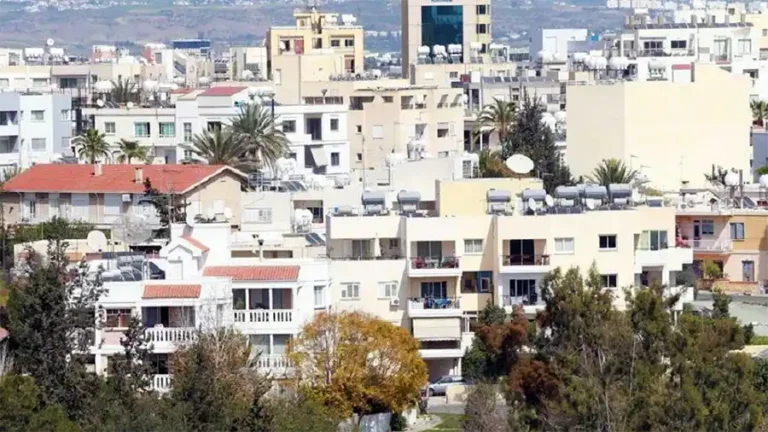
Residential property prices continued their upward trend in the second quarter of 2024, according to the latest price index released by the Central Bank.

During the second quarter of 2024, the Central Bank of Cyprus Residential Property Price Index (RPPI) for houses and apartments showed an annual increase.

Key highlights:

  • Annual increase: Residential property prices rose by 8% in Q2 2024 compared to 7.8% in Q1 2024. Apartment prices rose by 12%, while house prices rose by 6.2%.
  • Trends: The Apartment Price Index recorded a higher percentage increase compared to the House Price Index. However, there was a relative slowdown in growth on both a quarterly and annual basis.

Market dynamics

Several indicators suggest a general slowdown in the growth of the real estate sector. This trend is primarily driven by:

  • A fall in the number of sale contracts, particularly in transaction volume and value for housing.
  • An increase in housing supply (greater availability for rent and sale).
  • High mortgage interest rates and only minor reductions in construction material costs.

Developments in the real estate market by district

Real estate market trends appear to vary by district:

  • In Limassol and Nicosia, supply is increasing to meet existing demand.
  • In Larnaca and Paphos, supply remains moderate while demand continues to rise.
  • In Famagusta, supply is still relatively limited, with prices trending upward due to, among other factors, the entry of new residential units to the market.

Price changes by district

Quarterly trends (Q2 2024):

The general housing price indices showed:

  • Faster increases in Limassol (1.8%) and Paphos (3.5%).
  • Slower increases in Larnaca (2%) and Famagusta (1.2%).
  • A steady rate of growth in Nicosia.

Annual trends (Q2 2024):

  • Faster annual price increases were recorded in Limassol (9.5%) and Paphos (12.1%).
  • Slower increases were noted in Nicosia (2.4%), Larnaca (9.9%), and Famagusta (10.9%).

House prices by district (quarterly basis):

  • Prices accelerated in Limassol (3.3%), Larnaca (2.1%), and Paphos (3.7%).
  • Prices slowed in Nicosia (-0.5%) and Famagusta (0.8%).

House prices by district (annual basis):

  • Accelerated increases were recorded in Limassol (7.7%), Larnaca (7%), and Paphos (10.1%).
  • Slowdowns were observed in Nicosia (-1.3%) and Famagusta (-9.4%).

Real estate demand and supply

Demand:

  • According to the Department of Lands and Surveys (DLS), total sale contracts for all property types decreased annually in Q2 2024.
  • Domestic buyer activity increased, while foreign buyer activity declined. Regional analysis revealed differing trends:
    • Decreases in sales were noted in Limassol, Paphos, and Famagusta.
    • Significant increases were recorded in Nicosia and Larnaca.

Supply:

  • Statistics on approved building permits indicate an influx of new properties entering the market, supported by further reductions in construction material prices.
  • DLS data on property sales showed Limassol leading in transaction volume, while Nicosia recorded the highest number of apartment transactions.

Property prices driven up by foreigners say analysts

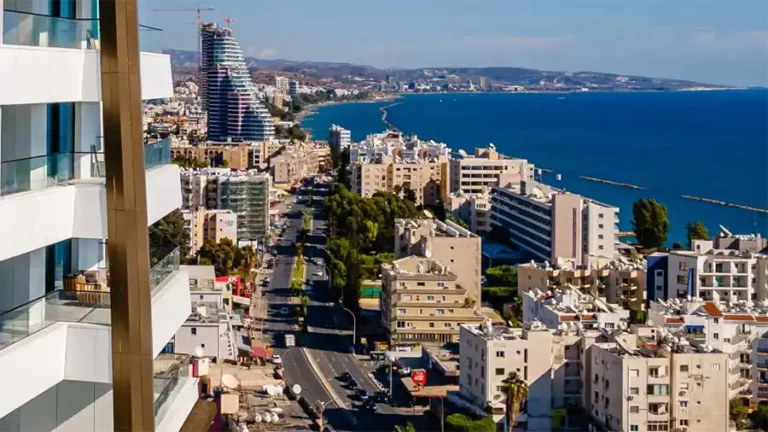
Property prices in Cyprus remain high despite signs of stabilization, with increased demand, particularly from foreign buyers, making home ownership out of reach for many locals and pushing rental costs higher, according to market analysts.

Marinos Kineyirou, president of the Cyprus Real Estate Registration Council, highlighted that while the market has shown resilience, unresolved structural challenges could lead to further hikes in property prices.

Recent data from the land registry for the first nine months of 2024 painted a mixed picture: transaction volumes and values declined, but the number of sales documents rose. Gains in Nicosia and Larnaca helped offset losses in Paphos and Limassol, while Famagusta bounced back with a modest 1% growth.

Polys Kourousides, president of the Property Valuers Association, warned that strong demand, particularly from foreign buyers who now account for half of the market, will likely persist through 2025. He pointed to delays in issuing building permits as a critical factor driving up housing costs.

“Without increasing supply, the housing crisis cannot be resolved,” Kourousides stressed, arguing that current government measures, such as the “renovate-rent” scheme, are inadequate. He also cautioned that geopolitical factors, such as the Israel-Hamas conflict, could further intensify demand from high-purchasing-power Israeli buyers.

Permit delays are causing developers to scale back, with some considering lay-offs due to stalled projects, Kourousides added. He proposed public-private partnerships as a potential solution, suggesting that the government could allocate state-owned land to developers to construct affordable rental housing.

“If the issuance of building permits continues to lag in 2025 and 2026, the influx of foreign buyers will absorb any new supply, leaving Cypriots in a difficult position,” Kourousides warned.

Prices of new residential properties surge in 2024

The prices of new residential property in Limassol rose sharply in the first nine months of 2024, with apartment prices rising by more than 20% and house prices climbing 30% compared to the same period last year, according to a report by Nicosia-based Landbank Analytics.

During the first nine months of 2024, the number of contracts deposited for the sale of new residential properties in Cyprus reached 5,253; a 19.2% rise compared to the same period in 2023 and accounting for 45% of the 11,634 sale contracts deposited over the period.

The total sales value of these new apartments and houses increased by 25% to exceed €1.9 billion, with all districts seeing increases in both sales volume and value.

Residential apartment sales soar, house sales decline

Sales of newly built apartments reached 4,335 with a total value of €1.45 billion; a 27.7% increase in volume and a 38.1% rise in value compared to 2023. In contrast, new house sales declined by 9.2% in volume and 2.8% in value, amounting to 918 properties with a total value of €457.2 million.

District insights

Nicosia

Nicosia saw notable gains from January to September 2024, with the number of new residential sales rising by 25.2% and value by 20.6%.

Apartment sales reached 1,194 properties (up 29%) with a total value of €236.9 million (up 25.2%).

House sales also rose, with 161 properties sold (up 3.2%) for a total of €49.8 million (up 2.6%).

Limassol

Limassol recorded a 17% increase in apartment sales volume and a substantial 41% rise in value, totalling 1,469 properties and €820 million.

However, house sales fell by 18.5%, with only 237 properties sold. Despite this, the value of house sales grew by 6%, reaching €165 million.

Larnaca

The Larnaca market performed strongly, with 1,113 apartments sold at a total value of €218.8 million and 191 houses sold for €64.3 million.

Apartment sales saw the highest growth, rising by 35.4% in volume and 39.5% in value, while house sales increased by 14.4% in volume and 6.2% in value.

Paphos

In Paphos, apartment sales surged by 42%, totalling 416 properties, while house sales dropped by 23.1% to 243 properties.

The value of apartment sales rose by 31.4% to €138.4 million, while house sales declined by 16.8%, totalling €149.6 million.

Famagusta

Despite its smaller size, Famagusta showed strong growth in residential sales.

Apartment sales increased by 46% to 143 properties, and house sales rose by 6.2% to 86 properties. The value of apartment sales climbed by 62.1%, and house sales value increased by 10.3%.

House sales analysis

District No. New
House Sales
Total Value
(€ million)
Average Price
New Houses
Nicosia 161 50 €310,559
Limassol 237 165 €696,203
Larnaca 191 64 €335,079
Paphos 243 150 €617,284
Famagusta 86 29 €337,209
Total 918 458 €459,267

Apartment sales analysis

District No. New
Apartment Sales
Total Value
(€ million)
Average Price
New Apartments
Nicosia 1194 237 €198,492
Limassol 1469 820 €558,203
Larnaca 1113 219 €196,765
Paphos 416 138 €331,731
Famagusta 143 33 €230,769
Total 4335 1447 €303,192

Residential sales market observations

CEO of the Landbank Group, Andreas Christophorides, stated: “The rising demand for new apartments is closely linked to current economic conditions, particularly housing costs and access to financing. Young couples, motivated by affordability and long-term financial stability, are increasingly choosing apartments over houses. Additionally, the nationwide drop in both the volume and value of new house sales is primarily driven by the Paphos district, where the market is significantly influenced by foreign buyers of luxury properties.”

Cyprus’ silent expat exodus

0

“Everywhere changes,” says Sarah Harrison. “But Cyprus changed in ways I could never have imagined: by the time I left, it felt like the island I fell in love with had slipped away…“

According to the latest Eurostat data, 18,000 people emigrated away from the island in 2022 (the last year for which data is available). About 95 per cent of those (close on 17,000) were non-Cypriot – which makes sense: if you were born somewhere, you’re less likely to leave.

But how many were Brits?

Once upon a time, these were the people who couldn’t wait to find their place in the sun: selling their semi in Swindon to move to the perpetual paradise of Peyia. But now?

Well, while there’s no definitive data on who is actually packing up and heading home, there is a suggestive lack of stats – and it all comes down to Brexit…

According to CySTAT, the number of EU nationals leaving Cyprus rises strongly year on year up until 2019, when Britain dropped out of the EU and off the data tables. In the following four years, the data no longer includes British residents leaving Cyprus. And suddenly, we see the number of EU emigrants level out.

Could it be that Brits make up a significant portion of those leaving the island?

Andrea Etherington certainly thinks so.

“Over 75 per cent of those we help relocate are Brits,” she reveals. “And I think that’s a fairly good indication of emigrants’ nationality.”

A Peyia resident, Andrea works for Cyprus Container Shipping, which has helped thousands of people relocate both to and from the island. Over the last few years, she admits that she’s seen a significant rise in the number of British-born residents leaving the island. And they’re all, she says, elderly…

“We’ve always seen a lot of Brits ending up in Cyprus: military who’d been here on tour, retirees from the Middle East not yet ready to face the rain. But there was a time in the early 2000s when Brits were arriving in Cyprus in their droves – perhaps related to the exchange rate,” she says. “I suspect those people are now all of an age when they want to go ‘home’ – back to Britain.

“They’re older, they miss their family; they want to make this decision before it has to be made for them. The vast majority of emigrating Brits are over the age of 65.”

Within the last week, Andrea has helped relocate a 91-year-old gentleman who’s “lived in Cyprus for donkey’s years and will be returning to family in Gloucester, as well as an 82-year-old who lost her husband two years ago and is going back to Norfolk.

“‘It’s time,’ they told me. ‘Time to go home.'”

During the pandemic, she reveals, fewer people left the island. “But in the years since, we’ve seen a distinct uptick in the number of people relocating back to the UK. The reasons are usually the same,” she adds. “It’s age, family or health – and the odd few who’ve had a relationship break-up or simply discovered they can’t afford the cost of living.”

75-year-old Margaret Davies retired to a Limassol village in 2010. “It was everything we’d dreamt of: community, sunshine, and a slower pace of life. But when my husband passed away in 2020, I began to have a rethink.”

In 2022, Margaret left for good.

“I had friends, both foreign and local. And I still loved life in Cyprus. But I was missing the grandchildren. And my health was getting worse – it was harder to get to hospital each month. So eventually, I packed up and came back to Hampshire.”

According to the InterNations Expat Survey, health care is one of the very few areas in which Cyprus ranks highly: 15th globally. But in almost all other categories, we’re slipping badly.

Chloe Morgan is one of the younger leavers; she first moved to Cyprus at the age of 22.

“I did exactly what you’d expect – came out on holiday, fell in love with a Cypriot, and stayed. My boyfriend’s family had a restaurant in Ayia Napa, so I worked there first. Then, when we broke up, I got a job in a real estate firm, working mostly with tourist rentals.”

For the first 10 years, says Chloe, Cyprus was a dream. “But by the age of 30, I knew it couldn’t last much longer. Everything from rent to groceries was getting more expensive, and eventually, I just couldn’t survive anymore. I wasn’t putting anything away for the future; I had no real job security. So last autumn, I moved back home to Bristol.”

In 2023, when Chloe left, the InterNations Expat Survey ranked Cyprus 47th out of 53 countries for ‘working abroad’.

This year, the island has slipped to 51st. Only two in five local expats are satisfied with their job and working hours, and 41 per cent of respondents said they were not paid fairly for their work.

But it’s not just age, health or cost of living that’s encouraging this exodus. For Sarah, who mentioned that she’d seen everything change, Cyprus was no longer the dream.

“By the time I left, I didn’t recognise Cyprus anymore,” explains the 68-year-old. “I know time marches on – but at this pace?

“When I first moved to the island, you could camp at Konnos and it was deserted; visit Akamas and not see another person for miles. Limassol was a sleepy coastal town, and Ayia Napa a quiet fishing village.”

69-year-old Sarah left Paphos two years ago, moving back to a sleepy Shropshire village.

“After years on the island, little of what I loved was left: Akamas was being raped, Limassol was a maze of construction, Nicosia had oozed out across the plain. Even the little mountain villages I loved so much seemed to have sold their soul to souvenir shops.”

“It was,” she admits, “a heart-breaking decision. My heart will always belong to Cyprus – but the Cyprus of the past. I made the right choice.”

CM

Housing schemes revised ahead of Friday’s launch

The Ministry of Interior has announced substantial updates to two housing schemes, set to open for applications on November 15, with the goal of simplifying the process and enhancing accessibility for applicants.

The first scheme, which provides financial aid to young people and couples up to age 41, now includes a key adjustment: applicants who have not yet purchased property can still apply. Instead of requiring a completed sales contract registered with the Land Registry, applicants may now submit a signed reservation agreement.

This reservation agreement, signed by both buyer and seller, must detail the estimated acquisition cost and the technical specifications outlined in Appendix B of the scheme. District administrations will then assess the property’s eligibility and calculate financial aid based on this documentation.

If an application meets all criteria, applicants will receive a pre-approval letter, with four months to finalize a stamped sales contract registered with the Land Registry. Failure to meet this deadline will result in automatic rejection, regardless of subsequent document submissions.

The “Renovate-Rent” scheme has also undergone a revision in its disbursement approach. Rather than a lump-sum payment upon completion, renovation funding will now be provided in two instalments. Property owners can receive an interim payment of 40% when half of the renovation is completed, contingent upon submission of designer certification, receipts, and photo evidence.

These modifications aim to make both housing schemes more accessible and user-friendly, streamlining application and funding processes for eligible recipients.

Encroachment: should I have boundaries surveyed?

0

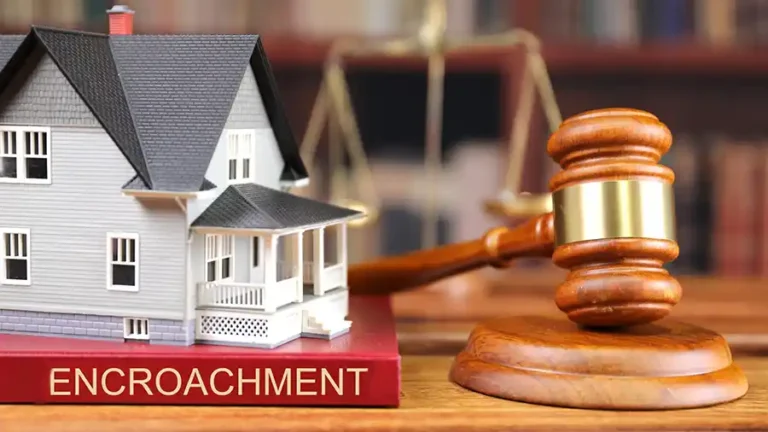
Encroachment occurs when an owner of a property extends a structure or some other feature beyond the boundaries of his land onto land belonging to a neighbour.

Encroachment can involve fences, buildings, driveways, landscaping, or even utilities that cross over a property’s boundaries. Encroachments in Cyprus usually arise from outdated boundary surveys, most often due to builders failing to survey the land before they start construction work.

How do boundaries become outdated?

If we turn back the clock to the 19th century, a British surveyor and cartographer by the name of Horatio Herbert Kitchener surveyed Cyprus. Kitchener, a junior officer at the time, went on to become 1st Earl Kitchener who is probably best known for his WWI recruitment poster, surveyed Cyprus.

Although his survey was considered to be very accurate at the time, it’s accuracy was limited to the equipment available to him at the time. E.g. Kitchener used a 100-foot chain supplied by the Ordnance Survey.

Surveying equipment has become more accurate since Kitchener’s time. Today Cyprus uses sophisticated surveying equipment that measures distances that are accurate to within 1-2 millimetres over typical distances and employs global navigation satellite systems (GNSS).

This increased accuracy means that plots of land may appear to have ‘moved’, with their boundaries now encroaching onto their neighbours land.

Resolving disputed boundaries

Land encroachment in Cyprus is a serious issue, especially given the island’s limited land area and growth of the real estate market since the start of the century.

Resolving encroachment and boundary disputes typically involve legal, administrative, and sometimes technical approaches, depending on the severity of the encroachment and the parties involved.

Avoiding the problems

I have three friends whose properties encroach on their neighbours land and there’s no easy solution to the problem. Their properties are located on the edge or outside the built up areas. Two bought land and built individual houses and one bought a detached house that was built some years earlier.

To avoid the problems experienced by my friends, I recommend that anyone buying land to have the plot surveyed to confirm its boundaries. Similarly if someone plans to buy an older resale property on the edge or outside the built up area I recommend they have it surveyed.

The Department of Lands & Surveys (DLS) publishes a list of licenced private surveyors, or people may chose to have a DLS surveyor undertake the work.

Fees for private and DLS surveyors may be found at the Land Registry’s leaflet of Fees & Charges.