

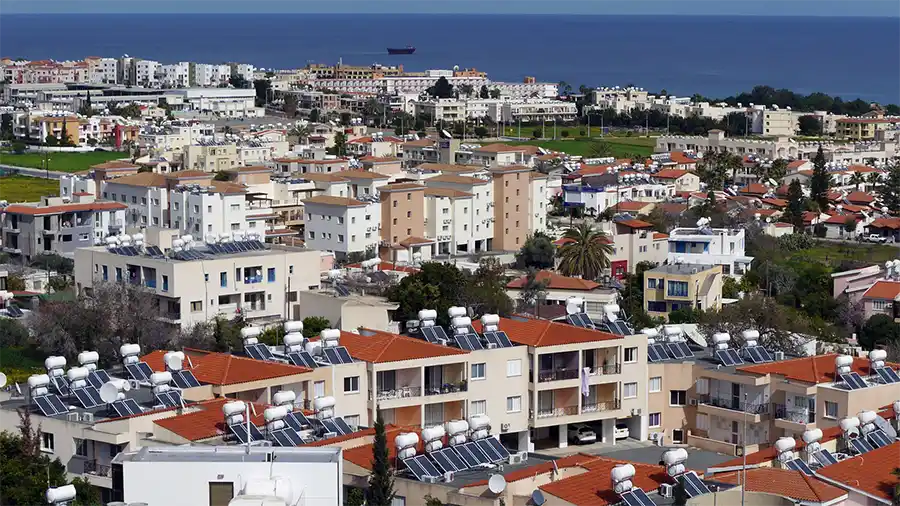
Housing has always been a topic of public concern in Cyprus. Today, however, it has transformed from a general social ideal into a pressing survival issue for thousands of people, particularly students and young couples looking to buy a home.
The soaring price of property and rents in Cyprus continues to rise, pushing a significant number of the population, particularly those on low and middle incomes, to the margins.
Cities like Nicosia, Limassol, and Larnaca are seeing their stock of affordable housing fall, with demand growing rapidly and supply failing to keep pace. As a result, thousands now face limited options: either remain in the family home well into adulthood or pay inflated rent prices that eat away at their income.
Recently, some have pointed to foreign investment in real estate as a contributing factor to the crisis. However, Cyprus has long been a magnet for international buyers and often at even higher volumes in the past. In fact, this international interest has been one of the primary drivers behind the real estate sector’s rapid development in recent years.
The real roots of the issue lie elsewhere. Key factors include a sharp increase in population, high construction costs driven by war-related disruptions and geopolitical instability, delays caused initially by the pandemic and more recently by slow planning approvals, limited state intervention, and a sluggish response from the private sector.
Importantly, Cyprus is part of a much broader European trend. A recent Eurocities survey found that 9 out of 10 mayors in major European cities see housing as the most critical social and economic challenge of our time.
The European Parliament and local authorities are now advocating for the establishment of a dedicated housing fund and for greater flexibility in how EU resources are deployed to tackle this crisis.
The European Commission, through its cohesion policy, has acknowledged that without coordinated intervention, the housing crisis threatens the very cohesion and stability of the EU as a whole.
EU meeting on affordable housing
Cyprus participated recently in a key EU-level meeting on affordable housing in Brussels, represented by the Office of the Commissioner for State Aid Control.
The gathering brought together officials from EU member states and representatives from major European organisations, including the European Investment Bank (EIB), Build Europe, Eurocities, the International Union of Property Owners, the International Union of Tenants, and Housing Europe.
At the heart of the agenda was the proposal to include affordable housing under the Decision on Services of General Economic Interest (SGEI). The goal: to formally recognise housing as a vital public service, similar to healthcare and education, with a legitimate economic and social function.
According to a statement from the Office, the purpose of the meeting was to allow stakeholders and member states to present their perspectives, share experiences, and make recommendations on how affordable housing should be framed within the SGEI framework. The European Commission, which led the proceedings, also offered key clarifications to guide this evolving policy direction.
Cyprus, through the active involvement of the Commissioner’s Office, is playing a meaningful role in shaping a unified European approach to this critical social issue: the right to housing.
The first draft of the revised SGEI Decision – including provisions for defining and implementing affordable housing – is expected to be presented in September 2025.
It’s time for action
The housing crisis is neither abstract nor inevitable. It is the result of policy decisions, market forces, and delayed responses. But there is room – and need – for action. Whether through targeted investment, smart urban planning, or stronger public-private cooperation, practical and inclusive solutions must take centre stage. Housing must be for the many – not just the privileged few.
