Solutions prepared for trapped buyers

Efforts are underway to resolve the issue of trapped buyers, Interior Minister Constantinos Ioannou said on Wednesday at the House legal affairs committee. 

Presenting a solution, he explained around 50 per cent of cases could be resolved in a manner which is constitutionally sound and has the green light from the legal service. 

Though the session primarily brainstormed without settling on any concrete proposal, the legal service suggested going through court – sparking a reaction from Disy MP and committee chair Nicos Tornaritis. He argued that considering there are around 10,000 pending cases, it would take some 20 years for court to issue a decision. 

The legal service expressed its disagreement, underlining there would be an order issued to speed up these cases. 

Ioannou said there are 9,497 applications by trapped buyers, of which 5,417 have no title deed and will remain pending until authorities can figure out whether one can be issued or not. 

With the remaining 4,080 there are around 2,500 that have no other burdens such as a mortgage. As such, they will be examined and be issued a title deed. With the remaining cases, they will be examined following written consent. 

Banks have agreed to suspend foreclosures until the beginning of 2025. 

Financial ombudswoman Valentina Georgiadou specified that any out-of-court settlement should be carried out with a proper framework.

CM

House prices and rents went up in Q2 2024

Eurostat reports that in the second quarter of 2024, house prices in the EU increased by 1.9% and rents by 0.7% compared with the first quarter of 2024. 

Compared with the second quarter of 2023, the price of houses went up by 2.9%, while rents increased by 3.0%.  

House prices and rents in the EU followed a similar pattern between 2010 and the second quarter of 2011 but have since evolved differently. While rents have increased steadily, the price of houses have followed a more variable pattern, combining periods of decline followed by rapid increases. Between 2010 and the second quarter of 2024, house prices increased by 52% and rents by 25%.

house prices in EU statistics

House prices have more than doubled in 9 EU countries since 2010  

When comparing the second quarter of 2024 with 2010, among the EU countries for which data are available, the price of houses increased more than rents in 20 countries. House prices more than tripled in Estonia (+232%) and Hungary (+218%) and have more than doubled in Lithuania (+178%), Latvia (+146%), Czechia (+131%), Austria (+111%), Portugal (+106%), Luxembourg (+103%) and Bulgaria (+102%). The price of houses did not change in Cyprus and decreased in Italy (-5%).  

For the same period, rents increased in 26 EU countries, with the highest rises registered in Estonia (+203%), Lithuania (+178%), Ireland (+106%) and Hungary (+104%). The only decrease in rent prices was recorded in Greece (-18%).

EU House Prices & Rents

New marinas and golf courses on the way

The government’s priorities for the coming years include promoting and completing new tourism projects, in particular the development of new golf courses and marinas. 

The Deputy Ministry of Tourism‘s 2025 budget, totalling €65.6 million, has already allocated funds for tourism projects. 

2025 budget tourism allocations 

According to the Deputy Ministry’s strategic plan for 2025-2027, the state will focus on promoting new tourism projects aimed at diversifying Cyprus’ tourism offerings. 

These investments will include the development of new golf courses and the construction of additional marinas. 

The promotion and completion of these projects remain key government priorities for the coming years. 

The 2025 budget earmarks €380,000 for services related to preparing the terms of an open tender for the development of a marina in Kissonerga, Paphos, as well as for providing support throughout the tendering process. 

Additionally, €25,000 is set aside for a supervisory team for the Paralimni marina and for other consultancy services regarding marinas and leisure boat mooring facilities. 

At the same time, the Deputy Ministry has outlined its main activities for 2025-2027. These include further developing existing and exploring new markets, enhancing the quality of tourist services and experiences, improving infrastructure, expanding both existing and emerging forms of tourism to extend the tourist season, and accelerating digital and green transitions alongside improving accessibility. 

Kissonerga marina development 

The strategic plan also highlights efforts to enrich and upgrade the tourism product, which includes overseeing key development projects. 

This involves supervising major tourism-enhancement projects, with a focus on the allocation and management of lease contracts for developing and operating marinas and recreational boat mooring facilities. 

To this end, the coordination and support of the Marina Management Committee and the Recreational Boat Mooring Evaluation Committee are underway, alongside efforts to streamline all related project matters. 

Currently, the lease agreement for the development and operation of the Paralimni marina is being managed, while actions and processes for contracting the development of a marina in Kissonerga, Paphos, are progressing. Additionally, the management of lease contracts for the Limassol and Ayia Napa marinas is ongoing. 

The Deputy Ministry also oversees the work of the Golf Course Development Committee, responsible for implementing the regulatory framework governing new golf course developments. 


Planning amnesty has very limited scope

Earlier this week, I wrote a letter to the Cyprus Mail about the Planning Amnesty, which they kindly published earlier today.

They titled my letter ‘Title deed amnesty has very limited scope‘, which I’ve republished below.


I was quite excited when I read “Buildings amnesty approved, thousands to receive title deeds”, which was published in the Cyprus Mail Friday, September 13. At last, I thought, the government’s got a grip on sorting out the mess with illegal constructions and tainted title deeds.

However, on second thoughts, as the article was published on Friday 13th, I should have known better!

The amnesty has very limited scope. The most glaring omission is that only foreigners with Alien Registration Certificates (ARC) can apply as the online application system (Ippodamos) requires foreign applicants to enter their ARC number.

So what about non-Cypriots with holiday homes who are not permanent residents? Why has the system been designed prevent a sizable proportion of non-Cypriots benefitting from the amnesty? Is this a cunning plan by the government to reduce the workload on civil servants?

And what about the non-ARC holding foreigners who have title deeds, but who are unable to sell their properties because building irregularities have resulted in tainted title deeds? It’s also worth noting that the amnesty doesn’t include a large number of irregularities that result in a tainted title deed.

From the many emails I receive, similar to Lionel Grancourt’s letter “Victim of the title deed nightmare”, which was published in the Mail on August 4, shoddy work by property developers is the overwhelming cause for building irregularities, which the amnesty attempts to correct.

Does the government really believe that developers responsible for planning irregularities will be willing to pay to get them legitimised, bearing in mind that these developers have sold the properties and banked the proceeds?

The government needs to think again!
Nigel Howarth, Erimi


Here’s a few of the issues the Planning Amnesty fails to address:

  • Unfinished/lack of roads and/or pavements
  • Unfinished/lack of green area
  • Unfinished/lack of surface water drainage
  • Parking spaces configured incorrectly
  • Lack of disabled parking spaces
  • Lifts not installed according to the permit
  • Balcony railing heights built less than 1.1m from the parapet
  • Electricity sub station built in wrong place
  • Boundary walls too high
  • Access in wrong place
  • Lack of sewage green card
  • Final approval certificate not issued
  • Communal facilities not inspected
  • Nowhere to keep rubbish bins and/or not enough bins
  • Swimming pool changing rooms and facilities not built according to permit
  • Properties built facing wrong direction
  • Street lighting not installed
  • Parking areas blocked in and covered
  • Biological sewerage systems not installed as required by permit
  • Buildings failing to meet fire regulations
  • Buildings encroach on land belonging to someone else

I’m sure there are more. Please tell me the planning issues you are facing in your comments below.

Primary residences going under the hammer increasing

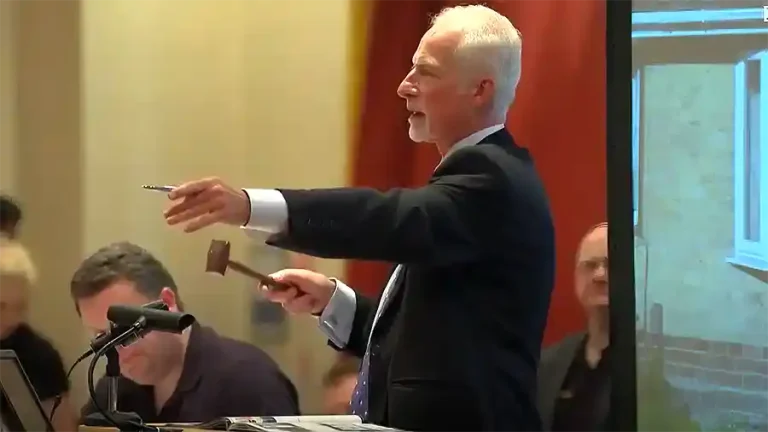
The number of primary residences going under the hammer has risen sharply since the second quarter of 2024, following a pause triggered by foreclosure-related legislation introduced at the end of 2023.

Data from the Central Bank reveals that six primary residences valued below €350,000 were sold at auction during the second quarter of 2024. Additionally, three homes with market values exceeding €350,000 were auctioned. 

Notably, the six properties under €350,000 were sold at the first auction, while the three above that threshold were sold at the second auction. In contrast, no primary residences were sold at the first auction in the first quarter of 2024, and only one property valued over €350,000 was sold at the second auction. 

In terms of primary residences sold directly to third parties, Central Bank data shows that one residence valued below €350,000 was sold. Moreover, ten properties reverted to the mortgage lender after six months from the first auction; one of these had a market value under €350,000. 

At the same time, auctions are ongoing for another 70 residences, with 45 valued below €350,000 and 24 above this amount. Over 450 primary residence owners have received their first notifications for loan repayment delays exceeding 120 days, initiating the foreclosure process. 

Foreclosures involving €500 million worth of properties 

In the second quarter of 2024, 2,794 foreclosure notices were issued for properties valued at nearly €500 million, compared to 2,968 notices in the first quarter for properties worth €246 million. 

There has been a notable increase in notices, which banks and loan management companies send to borrowers with payment delays of more than 120 days, signalling the start of foreclosure. This is typically followed by a second notice, which lists the outstanding mortgage, interest, and other costs, giving the borrower about 30 days to repay. 

A slight reduction in the number of second notices, which set the auction date for properties, was recorded in the second quarter. These notices are issued when the borrower fails to settle the outstanding debt. 

Surge in primary residences going under the hammer 

Central Bank figures show that 462 foreclosure notices were issued for primary residences in the second quarter of 2024. The number of first notices doubled, with 146 properties valued at €33 million receiving them, compared to 82 properties worth €13.3 million in the previous period. Of these, 133 were valued below €350,000, and 13 were above. 

Few borrowers seeking out-of-court settlements 

Financial Commissioner Valentina Georgiadou pointed out that few borrowers have sought her office’s assistance since the introduction of new legislation at the end of 2023. Only eight cases have been submitted, and none could be investigated due to pending court rulings. 

Despite laws requiring the establishment of a Special Court for Foreclosures to prioritize cases involving primary residences valued up to €350,000, this court has not yet been created. Furthermore, Supreme Court guidelines call for fast-tracking cases related to these properties, but this process has yet to gain traction. 

Rising complaints from borrowers 

Jenny Papacharalambous, Director of the Borrowers Association, reported that requests for assistance from borrowers, especially concerning primary residences, continue to surge, with over 20 cases weekly. Michalis Paraskevas, President of the Association for the Protection of Primary Residences, expressed frustration over the courts’ lack of progress in handling these cases, highlighting inconsistent rulings for similar matters. 


Planning permission axed: Decree, Details & Applications

October 2 saw the Interior Minister’s decree come into force that axed the requirement to obtain planning permission for low-risk developments, such as the construction of one or two residences providing certain conditions are met.

The announcement of the decree. which was first in published in ekathimerini, lacked quite a bit of detail. I’ve translated the decree (below) and I’m grateful to Panayiotis Panayides of FSB Properties Ltd for his input.

Planning permission decree

The Minister of Interior, exercising the powers granted to him under the provisions of Article 22 of the Town and Country Planning Law, issues the following Decree:

  1. This Decree shall be referred to as the Town and Country Planning (Residential Development in Plots and Plots under Creation) Special Development Decree of 2024.
  2. This Decree applies to every plot [ikopedo] and plot under creation located in Residential or Tourist Zones, in Housing and Office Zones, Holiday Housing Zones, or other areas where residential development is permitted, within the boundaries of the Development Plans.
  3. Unless a different meaning arises from the context, the terms used in this Decree have the meaning assigned to them by the Town and Country Planning Law, the applicable Development Plans, as amended or replaced, and the Town and Country Planning General Development Decree. The singular includes the plural. It is understood that, for the purposes of this Decree, the term “Law” means the Town and Country Planning Law of 1972 to 2021, as amended from time to time.
  4. (1) In addition to the developments permitted by the Town and Country Planning General Development Decree, on any plot or plot under creation falling under the provisions of this Decree, residential development of up to two housing units, either in a single building or independent buildings, as well as auxiliary buildings related to it, shall be allowed only with the issuance of a Certificate from the Urban Planning Authority, following the procedure recorded in paragraph 4(2), provided that all the following conditions are met:

(a) The plot or plot under creation is not affected by any plan for the opening or continuation of a road network,

(b) The number of housing units on each plot or plot under creation does not exceed two in any case,

(c) The building complies with all the essential provisions of the Development Plan applicable to the area, as well as the relevant provisions of any Regulation, Decree, or Order issued in accordance with the Law,

(d) No discretionary power of the Urban Planning Authority is sought concerning exceeding the height or number of floors set in the urban planning zone, exceeding the height of fences, reducing distances from boundaries, or any other deviation from regulatory provisions,

(e) The plot or plot under creation is not located in a Special Character Area (SCA),

(f) There is no building on the plot or plot under creation for which a Preservation Order has been issued under Article 38 of the Law,

(g) The development does not have access from an intercity road or a road of primary importance,

(h) The title deed does not record that the plot/plot under creation is affected by a right in favour of third parties or an easement from cables, pipes, etc.

  1. (2) For developments permitted under this Special Decree, and for the purpose of ensuring compliance with its provisions and taking responsibility for the submitted information exclusively by the designer, the designer will submit to the Urban Planning Authority a completed form titled Responsible Designer’s Statement/Urban Planning Authority Certificate, attached herewith.

The form, along with the other required documents (as listed in ANNEX I of the form), will be submitted and electronically managed through the “IPPODEMOS” information system.

After verifying that the submitted Statement falls within the scope of the Decree, as well as a strategic review of the basic aspects of the proposed development (building coefficient/coverage ratio, number of floors/height, distances from boundaries, parking spaces, auxiliary buildings), for which the designer is responsible, the Urban Planning Authority will issue the Certificate within 20 working days from the date of submission, or will reject the application for a Certificate if it determines that the application does not fall within the scope of the Special Decree, or does not comply with the provisions relating to the basic aspects of the development. If the Urban Planning Authority does not issue the Certificate within 20 working days, the Certificate will automatically be issued through the “IPPODEMOS” information system, stating that the planning permit is considered granted, with the responsibility of the designer, should the submitted plans and documents be incorrect.

The Responsible Designer’s Statement, along with the Urban Planning Authority Certificate, as mentioned above, will then be submitted to the competent Authority (along with all the required plans/documents/details) for the purpose of obtaining a building permit.

  1. (3) No development is permitted under this Decree if:

(a) It violates a condition imposed on a permit granted by the Urban Planning Authority,

(b) There is an illegal building on the plot or plot under creation (unless it is proposed for legalization with the application),

(c) There is or has been approved another non-residential development on the plot or plot under creation,

(d) A change of use of an existing building from non-residential to residential is planned,

(e) Its execution requires or entails the configuration, opening, or significant widening of access to an intercity road or a primary artery.

  1. (4) In cases where discretionary power is sought (paragraph 4(1)(d) above) or in other special cases mentioned in the Responsible Designer’s Statement/Urban Planning Authority Certificate, an application for a planning permit will be submitted using the planning certainty process, in accordance with Order 2/2020 (amended 2024).
  2. Every six months, the Urban Planning Authority will conduct random checks on 10% of the submitted applications and inform the Cyprus Scientific and Technical Chamber (ETEK) and the Ministry of Interior of the results of the sampling. If, during the Urban Planning Authority’s review or when the competent Authority examines the building permit application, or at any subsequent stage, it is found that incorrect information concerning key issues was declared, the Certificate referred to in paragraph 4(2) above will be revoked, and ETEK will be informed for the imposition of penalties according to the relevant legislation, along with the submitted professional insurance Certificate. The competent Authority will also be informed.
  3. (1) If the Urban Planning Authority deems it necessary that no development specified in this Decree be carried out in any particular area, or that no specific development should proceed unless a planning permit is granted following the submission of an application for that purpose, the Urban Planning Authority may issue an Order to ensure that the process of securing the Certificate provided under paragraph 4 of this Decree does not apply to that area or development. (2) For any Order issued by the Urban Planning Authority under subparagraph (1) above, the provisions of subparagraphs (2) and (3) of paragraph 4 of the Urban Planning and Spatial Planning General (Basic) Development Decree shall apply.
  4. This Decree shall come into force on 2/10/2024, the same date on which the amended Order 2/2020 shall come into force.

ETEK engineers form (illustrative purposes only)

Responsible Designer’s Declaration / Urban Planning Authority Certificate