Sunshine and strain – a market divided

The Cyprus real estate sector is in a seemingly golden age. But all that glitters is not gold.

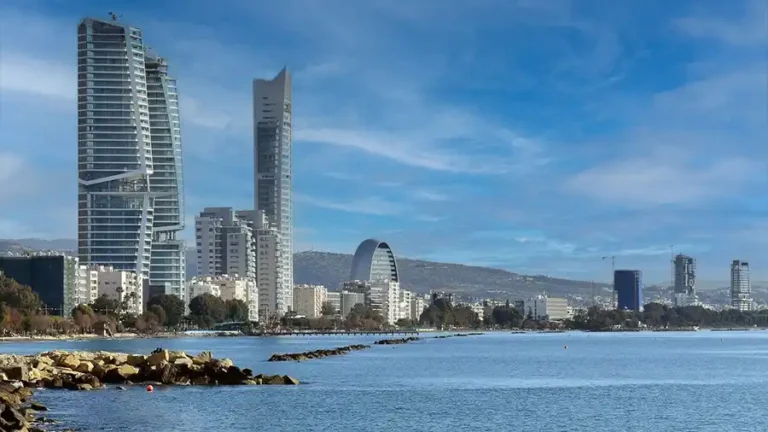
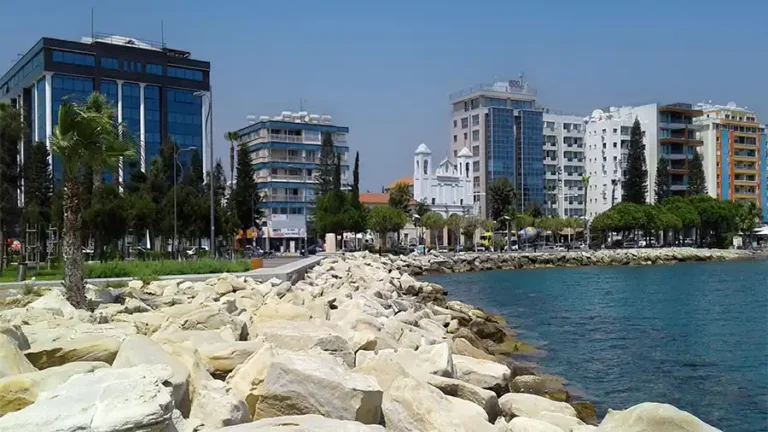
A booming economy (projected 2.7% growth in 2024), resurgent tourism, and impressive fiscal discipline (budgeted surpluses averaging 2.3% of GDP from 2023 to 2028) create a narrative of prosperity. Construction flourishes, with coastal hotspots like Limassol leading the charge.

However, beneath this sun-drenched exterior lies a tale of two markets, each with its own set of challenges.

Locals Feeling the Squeeze: While foreign investors flock to Cyprus, lured by the “golden visa” programme, low corporate and income taxes, and the promise of sunshine and stability, locals face a different reality. In February 2024 loan restructuring comprised 45% of new lending for home purchases, highlighting the financial strain on some Cypriots.

Rising interest rates and inflated property prices – exacerbated by raw materials, energy, and overall inflation – further tighten their grip. This financial squeeze is particularly concerning for local residents, who generally earn less and are taxed more compared to their foreign counterparts.

Foreign Investment – A Double-Edged Sword: Foreign investment, particularly from non-EU countries, has fuelled the coastal boom in places like Limassol and, to a lesser extent, Paphos and Larnaca. However, this reliance on external capital creates a vulnerability.

Sanctions on traditional investor pools like Russia, coupled with a potential market correction (indicated by a downturn in property transactions, especially for higher-end residential properties), could see some foreign buyers shift their focus.

The occupied north has already become more attractive to certain demographics, such as Russian (circa 70,000 already live there), Israeli and Lebanese investors.

A History of Overlooking Problems:  Cyprus has a track record of overlooking problems, as evidenced by past economic crises, as well as taking a short-term view when trying to address them. A proactive approach from the government is crucial to ensure long-term stability.

This includes addressing the affordability concerns of local residents, mitigating the risks associated with overdependence on foreign investment, and building the mechanism to ensure that all locals benefit from the increase in overseas companies and residents.

We are not hopeful, as politicians are currently focused on the upcoming municipal and European elections, with the parties in parliament remaining divided and lacking vision.

Foreigners everywhere: One-in-four persons living in Cyprus was born overseas, they own established businesses, and form part of society’s fabric. They are here to stay. For good. They are Cypriots.

Ignoring one quarter of the population isn’t the way to build a sustainable future. The fact that some (many) don’t like that the cost of living has increased, that working hours are longer, and that there are more technically savvy people around, doesn’t mean that by ignoring “the foreigners” all of these problems will go away. The competition is here, now.

Whether you decide to enter the race is your choice, but the race is still going to take place and you will still feel the consequences of its outcome.

Immigrants, their descendants and newcomer foreigners are playing an increasingly central role. They own a significant part of Cyprus’ infrastructure (both airports and ports, three out of four telecommunication companies, all banks, an increasing number of hotels, etc), they start businesses, contribute to the local culture, and participate in community life.

This not only enriches the cultural landscape but also boosts the economy by creating jobs, increasing demand for goods and services, and bringing in new skills and perspectives.

Challenges

However, this influx also presents challenges for the housing market. Increased competition for jobs often puts pressure on local wages, which can make affording property more difficult.

Furthermore, the growing population creates a higher demand for housing, potentially leading to rising prices and pressure on public services. This rapid change can cause friction among some locals, who may feel left behind or displaced.

These concerns sometimes manifest in the rise of right-wing political parties. It’s crucial to recognise, however, that these anxieties are not unique to Cyprus.

Globalisation and technological advancements are reshaping economies and labour markets globally, leading to similar concerns about living costs and competition.

Moving forward, a sustainable future requires acknowledging the contributions and needs of all residents. Integration policies and inclusive economic planning are essential. These policies should aim to ensure that the benefits of immigration – economic growth and cultural diversity – are distributed fairly across the population. This may involve supporting affordable housing initiatives and developing programmes that equip locals with the skills they need to thrive in a changing market.

Only one future is sustainable for Cyprus real estate: one that bridges the divide and fosters a shared prosperity for all residents.

About the author

Pavlos Loizou is CEO of AskWire, real estate investment advisors

Jho Low’s citizenship revoked

The cabinet confirmed it has revoked the citizenship of fugitive Malaysian businessman Jho Low.

Low, wanted by Interpol for significant financial crimes, had his Cypriot citizenship initially revoked in May 2023. He appealed the decision, but on May 17, 2024, an independent citizenship commission rejected his objection.

Under Cypriot law, citizenship can be revoked within ten years of naturalisation for individuals wanted internationally for serious crimes. Low had acquired Cypriot citizenship in September 2015 through the country’s citizenship by investment programme (aka Golden Passport scheme). The Council of Ministers approved the Interior Minister’s proposal to issue a decree finalising the revocation.

This decision occurs amidst ongoing investigations into Low’s alleged involvement in the 1MDB scandal, where he is accused of embezzling billions from Malaysia’s 1MDB investment fund and transferring the funds to his accounts.

Low reportedly obtained Cypriot citizenship by purchasing a €5 million villa in Ayia Napa. On discovering his criminal background, Cypriot authorities seized the villa for potential confiscation if he obtained his citizenship fraudulently.

The investigation also examined the role of the late Archbishop Chrysostomos, who had received a €300,000 check from Low’s application. The Archbishop returned the check when the scandal emerged, and a police investigation found no evidence of corruption.

Home raids to ensure 5% VAT compliance

Tax Department officials will be conducting raids on homes and apartments in the coming days. They suspect that some property owners have taken advantage of the preferential framework for the reduced 5% VAT on primary residences but are now renting these properties illegally through platforms like AirBnB and Booking.com.

Many Cypriot and foreign buyers bought residential properties in recent years, paying only 5% VAT, intended for primary residence purposes. However, they have not used these properties as their main residences. Instead, most of them rent out these properties either on a monthly or daily basis, earning significant financial benefits.

According to the law, buyers who benefit from the 5% VAT and use the properties commercially are required to pay the standard VAT rate of 19% to the Tax Department.

With the upcoming summer holidays expected to increase the number of tourists choosing these properties for their stay, the Tax Department has decided to launch a new inspection campaign to identify those who have violated the law.

Raids and Inspections

Dozens of Tax Department officials will visit areas with rental homes or apartments to determine whether these properties are occupied by the buyer who benefited from the reduced VAT or by tenants. Previous inspections have shown that many properties are rented out instead of being used as primary residences, especially along the coast.

Tax Commissioner Sotiris Markides urges property buyers who benefited from the reduced 5% VAT rate and are using the properties commercially to comply with the law and pay the amounts owed to the state.

Speaking to Phileleftheros, he mentioned that it would be best for owners of such properties to voluntarily go to the Tax Department to pay the remaining 14% VAT, to avoid disturbing tourists during inspections. “We urge those who received the 5% VAT without being entitled to it to come to the Department to settle their debt,” he emphasized. He explained that a large number of department officials would be involved in the campaign, aiming to check properties one by one if possible. Additionally, they will also conduct checks on the pages of these platforms to confirm rentals or identify such cases. “We urge the public to comply with the law to avoid the imposition of interest and penalties,” he indicated.

VAT payment in Instalments

Mr. Markides also told Phileleftheros that instructions were given to the District Offices of the Tax Department to accept the payment of the additional VAT owed by property owners in instalments. Specifically, taxpayers will be able to settle their debts in 12 equal monthly instalments. The Tax Commissioner has the authority to approve an extension of the number of instalments.

This is the second campaign carried out by the Tax Department to recover the additional VAT. During the previous campaign, department officials conducted 3,000 on-site housing inspections, identifying 500 buyers who had misused the reduced VAT. Additionally, another 500 taxpayers, after being informed about the campaign, voluntarily went to the Tax Department and paid the remaining 14% VAT owed to the state.

From the previous campaign, the Department’s coffers received nearly €40 million.

Cyprus property sales slump in May

Cyprus property sales fell in May, with the total number of sales contracts deposited at Land Registry offices across Cyprus dropping by 17% compared with the corresponding month in 2023, according to official figures from the Department of Lands & Surveys.

As well as residential properties, the figures from the Department of Lands and Surveys include commercial property, retail premises, offices, warehouses, and land. Regrettably, the Department doesn’t provide a more detailed analysis.

Sales fell in all districts, with Paphos reporting the sharpest drop of 30% followed by Limassol (20%), Famagusta (18%), Larnaca (8%), and Nicosia (7%).

Total contracts of sale deposited – 2023/2024 Comparison

Sales in the first five months of 2024 fell 1% compared with the same period last year. While property sales in Nicosia and Larnaca rose 28% and 9% respectively, sales in Paphos fell 15%, Limassol sales were down 10%, and sales in Famagusta were down 11%.

Total contracts of sale deposited – 2023/2024 Comparison (Jan-May)

Property sales – market segment analysis

Sales to the domestic (Cypriot) market

The total number of sales to the domestic market in May 2024 declined 10% compared to the same period last year and accounted for 23% of the total number of sales in the month.

With the exception of Paphos (where sales rose by 3%) sales in Famagusta, Larnaca, Nicosia, and Limassol fell by 42%, 13%, 12% and 6% respectively.

Domestic contracts of sale deposited – 2023/2024 Comparison

Sales to the domestic market in the first five months of 2024 reached 3,781; an increase of 12% on the 3,370 achieved in the same period of last year. With the exception of Famagusta, all districts recorded gains.

Domestic contracts of sale deposited – 2023/2024 Comparison (Jan-May)

Property sales to the overseas market

The total number of property sales to the overseas market (both EU and non-EU citizens) in May 2024 fell 28% compared to the same month last year.

Increased sales in Famagusta and Nicosia were wiped out by falls of 41% in Paphos, 38% in Limassol, and 3% in Larnaca. (In terms of the number of properties sold to overseas buyers, Limassol was the most popular achieving 153 ales.)

Overseas contracts of sale deposited – 2023/2024 Comparison

On an annual basis, sales to the overseas market fell by 10%. Increased sales in Nicosia, Famagusta, and Larnaca were more than wiped out by falls in Limassol and Paphos.

Overseas contracts of sale deposited – 2023/2024 Comparison (Jan-May)

Property sales to EU nationals

Sales to EU citizens fell 12% in May compared to the same month last year accounting for 13% of the total number of sales (1,268) achieved during the month.

While sales rose by 60% in Larnaca, 57% in Nicosia, and 40% in Famagusta, they fell by 50% in Limasol and 22% in Paphos.

Contracts deposited by EU Nationals – 2023/2024 Comparison

Sales to EU nationals in the first five months of 2024 reached 720; a fall of 4% compared to the same period last year, with only Nicosia, Famagusta and Larnaca improving on last year’s numbers.

Contracts deposited by EU Nationals – 2023/2024 Comparison (Jan-May)

Sales to non-EU nationals

Sales to non-EU nationals fell 31% in May compared to the same month last year accounting for 26% of the total number of sales (1,268) achieved during the month.

Although sales in Larnaca, Nicosia and Famagusta rose by 60%, 57% and 40% respectively, they fell by 50% in Limassol and 22% in Paphos.

Contracts deposited by non-EU Nationals – 2023/2024 Comparison

Sales to non-EU nationals in the first five months of 2024 reached 1,730; a fall of 20% compared to the same period last year, with only Nicosia, Larnaca and Famagusta improving on last year’s numbers.

Contracts deposited by non-EU Nationals – 2023/2024 Comparison (Jan-May)

Market segment summary analysis

The chart below shows each of the district’s popularity with each of the market segments. Sales to the overseas market segments (EU nationals + non-EU nationals) exceed domestic sales in Paphos and Famagusta.

In Paphos, the most popular with those looking for a holiday home in the sun, sales to non-EU nationals alone exceed sales to the domestic market (Cypriots.)

Market Segment Summary Analysis Jan-May 2024

Year to date performance

The chart below is an analysis of sales since 2008, showing total domestic sales and total overseas sales during the first five months of each year.

Contracts Deposited 2008 to 2024 in the First Five Months of Each Year


Cyprus image tarnished by short-term rentals

President of the Cyprus Real Estate Agents Registration Council Marinos Kineyirou on Monday called for stricter regulation of short-term rentals in Cyprus.

The council president highlighted the adverse impacts on the economy, particularly on the tourism and real estate sectors, stressing the need for government intervention.

“The way short-term rentals currently operate causes multiple problems in key economic sectors like tourism and real estate. The state loses tax revenue, and the effects impact society and citizens,” Kineyirou stated.

Kineyirou noted that short-term rentals, especially of apartments, drive up rental prices by reducing the supply of long-term rental properties.

“This is one of the reasons for the steep rise in rental prices, as a significant number of properties are removed from the market at a time of increased demand due to high interest rates and inflation, making home buying difficult,” he explained.

He also pointed out that rental prices surged after the mass adoption of short-term rentals in Cyprus. The lack of regulation for short-term rentals results in a range of problems, from misleading advertisements to inadequate property conditions, which harm Cyprus’ tourism reputation.

“Due to our involvement in the real estate market, we witness daily comical situations that damage the brand of Cyprus tourism and tarnish our country’s image. There are instances where apartment owners do not provide an accurate depiction of the buildings their properties are in, or they even use misleading photos to entice renters. When tourists arrive, they often find that what they rented is not what was advertised,” he said.

Kineyirou emphasised the urgency of the situation, referencing a Cyprus Chamber of Commerce (Keve) official’s statement from February, which said that “we have exceeded 6,700 accommodation units, with bed capacity surpassing 30,000”.

However, Kineyirou he pointed out that a simple search on the Airdna short-term rental platform revealed over 15,000 active short-term rental properties in free Cyprus, indicating a significant gap in registered and actual short-term rentals.

“The large discrepancy between the number of registered self-catering accommodations and those available for short-term rental on platforms leads to significant lost state revenue from taxes,” Kineyirou explained.

In addition, he called for the government to establish operating rules and control mechanisms for registered properties, as well as identify unlicensed ones.

“It is the responsibility of the state and government to finally close the loophole that works against both citizens and professionals in the real estate and tourism sectors,” he urged.

Finally, Kineyirou suggested that only hotels and organised residential complexes should be licensed for short-term rentals based on specific parameters and criteria.

CM

April’s most expensive real estate sales

Cypriot fintech Ask Wire has compiled and published data on the 10 most expensive real estate transactions completed in April 2024, detailing the total value of  sales by each of the five district.

The top 10 most expensive real estate sales in Cyprus totalled €16.2 million, with the most expensive being a house in Kouklia, Paphos district, priced at €3 million.

Limassol accounted for six of these top ten transactions, Paphos for three, and Nicosia for one. The total value of transactions in Limassol was €10.3 million, in Paphos €4.9 million, and in Nicosia €1 million

The ten most expensive real estate sales in April 2024

Property type Selling price District/ Municipality – Community
House €3 million Paphos / Kouklia
House €2.6 million Limassol / Pano Platres
Field €2.1 million Limassol / Agios Ambrosios
Apartment €1.73 million Limassol / Mouttagiaka
House €1.5 million Limassol / Mouttagiaka
Plot €1.4 million Limassol / Municipality of Agios Athanasios
Plot €1 million Nicosia / Strovolos Municipality / Varnavas & Agios Makarios District
House €950 thousand Paphos / Kissonerga
Field €950 thousand Paphos / Kissonerga
Apartment €930 thousand Limassol / Agia Zoni

Source: Department of Lands & Surveys, Analysis: Ask Wire

In April, the 50 largest transactions, ten per district, amounted to a total value of €35.6 million.

Of this total, 37.1% came from the 10 properties in the Limassol district, and 27.5% from the 10 properties in the Paphos district. The 10 most expensive properties in the Nicosia province were sold for €5.5 million, those in Larnaca for €4.1 million, and in the free province of Famagusta for €3 million.

Total value of 10 most expensive sales per district

District Total transaction value Percentage of the country’s total
Famagusta €3 million 8.4%
Larnaca €4.1 million 11.5%
Limassol €13.2 million 37.1%
Nicosia €5.5 million 15.4%
Paphos €9.8 million 27.5%
All of Cyprus €35.6 million

Source: Department of Lands & Surveys, Analysis: Ask Wire

Most expensive sale by District

District More expensive transaction Type of more expensive property Percentage of the entire district
Famagusta €688 thousand House 22.9%
Larnaca €590 thousand Apartment 14.4%
Limassol €2.6 million House 19.7%
Nicosia €1 million Plot 18.3%
Paphos €3 million House 30.6%

Source: Department of Lands & Surveys, Analysis: Ask Wire

Pavlos Loizou, CEO of Ask Wire, highlighted the dominance of residential properties in the high-end market trends.

“If we examine the 10 most expensive transactions across Cyprus in April, we see that six of them involve residential properties – four houses and two apartments. Additionally, the most expensive transactions in each district, except Nicosia, also concern residential properties,” Loizou explained.

“This trend is even more pronounced among the 50 most expensive sales – 10 per district – with 38 involving residential properties,” he added.

“Specifically, 29 houses were sold for a total of €19.1 million, and nine apartments were sold for €6.1 million. Overall, Limassol continues to lead in high-value property sales,” Loizou concluded.