Property price growth slowed in Q1 2024

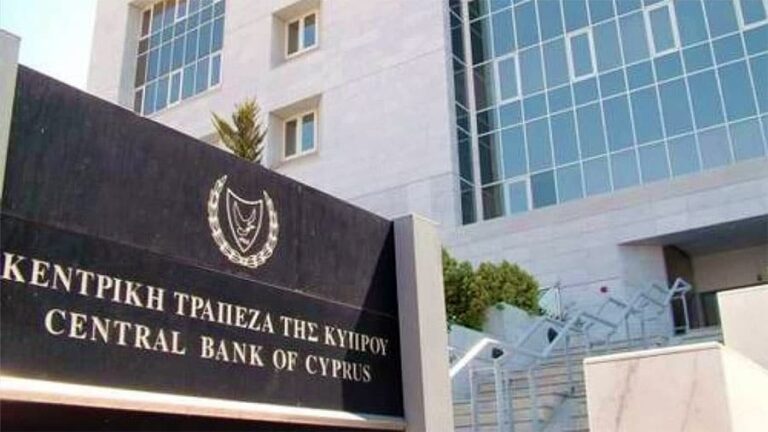
The Cyprus Central Bank recorded a slowdown both quarterly and annually in its Residential Property Price Index. The slowdown came from the house price index, while the apartment price index continued to grow.

Regarding the supply of housing supply, its availability for rent and sale has increased, particularly in the Limassol district. This increased housing supply, combined with the continued fall in construction costs on an annual basis, is expected to ease upward price pressures.

Changes in the Residential Property Price Index

On a quarterly basis, the index rose 1.6% in Q1 2024 compared to the 2.3% increase in the previous quarter. The rise of 1.6% resulted from a 0.8% rise in house prices and a 3.4% rise in apartment prices.

On an annual basis, the index rose 7.8% in Q1 2024, compared to an 8.3% increase in the fourth quarter of 2023.

The chart below is derived from the MS-Excel relevant quarterly data series published by the Central Bank of Cyprus.

Bank of Cyprus Residential Property Price Index Q1 2006 – Q1 2024 (Q1 2010 = 100)

Changes in house prices

On a quarterly basis, house prices in Q1 2024 recorded increases in Paphos and Famagusta of 3.1% and 4.4% respectively. However, the increases slowed in Nicosia, Limassol, and Larnaca where they recorded 0.2%, 1 .5%, and 2.2% respectively.

On an annual basis, house prices rose in Paphos and Famagusta by 11.2% and 11.8% respectively, while the increases slowed in Nicosia by 4%, in Limassol by 9.2%, and in Larnaca by 10.7%.

Changes in apartment prices

On a quarterly basis, the growth in apartment prices slowed in all districts with the exception of Famagusta, where they rose 10.7%. Apartment prices in Nicosia rose 0.8%, in Limassol 3.7%, in Larnaca 4.3%, and in Paphos 3.5%.

On an annual basis, apartments prices rose 21.4% in Paphos, 18.1% in Larnaca, 16.5% in both Limassol and Famagusta, and 5.1% in Nicosia.

About the residential property price Indices

The residential property price indices for Cyprus are constructed by the Central Bank of Cyprus’ Real Estate Unit (REU), which is part of the Economic Analysis and Research Department, in collaboration with the member banks of the Association of Cyprus Banks (Bank of Cyprus, Hellenic Bank, Alpha Bank, National Bank of Greece, the Cyprus Development Bank, Societe Generale, Astro Bank, Ancoria Bank and Eurobank).

The indices are based on property valuation data collected since 2006 by the contracted banks, which receive the relevant information from independent property surveyors in connection with mortgage transactions, such as housing loans, mortgage refinancing and mortgage collateral. The data, which are representative of the Cyprus property market, cover all the areas under the effective control of the Republic of Cyprus (Nicosia, Limassol, Larnaca, Paphos and Famagusta) and refer to residential properties (houses and apartments).

The base period for all the indices is the first quarter of 2010 (i.e. 2010Q1=100). The Central Bank of Cyprus will be publishing the relevant data series on a quarterly basis. Further information and explanations on the methodology used for the construction of the various price indices is available in the methodology report.

Frequently Asked Questions: Residential Property Price Index

Further Reading

Central Bank of Cyprus: House Price Index Q1 2024 (in Greek)

What lies ahead for the Cyprus real estate market?

1

In the near future, the Cyprus real estate market is expected to continue on its dynamic path, however, it will not be a bed of roses, and strategic planning will be crucial to navigate changes and challenges ahead.

In the next couple of years, we should expect to experience moderate growth as high interest rates stabilise demand and projects are set to come online to satisfy demand.

The Central Bank of Cyprus (CBC) has reported a deceleration in the House Price Index (HPI) for houses and apartments in the first quarter of 2024.

The index reveals that there is a normalisation in real estate demand, indicated by a marginal increase in the number of sales documents.

According to the quarterly data, the HPI for homes and apartments rose by 1.6% in the first quarter of 2024, down from a 2.3% increase in the previous quarter. This rise was driven by a 0.8% increase in house prices and a 3.4% increase in apartment prices, the CBC stated.

“Talking Real Estate” with Masis Der Parthogh and Kyriacos Kiliaris

Annually, house prices in Q1 2024 saw a 7.8% increase, compared to an 8.3% rise in Q4 2023. Apartment prices surged by 13.9%, while house prices increased by 4.7% during the same period.

Additionally, there’s an uptick in supply, with more homes available for rent and sale.

This trend is anticipated to continue to contribute to a significant slowdown in sales documents in the next couple of years.

Continued foreign investment, spurred by regional geopolitical tensions, will play a significant role, although the real estate market will face challenges from rising construction costs and regulatory changes.

The Cyprus Residency Programme, known as the “Golden Visa,” which has been a significant driver of this foreign investment, will continue to drive demand and prices.

Construction costs

Meanwhile, rising construction costs have further impacted new developments, contributing to the upward pressure on property prices. Cyprus remains an attractive destination for foreign investors, offering promising returns on investment.

These dynamics present distinct implications for various stakeholders.

Things are not expected to get easier for local buyers, as home ownership will become more challenging due to high property prices and elevated mortgage rates. In contrast,

For developers, the high demand, especially in areas like Limassol, Paphos and Larnaca, presents lucrative opportunities despite the challenge of rising construction costs.

Overall, the market conditions in Cyprus favour foreign investment and development, with the completion of new projects.

At the same time local buyers are being marginalised from the market, as high inflationary pressures, especially in the energy sector, continue to erode citizens’ disposable incomes, impacting their standard of living.

Cypriots are being further marginalised, as renting a flat or a house has become a nightmare, especially in Limassol and the capital Nicosia, where they have been outpriced.

The ever-increasing number of high-tech and fintech firms moving to Cyprus, while boosting the economy, has made things difficult for locals looking for a flat to rent.

Balanced

In the mid-term period, that is the next five years we should expect to see growth balance out even more, as construction projects, either already in the pipeline, or were initiated in this latest period of boom will be coming online.

According to the island’s statistical service Cystat, building permit issuance in Cyprus increased by 8.3% from January to April 2024 compared to the same period in the previous year.

Local authorities issued 2,545 permits in the first four months of 2024, up from 2,351 in the same period of the previous year.

The value of these permits rose by 8.9%, and the total area covered expanded by 15.7%. There was also a significant 24.2% increase in the number of planned residential units.

Expected improvement of financial stability along through a more effective management and eventually the further reduction of NPLs.

Long-term, that is in the next ten years to come, growth will stabilize, with local demand increasing, while foreign demand is expected to balance out.

Demographic changes carried out, coupled with regulatory changes, such as the change in VAT regulations, will bring about a shift in housing preferences.

Demand for residential properties will be mostly driven towards smaller, more affordable units.

At the same time, EU regulatory changes, will push the construction sector to put more emphasis on sustainable and eco-friendly properties.

Concluding, stakeholders in the island will need to recognise the writing on the wall, closely monitor trends and adopt a strategic plan to address challenges from rising costs, and regulatory changes.

About the author

Kyriacos Kiliaris is Chief Marketing Officer at Danos International Property Consultants & Valuers

Progress in the Paphos marina tender process

The deputy ministry of tourism and Deloitte Triton Paphos Marina Consortium signed on Monday a 30-month contract to provide consulting services over the tender process for the Paphos marina development.

The aim of the contract is to create a tender process that will lead to the selection of a strategic investor, which will develop the marina using the DBFOT method. (Design, Built, Finance, Operate, Transfer).

Deputy Minister Kostas Koumis said that the first step is being taken for the implementation of an important project for the district of Paphos, which is expected to upgrade the tourist product of the whole of the island.

According to the deputy ministry, the marina is slated to be built in the Potima area, in Kissonerga village. The investor will have the option to either build a marina with a capacity of 1,000 boats, which will include both residential and commercial development, or a combined development of a marina of 1,000 boats, with infrastructure to accommodate cruise ships, which will also include residential and commercial development.

The total duration of the contract is 30 months. The announcement of the project is expected to take place in nine to 12 months from the signing of the contract. The project is expected to be completed around the end of 2026.

Consultations with both public and private entities are going to take place in the coming months, as provided for in the contract, in order to finalise its parameters.

Koumis highlighted that all the projects lay the foundations for the further development of maritime tourism and yachting tourism in particular, a form of tourism characterised primarily by high-income visitors.

CM

Significant rise in apartment prices & rents

Ask Wire has published the Q2 2024 edition of the its Wire Index for property sale prices and rental values. (The Ask Wire Index covers all districts and main property types, with values from Q4 2009.)

Property prices

On an annual basis, values increased by 3.5% for apartments, 1.0% for offices, and 0.6% for holiday apartments.

Prices for houses and warehouses remained stable, while the values of holiday houses and commercial properties fell by 0.2% and 0.6% respectively.

Although property values remained stable a quarterly basis across all districts, there was a small fall of 0.1% in the value of houses.

Rental values

On an annual basis, rental values increased by 5.0% for apartments, 0.1% for houses, 0.8% for retail, 3.2% for offices, 2.5% for holiday apartments and 0.3% for holiday houses, and a fall of 1.3% in warehouse rents.

On a quarterly basis, rental values increased by 1.5% for apartments and decreased slightly by 0.2% for warehouses, and remained stable for the rest of the properties.

Pavlos Loizou, CEO of Ask Wire, commented that “persistent geopolitical risks and ongoing conflicts destabilize the construction supply chain, raising construction costs. Sustained high interest rates further impact the affordability and demand for residential properties, especially in the middle to lower market segments.

“These factors, coupled with regional unrest, continue to influence overseas real estate demand, accelerating price impacts.

“High mortgage rates are likely to persist, reducing the buying power of locals and stabilizing market prices as demand adjusts.

“Moving into the third quarter of 2024 and beyond, we anticipate a slowdown in property prices for opportunistic investments. The convergence of high interest rates, elevated construction costs, and regional unrest is expected to significantly affect market stability and shape long-term investment decisions.”

For a breakdown of movements in sale and rental values by district, visit https://ask-wire.com/insights/.

Property Type Prices Rents
Apartments 0.0% 1.5%
Houses -0.1% 0.0%
Commercial 0.0% 0.0%
Warehouses 0.0% -0.2%
Office spaces 0.0% 0.0%
Holiday apartments 0.0% 0.0%
Holiday houses 0.0% 0.0%
Source: Ask WiRE – Across Cyprus: Quarterly percentage change in property values (Q1 2024 with Q2 2024)
Property Type Prices Rents
Apartments 3.5% 5.0%
Houses 0.0% 0.1%
Commercial -0.6% 0.8%
Warehouses 0.0% -1.3%
Office spaces 1.0% 3.2%
Holiday apartments 0.6% 2.5%
Holiday houses -0.2% 0.3%
Source: Ask WiRE – Across Cyprus: Annual percentage change in property values (Q2 2023 with Q2 2024)

Further Reading

Ask Wire Index: Q2 2024 press release.

Impact of the recent court’s ruling on “Trapped Buyers” in Cyprus

In 2015, the Parliament in Cyprus introduced the Law 139(I)/2015, commonly known as the “Trapped Buyers Law” to address issues faced by property buyers who were unable to obtain title deeds for the properties they purchased, despite having fulfilled their contractual obligations.

This predicament arose from various complications, including developers’ failure to clear mortgages or other encumbrances on the land where the properties were constructed, leaving buyers in a difficult position.

Under Trapped Buyers Law, trapped buyers could submit an application to the Land Registry for the transfer of title deed, and if successful, they managed to “bypass” the developer and achieve the transfer of the title deeds for the properties the purchased into their names.

Recent developments

A recent ruling by the Court of Appeal in Cyprus, following an appeal by a banking institution against a lower Court decision, has significant implications for the trapped buyers. The Court found that the provisions of the Law, which allowed the transfer of title deeds to buyers despite the existence of mortgages, infringed the rights of creditors, i.e., the banks. This decision deems these provisions unconstitutional, emphasizing the banks’ rights to retain claims on mortgaged properties, even if they are sold to third parties.

Summary of the Case

The case involved a bank which had provided loans to a developing company, which had secured these loans with mortgages on land intended for future construction. A third-party buyer purchased an apartment to be built on the mortgaged land and later applied to the District Land Registry to transfer the title deed into their name, on the ground that they fulfilled their contractual obligations. The Land Registry’s initial decision in favour of the buyer was objected by the Bank. The District Land Registry rejected the Bank’s objection, citing that the necessary documentation supported the application for title transfer. However, the Bank proceeded with a legal action, seeking to nullify the Land Registry’s decision and declare the law unconstitutional.

The Bank initially challenged the decision of the Land Registry at the District Court, and then appealed to the Court of Appeal, arguing the unconstitutionality of the Law.

Ruling of the Court of Appeal

The Court of Appeal ruled that certain clauses of the Trapped Buyers Law are unconstitutional. This ruling recognizes the rights of banks to retain mortgages and their claims on properties even if they have been sold to third parties, i.e., the trapped buyers, despite the existence of legislation aimed at protecting buyers who have been trapped in these circumstances.

The decision of the Court of Appeal resulted in both the suspension of the ongoing reviews of the applications already submitted by trapped buyers with the District Land Registry Departments, and the halt in the acceptance of any new applications.

The ruling will not impact cases where title deeds have already been transferred to the trapped buyers, but it will affect the pending cases in District Courts, as it sets a precedent.

Consequences of the Court’s Ruling

  1. Heightened Legal Uncertainty: Trapped buyers now face increased uncertainty regarding their property ownership. The suspension of application reviews and acceptance of new applications by the Land Registry Departments of each District means that buyers who have fulfilled their contractual obligations may still be unable to obtain title deeds due to existing mortgages.
  2. Parliamentary Response: The Parliament will need to consider alternative legislative measures or amendments to address the constitutional issues highlighted by the Court. This could involve drafting new laws to ensure the balanced protection of trapped buyers while upholding the constitutional rights of creditors.
  3. Market Impact: The uncertainty and legal complications arising from this ruling could affect the real estate market in Cyprus. Potential buyers may be hesitant to invest in properties without clear title deed processes, potentially leading to a slowdown in the market.

Conclusion

The recent ruling of the Court of Appeal and the decision of the authorities to stop the review of the existing applications and the acceptance of any new applications, pose a significant setback for the protection of trapped buyers in Cyprus. Although the Government had enacted legislation to safeguard buyers, the Court of Appeal sided with the Bank.

The Parliament should act swiftly to address these constitutional issues and find a fair solution that protects both buyers and creditors.

Those who consider purchasing or selling a property in Cyprus are advised to seek independent legal advice and consider the specific circumstances of each case, to ensure an efficient and smooth process and to protect their financial interests..

Maria Kokoridi
Lawyer at Polycarpos Philippou & Associates LLC

Trapped buyers law ruled unconstitutional (Update)

The Appeals Court ruled unanimously on 20th June that the ‘Trapped Buyers’ law was unconstitutional.

The objective of the Trapped buyers law, which was introduced in 2015, was to a transfer property to its purchaser(s) who, although they have fulfilled their contractual obligations to the vendor, were unable to obtain its Title Deed.

Typically this situation occurred when a developer had mortgaged the land on which he was building or a memo or any other encumbrance has been registered on the property and the developer was unable or unwilling to repay this mortgage and any other debts – and a developer whose company is insolvent.

In these situations, the bank had ‘first call’ on the property. So if the developer failed to pay off the mortgage or went bankrupt, the bank would be able to sell/auction the property to recover the debt (even though the property’s purchaser had paid the developer in full for the property and may have been living in it for many years).

In 2015 the Appeals Court ruled that certain clauses of the 2015 law were unconstitutional, as they violate the right to property as well as the right to freely enter into a contract. This appeared to apply solely to cash buyers as the bank that loaned the money to the developer didn’t have any knowledge of the sale (as they would have done if the buyer needed a bank loan to buy the property.)

However, the latest decision by the Appeals Court rules the whole of the Trapped Buyers’ law unconstitutional.

Here’s the reply received from the Land Registry in reply to a question about a Trapped Buyers application:

“the Appeals Court decided in a Civil appeal that articles 44IH – 44KB of N139(I)2015, come into conflict with articles 23 and 26 of the Constitution, as a result of which the examination of the processing of any request of an Enclaved Buyer is terminated.”

It seems that the only option available to the government is to repeal and issue a revised Trapped Buyers law dealing with the mortgage issue.

Update 19 July. According to the Interior Minister, Title Deeds that have already been issued to buyers cannot be taken back. The Minister is already on the case and is expecting to put a revised law for consideration before parliament in Sept.

So far the trapped buyers law is suspended.

What a mess!

Advice to those considering buying a property in Cyprus

The only advice I can offer to those considering buying a property in Cyprus is:

Only buy property that has a clean Title Deed. I.e. a property that is not burdened by any debts or other encumbrances and does not suffer from any planning infringements. Do not buy off-plan.

Always use an independent lawyer when buying a property. I.e. a lawyer who has no connection whatsoever with the person selling the property or anyone else involved in the sale such as the estate agent.

(For British buyers, The UK Foreign Commonwealth and Development Office provides a list of English-speaking lawyers to help British nationals find the legal support they need. You can find the list at Find a lawyer in Cyprus.)

Further reading

The Appeal Court judgment may be found at Civil Appeal No.: 285/2018