Limassol set to have the tallest building in Cyprus

The Aura project, which is set to become the tallest building in Cyprus at 181.5 metres with 44 floors, has finally received approval for construction on Limassol’s seafront. However, the journey to this point has been marked by controversy and heated debates among municipal groups in Limassol.

Initially, there were serious disagreements among Limassol’s municipal councillors regarding the tower’s height and the suitability of the plot for such a large-scale development. These debates culminated in a recent procedural decision by the Limassol City Council, which essentially ratified the Council of Ministers’ decision to allow the unification of underground public spaces to facilitate the project.

The owners of the proposed site, located beyond a public road, requested the inclusion of additional land for higher building density. The Council of Ministers granted “the right to use the underground passage”, effectively unifying underground spaces for development purposes. Despite objections from groups like AKEL and EDEK, the majority of the Limassol City Council supported this decision.

The project had been under consideration since December 2019, receiving successive approvals despite opposition from Mayor Nicos Nicolaides and others. Compensatory measures secured by the municipality include the creation of a public square, park, cultural centre, and underground parking spaces.

Opponents like AKEL’s Michalis Sokratous and DISY’s Michalis Vasiliou raised concerns about the economic justification, environmental impact, and appropriateness of such a development. Sokratous criticized the accumulation of tall towers in the area, considering the economic conditions unsuitable. Vasiliou questioned the compatibility of the tower with the narrow plot, highlighting potential negative impacts.

Mayor Nicolaides, while initially opposing the project, acknowledged the democratic process and affirmed the legitimacy of the Council’s decision. Costas Yiallouros, head of the DISY municipal group, defended the majority’s support for the project, citing responsible decision-making during economic challenges and rigorous evaluation by relevant departments.

Designed by Foster + Partners, the Aura project aims to be a modern, ecological tower seamlessly integrated into Limassol’s urban fabric. The design prioritizes resident comfort and area improvement, with the tower rising above an urban park to maintain spatial and visual connections with the seafront while enhancing ventilation, lighting, and views.

Despite objections and controversies, the Aura project moves forward with the promise of reshaping Limassol’s skyline and offering modern amenities while stirring ongoing debates about urban development, economic priorities, and environmental concerns.

Measures to boost construction sector efficiency

Interior Minister Constantinos Ioannou addressed the 18th Real Estate, Land Development, Planning, and Construction Conference on Wednesday, outlining recent developments in the real estate sector, as well as the government’s priorities regarding urban development.

Ioannou commenced his speech by commending the initiative taken to organise the conference, providing professionals in the real estate and land development sector with a platform to scrutinise recent market trends.

“The construction sector is witnessing rapid changes, necessitating flexibility and adaptability from industry professionals and governmental bodies to foster development,” he said.

Highlighting the government’s commitment to improving public services and facilitating business operations in the construction sector, Ioannou discussed measures taken to streamline licensing and titling processes.

“The previous procedures for issuing development permits and property titles were time-consuming, causing significant delays detrimental to development,” he noted.

Moreover, Ioannou addressed the impending reform in local government, particularly the transfer of licensing authority to the five regional self-government organisations, effective July 1.

He also stressed the need for smooth consolidation to ensure faster processing and improved services under a unified authority.

In pursuit of goals to reduce delays and enhance service quality, Ioannou disclosed concrete actions taken by the government.

“A capacity plan identified the necessity to recruit 105 individuals to bolster existing personnel for expedited licensing,” he said.

He explained that “already, 87 individuals have been hired and deployed”, with plans for further recruitment and training aligning with the establishment of new licensing agencies.

Additionally, Ioannou outlined measures aimed at simplifying state urban and spatial planning, expecting improved development prospects.

“Through the establishment of flexible and expedited procedures, we anticipate eliminating significant delays observed in titling processes, thus reducing inconvenience for people,” he asserted.

Moreover, the minister noted that since October 2023, following consultations with the Cyprus Scientific and Technical Chamber (ETEK), a package of 22 measures was created, the implementation of which has already begun, with a completion deadline of July 1 of the current year.

In terms of the reforms aimed at streamlining the licensing process and improving efficiency in local governance, Ioannou said that the purpose is to modify existing procedures to reorganise the entire licensing process and introduce a more flexible framework to reduce the processing time of applications.

“Since last October, we have been implementing a series of measures to expedite the licensing process,” stated Ioannou.

“One of these measures includes prior consultation with relevant services such as the Fire Service and the Electricity Authority of Cyprus, among others, to ensure applications are submitted in an integrated manner,” he added.

Furthermore, Ioannou highlighted the importance of technological integration in improving efficiency, noting that “our ultimate goal is the full operation of the Ippodamos information system“.

“This system will allow for the electronic submission of all requirements, further reducing processing times,” Ioannou said.

The minister also said that since January 1, 2024, new requirements have been introduced to ensure the accuracy and completeness of applications.

“Prior securing and submission of an external demarcation certificate is now required with town planning applications,” explained Ioannou. “This measure aims to facilitate correct submissions based on on-site data and prevent delays in examination.”

Meanwhile, he said that efforts are underway to standardise procedures across different licensing authorities.

“We are preparing a unified manual in collaboration with the Interior Ministry and ETEK,” he said.

He added that “this manual will introduce common forms, procedures, and criteria to be uniformly applied in the examination of applications”.

In addition to procedural reforms, Ioannou stressed the importance of training the staff involved in the licensing process.

“A training plan has been developed for both ETEK members and regional self-government organisation staff,” he said, noting that “the aim is to ensure proper submission and examination of applications, thereby minimising delays in decision-making”.

One of the flagship measures being implemented, he explained, is the abolition of the obligation to obtain town planning and building permits for small developments.

“This legislative regulation will hold the architect or civil engineer responsible for the accuracy of project studies,” explained the minister. “Additionally, the role of building inspectors will be introduced to enhance on-site inspection.”

Ioannou continued by saying that “the urban and spatial planning of the state is changing, aiming to serve people directly and enhance development prospects”.

He said that alongside changes in the urban planning licensing process, “radical reforms in the process of issuing property titles have been initiated and implemented”.

He explained that a number of changes have been implemented or are in the process of being enacted, aiming to eliminate any unnecessary inconvenience.

These changes, he noted, seek to reduce the overall time for completing the application and issuing titles within three months, on average.

The minister said that since January 2, 2024, a new procedure for issuing property titles has been in place.

He explained that this involves updated practices for applications seeking to divide land parcels (both horizontally and vertically) to create new property titles for plots and other units.

Now, prior to submitting a division application, obtaining an external demarcation certificate and conducting survey work are prerequisites.

This, the minister continued, ensures that all necessary documents are included in a fully completed application, leading to quicker evaluations and guaranteeing that development stays within parcel boundaries.

Furthermore, to speed up the process, the role of privately responsible surveyors has been introduced. This allows people to choose their own surveyor and proceed with development on their own schedule.

As a result, Ioannou said, “wait times for surveying work from the Department of Lands and Surveys are reduced, enabling the department’s personnel to focus on other tasks”.

Ioannou also stressed the need for an increase in residential stock, with a focus on providing affordable housing options for those in need.

“Our new housing policy is centred around people and strengthens the welfare state to offer solutions to socioeconomically vulnerable citizens who struggle to meet their housing needs,” the minister stated.

Ioannou also highlighted the implementation of two key measures since December, namely the ‘Build to Rent‘ scheme and revised urban planning incentives.

Through the scheme, developers are granted additional free building coefficients of up to 45 per cent, provided they allocate all additional units for affordable rent for at least six years.

Coupled with tax incentives, this aims to add 800 residential units over the next three years, the minister noted.

Addressing any identified shortcomings, the minister announced revisions to urban planning incentives to boost housing production and availability.

This includes granting an additional building coefficient of up to 45 per cent, with 25 per cent of additional units to be sold at a price reflecting the average construction cost for affordable housing purposes.

Alternatively, developers utilising these incentives may opt for a financial contribution to the state, calculated at 50 per cent above the building coefficient value.

Ioannou also expressed appreciation for feedback from professional associations regarding the ‘Build to Rent’ scheme and urban planning incentives, highlighting their importance in refining policies.

“We view the construction sector as the engine driving development in our country, with a significant contribution to the economy and entrepreneurship,” Ioannou said.

“For this reason, we invest in our collaboration with all organised bodies in the construction sector, wanting to strengthen it further,” he added.

“I assure you of our political willingness to intervene and modify entrenched procedures and practices to ensure the interests of both citizens and professionals,” the minister concluded.


CM

Paphos and Limassol dominate top 10 property sales in February

Cypriot real estate market analytics firm Ask Wire on Tuesday released a report outlining the ten most expensive property transactions completed in February 2024, shedding light on the state of the local property market.

According to Ask Wire’s findings, the top 50 property transactions in February amounted to over €55 million in total value, with the most expensive sale being a plot of land in the Paphos district, valued at €4.8 million.

Moreover, the Paphos district accounted for five transactions in the top ten sales, followed by Limassol with four, and Nicosia with one.

These transactions, the company explained, amounted to €12.6 million in Paphos, €9.8 million in Limassol, and €2.75 million in Nicosia.

The top 50 transactions, ten per district, in February, totalled over €55 million, with 63.4 per cent of this value attributed to properties in the Paphos and Limassol districts combined.

Specifically, the top ten most expensive properties in the Paphos district were sold for €17.5 million, the top ten in Limassol were sold for €17.4 million, and in Nicosia for €9.4 million.

The ten properties with the lowest value sold in February were in the Larnaca district, at a total of €7 million, followed by the Famagusta district with €3.7 million.

Pavlos Loizou, Managing Director of Ask Wire, commented on the data, stating that “a comparison with January 2024 shows a significant increase in high-value property transactions in February”.

“Additionally, the Paphos district continues to demonstrate its strength in this market, even surpassing Limassol in total sales value, albeit largely due to the highest-priced sale island-wide, which occurred in this specific district,” he concluded.

A table of the value of the top ten most expensive property sales per district can be seen below, along with the most expensive transaction in each district. (Translated from Greek by the editor.)

Total value of the 10 most expensive sales/district
District Total sales value Percentage of total
Famagusta €3.7 million 6.7%
Larnaca €7 million 12.7%
Limassol €17.4 million 31.6%
Nicosia €9.4 million 17.1%
Paphos €17.5 million 31.8%
Total €55 million
Source: Department of Lands & Surveys: Ask Wire
Most expensive sale/district
Property Type Most expensive transaction Most expensive property type Percentage of the entire district
Famagusta €605 thousand House 16.5%
Larnaca €1.61 million Plot 23%
Limassol €2.97 million Plot with building 17%
Nicosia €2.75 million Mixed use property 29.2%
Paphos €4.8 million Plot 27.4%
Source: Department of Lands & Surveys: Ask Wire

CM

RES communities: photovoltaics in apartment buildings

In the second half of 2024, regulations for developing and operating “RES communities” is expected to come into force, according to the Minister of Energy George Papanastasiou.

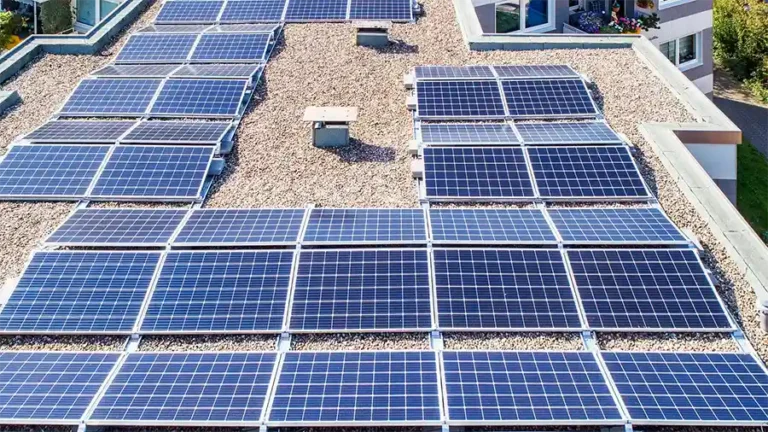
The regulations are expected to pave the way for the installation of photovoltaic systems in apartment buildings, which have shared roofs, as energy communities are the cooperatives that will allow apartment owners to produce energy, from clean or renewable sources.

In reply letter to the MP of Environmentalists Charalambos Theopeptou, Mr. Papanastasiou said that the Ministry of Energy has incorporated the provisions of the European Directive concerning renewable energy communities (RES communities) into the Promotion and Encouragement of the Use of Renewable Energy Sources Law of 2022.

He added that the regulations also ensure that RES communities have access to all appropriate energy markets and the remove any unjustified regulatory barriers to their development.

The Cyprus Energy Regulatory Authority (CERA) has published a tender for consulting services for the preparation of the necessary regulatory framework, which is expected to come into force in the second half of 2024.

Facilities and support for RES communities

Regarding Mr. Theopeptou’s query about the support measures for promoting RES communities, Mr. Papanastasiou advised that technical assistance from the European Commission has been available to the Ministry of Energy since January 2024. This assistance encompasses various aspects such as identifying best practices, addressing development obstacles, conducting public awareness campaigns, and devising financial incentives.

The minister expects initial deliverables by July 2024, with final recommendations aligning with the regulatory framework issued by CERA. He emphasized that further regulations may be considered from insights into the existing regulatory framework and the technical assistance.

Furthermore, the promotion of energy communities and RES communities has been integrated into the revised National Energy and Climate Plan for 2030, submitted to the European Commission in July.

In conjunction with a working group, the ministry will evaluate requests from municipalities and communities for developing renewable energy communities, aiming to propose pilot projects to promote them before the regulatory framework is introduced.

Photovoltaics for all progress

Approximately one in ten homes has a photovoltaic system and evaluating applications for the “Photovoltaics for All” project is expected to begin within days, according to Mr, Papanastasiou.

Speaking to StockWatch, Mr. Papanastasiou explained that “the pre-approvals of the applications, which have already exceeded 5000, will begin to be given within April”.

Two per cent of dwellings rented through Airbnb

An alarming 2% of dwellings in Cyprus are now listed on Airbnb, raising concerns regarding housing availability and regulatory oversight.

This data, exclusively focusing on Airbnb listings, reflects a broader trend of properties being repurposed as investment assets rather than addressing housing demands.

With a staggering 8,510 homes listed on Airbnb alone, estimates suggest that the total number of residences utilized for tourism purposes nationwide could reach up to 16,000.

This surge in short-term rental properties is underscored by the revelation that only approximately 6,700 accommodations are officially registered with the Deputy Ministry of Tourism.

The financial appeal of Airbnb is apparent, with earnings varying significantly by location. Analysis conducted by AirDNA reveals that in popular tourist destinations such as Famagusta and Paphos, annual earnings per accommodation can range from €13,000 to €63,000.

For example, in Ayia Napa and Protaras, average annual incomes experienced remarkable increases of 27% and 43% respectively compared to the previous year, reaching levels of up to €62,900.

Regulating Airbnb and other rentals

In January 2020 a new law came into force that requires those wishing to rent their property as self-catering accommodation and short-term holiday lets to obtain a license.

The new law 9(I)/2020 amended the current ‘Law on the Regulation of Establishment and Operation of Hotels and Tourist Accommodations of 2019 (N. 34(I)/2019)’ and is designed regulate the operation and licensing of self-catering accommodation in Cyprus.

Once obtained, the license is valid for three years and is automatically renewed on payment of the specified fee.

Those violating the law face a fine of €2,000 and repeat offenders €4,000.

Further information on licensing may be found at How to get a license to rent your property.

Cyprus must assess projects impacting Natura 2000 sites

Last Wednesday, the European Commission decided to send a reasoned opinion to Cyprus (INFR(2019)2303) for failing to properly assess projects that may have a significant impact on Natura 2000 sites as required by the Habitats Directive (Directive 92/43/EEC).

The Directive is one of Europe’s primary tools for protecting biodiversity. The Habitats Directive requires that plans and projects that are likely to have a significant impact on a Natura 2000 site undergo an assessment of their effects on the site before their authorisation.

Plans and projects can only be authorised, subject to certain exemptions, if they do not harm the integrity of the site.

The Commission sent a letter of formal notice to Cyprus in November 2019. Since then, the Commission has continued to receive complaints by citizens concerning the authorisation of new projects and has further monitored the situation.

The Commission has found that the structural and persistent practice of authorising economic activities in Natura 2000 sites without complying with the Habitats Directive continues.

Therefore, the Commission has decided to send a reasoned opinion to Cyprus, which now has two months to respond and take the necessary measures. Otherwise, the Commission may decide to refer the case to the Court of Justice of the European Union.

In it’s letter of formal notice to Cyprus in 2019, the European Commission noted that “it considers that it [Cyprus] has generally and persistently, since the date of accession to the EU, failed to ensure that its authorities subject plans or projects to appropriate assessment of their implications on the Natura 2000 sites and/or that it has agreed to plans or projects without having ascertained that they will not adversely affect the integrity of the Natura 2000 site concerned.”

Natura 2000 sites

Cyprus has a total of 125 protected areas, comprising 59 sites designated under national laws and 66 sites recognized as Natura 2000 sites. These Natura 2000 sites are designated under the Birds Directive, encompassing 33 Special Protection Areas, and the Habitats Directive, encompassing 40 Sites of Community Importance. Many sites are designated under both Directives.