Reduced VAT on new homes gets thumbs up from Europe

The European Commission has given the nod to the levying of the reduced 5 per cent VAT on first homes in Cyprus, the finance minister revealed on Monday.

Makis Keravnos made the remarks to journalists coming out of a courtesy meeting with the new leadership of the Chamber of Commerce and Industry.

He said the European Commission’s Directorate-General for Competition agreed to the reduced VAT scheme thanks to the “tireless efforts” of the finance ministry.

According to the minister, Brussels has taken on board the reduced VAT scheme exactly as it was passed by parliament last June.

The discounted VAT (the full rate is 19 per cent) applies to the first 130 square metres of a first home – for single dwellings and apartments alike – and up to a value of €350,000, provided that the total value of the transaction does not exceed €475,000 and that the total buildable area does not surpass 190 square metres.

Another clause provides that, for persons with a disability, the discounted VAT will apply to the first 190 square metres of the buildable area.

The law also provided for a transitional period, so that the new rules do not apply in cases where a town planning permit has been issued or where an application for a town planning permit has been filed within four months of the entry into force of the law.

On June 1 last year the European Commission had sent a reasoned opinion to Nicosia saying the latter did not correctly apply EU VAT rules for houses bought or built in Cyprus.

Cyprus had two months to address the matter. Unless it acted within the next two months, the commission could have decided to refer the case to the European Court of Justice.

In the worst-case scenario, Brussels could have imposed a fine for non-compliance.

It’s understood the infringement proceedings were first launched in the summer of 2021.

VAT directive 2017/541 allows EU member states to apply a lower rate for first homes as part of social policy. But the broad interpretation of the Cyprus provision apparently exceeded the social policy aim stated in the directive, for such an exemption.

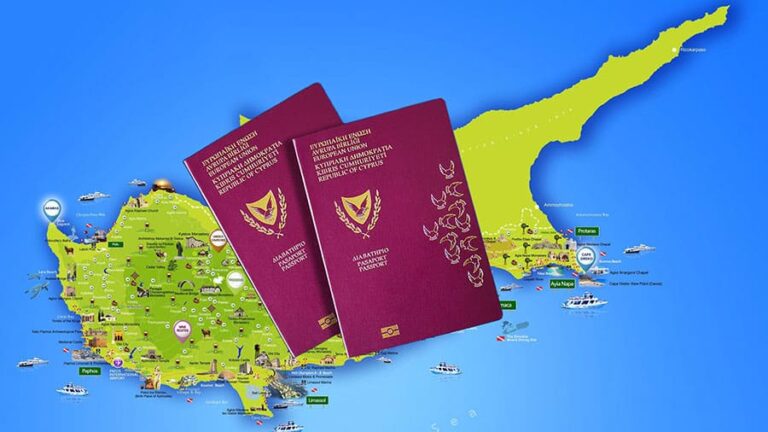
The Cypriot policy had also been flagged when it transpired that recipients of the now-defunct ‘golden passports’ scheme – who invested in property in exchange for citizenship – had likewise benefited from the lower VAT rate.

CM

Rent or buy? Tough choices as prices surge

0

Amid record-high property prices, a pressing question looms over thousands of citizens, particularly young couples: to rent or buy a home?

This challenge is exacerbated by a period in which loan interest rates remain elevated, and de-escalation trends are slow to unfold, mirroring the situation in the rental market, whether for apartments or houses.

Today, individuals aspiring to secure their house must carefully consider all factors before taking the leap. In contrast to previous years, the primary concern revolves around the interest rates tied to housing loans, despite the banking sector’s efforts to promote housing products with fixed interest rates spanning three, five, or ten years.

The objective is to ensure that clients commit to a stable instalment immune to fluctuations in the European Central Bank’s monetary policy.

The housing market, characterised by a new surge in both sales prices and rents for specific areas, prompts prospective buyers to ponder whether the monthly rent or a slightly higher sum could enable them to make the transition from tenant to property owner.

Instalments higher than average income

A current scenario involves a housing loan of €200,000, repayable over 20 years at an average purchase interest rate of 6%. The resultant monthly instalment stands at approximately €1,430.

This sum, by today’s standards, is far from trivial, especially when considering that it approaches the average income in Cyprus. Aspiring homeowners must also factor in the need to set aside a significant amount – around 30% – to finance a portion of the property’s value.

Essentially, with a budget of €200,000, interested parties may secure an approximately 100 sqm. used apartment. Research conducted by Phileleftheros on real estate sales websites reveals that a new 86 sqm. apartment in Lakatamia is listed at €165,000, while a 90 sqm. unit commands a price of €210,000.

Rent realities

Even in the face of today’s market dynamics, where rents in specific regions remain steady, the cost of renting an apartment in Nicosia, under 100 sqm., varies between €750 and €1,000, placing it below the monthly instalment for a housing loan. The location, apartment size, construction age, and city locale all play pivotal roles.

Meanwhile, in Limassol, apartments are both scarce and pricey. Extensive research on various real estate platforms indicates that rents for apartments under 100 sqm. in the city centre can reach €1,500 per month, escalating to €2,200 per month for units spanning 130 sqm.

In Larnaca, rental prices also hit the high notes, with a two-bedroom apartment in the city centre demanding €900 per month, while a three-bedroom residence could command up to €1,300 monthly.

Demand dropped

The Central Bank recently published a survey on bank lending, shedding light on the economic impact. The reduction in demand for housing loans during the third quarter of 2023 is attributed to soaring interest rates, dwindling consumer confidence, and weakened prospects within the housing market.

Statistical data on monetary policy reveals a significant 20% decrease in the provision of new housing loans during the first nine months of 2023. This downturn is primarily attributed to elevated interest rates and stringent lending criteria imposed by financial institutions.

© In-Cyprus.com

Cyprus raises bar further for citizenship

The Republic of Cyprus has introduced significant amendments to the law that govern naturalisation of foreign nationals based on years of residence in Cyprus.

These changes, published on December 19, 2023 in the Official Government Gazette, have immediate effect and have raised the bar further by including additional criteria and requirements that have to be met by applicants prior to being eligible to apply for Cypriot citizenship.

Criteria for Naturalisation

Under the provisions of the Amending Law 149(1)/2023 which amends the Civil Registry Law 0f 2002 (Law 141(I)/2002), a new article 111B has been added which outlines the criteria that have to be met for a foreign national to be eligible to apply to become a Cypriot citizen by virtue of naturalisation.

Foreign nationals may qualify for naturalisation provided that they are adults of full mental capacity and cumulatively meet the following criteria:

Residency in the Republic

Applicants need to prove that they have been legally and continuously residing in the Republic for the period of the immediately preceding 12 months from the date of submission of their application:

  1. Provided that, unlike the previous regime, periods of absence from the Republic not exceeding in total 90 days within the period provided for in this paragraph, this shall not interrupt the above-mentioned required 12-month period; and
  2. During the ten years immediately preceding this 12-month period, they were either lawfully resident in the Republic or were in the civil service of the Republic, or partly in the one and partly in the other, for periods which, taken together, are not less than seven years.

Good character

Applicants need to be of good character. It is understood that, elements tending to demonstrate good character include, but are not limited to, the following:

  1. They are law abiding and have not demonstrated by deeds or words a lack of conformity with the laws or contempt for the Republic of Cyprus;
  2. They have not acted in a manner that constitutes acceptance of the illegal administration/ occupancy in areas not controlled by the Republic of Cyprus, do not hold any office related thereto, and do not possess, have unlawfully entered, caused damage to, or interfered with immovable property located in such areas which belongs to another lawful owner;
  3. They have not in the course of any war conducted by the Republic engaged in any transaction and have not communicated with the enemy or engaged in the conduct of an operation or participated in any operation in such a manner as to have assisted the enemy;
  4. They have not been sentenced in the Republic or abroad to imprisonment for a serious criminal offence, which carries a penalty of five years or more in prison or for another serious offence or for an offence involving dishonour or immoral acts;
  5. They are not wanted at pan-European level by Europol or at international level by Interpol for a serious criminal offence, which constitutes an offence in the Republic and carries a penalty of imprisonment of five years or more or for another serious offence or for an offence which is dishonorable or involves moral deceit;
  6. They are not subject to a sanction regime and their name is not on a sanctions list;
  7. There is no criminal case pending against them in the Republic or abroad for an offence punishable by imprisonment of three years or more;
  8. They have not entered into the Republic of Cyprus through an illegal point of entry or entered or stayed in the Republic in violation of any prohibition, condition, restriction or reservation under the laws of the Republic in force from time to time; and,
  9. They do not constitute a danger to public order and public security of the Republic;

provided that, in the case of a conviction of a foreigner in another country, the conviction relates to an offence which also constitutes an offence in the Republic and which, as aforesaid, is punishable by imprisonment.

Language proficiency

Applicants need to have sufficient knowledge of the Greek language at the BI level, on the basis of the language proficiency certificates of that level specified in an Order of the Minister, which are issued upon submission of the foreigner to a written examination.

Knowledge of contemporary political and social reality

Applicants need to have sufficient knowledge of basic elements of the contemporary political and social reality of the Republic, the procedure and method of evaluation of which are determined by a three-member evaluation committee, which is composed of representatives of the Ministry of Interior, the Ministry of Education, Sports and Youth and the Ministry of Justice.

Suitable accommodation and financial stability

Applicants need to have suitable accommodation and stable and regular financial resources sufficient for the maintenance of the individuals and their dependent family members and for this purpose the following shall be taken into account:

  1. Income from full-time employment and/or income from other sources of a stable and lawful nature; and
  2. If they are or have been unemployed on a long-term basis during their stay in the Republic; and
  3. If, as a result of hardship or a difficult financial situation, they have received any financial assistance or financial benefit during their stay in the Republic.

Genuine Intention to reside in the Republic

Applicants need to have a genuine intention to reside in the Republic if granted Cypriot citizenship or to serve in the civil service of the Republic.

It is understood that residence for naturalisation purposes means the physical presence of the foreigner in the Republic, on the basis of the immigration rules applicable on a case-by-case basis.

It is further understood that, in calculating the period of residence, the period during which the foreigner has resided in the Republic, as an asylum seeker or as a holder of international protection order or as a holder of a student permit, shall not be taken into account.

Applicants need to meet all the above conditions and if one of conditions are not met this will lead to rejection of the application.

Furthermore, this law is implemented as of the day of its publication in the official gazette and has retrospective effect and, as a result, applications that are pending and are yet to be reviewed and which were submitted based on previous legislation will be reviewed in accordance with the Amending Law.

It is evident that the government has introduced additional safeguards in that the applicants must be physically present in Cyprus and thus have real ties to the island and speak the language and it has now become more demanding than before to meet the criteria needed in order to be eligible to become a Cypriot citizen.

Becoming a Cypriot citizen is a privilege and the Cypriot government will be granting this right to those who they feel meet all criteria, have an impeccable record, speak the language and have real ties to the island.

The content of this article is valid as at of the date of its first publication.  It is intended to provide a general guide to the subject matter and does not constitute legal advice.

For further information contact Esme Palas, Barrister at Law and Partner at Michael Kyprianou Law Firm at [email protected], + 357 26930800 or Whatsapp +357 99452516.

MP exposes dubious practices in land allocation process

AKEL MP Christos Christophides has called out the Department of Lands and Surveys for allegedly providing preferential information to entrepreneurs regarding unallocated state-owned land parcels.

Christophides claims that this information is then exploited by interested parties who submit applications for land use, ultimately leading to the approval of these applications by the Cabinet.

Speaking before the House Internal Affairs Committee, Christophides discussed a proposal from AKEL that aims to address the lack of transparency in the current land allocation process. The proposal suggests introducing competitive tenders for the allocation of state-owned land to the highest bidder.

Highlighting the flaws in the existing system, Christophides stated, “Based on the current procedure, someone somehow identifies state land in the land registry. After marking it, they submit an application, and the Ministerial Council determines a rent – if a decision for allocation is made – which, as a rule, is much lower than the market value, and they take possession of the land.”

The proposed law received support from representatives of state services and the Audit Office, which had previously raised concerns about transparency. A representative from the Law Office emphasised the need for careful consideration of the proposed regulations before presenting them to Parliament for approval.

Following the parliamentary committee’s discussion on the proposed law, Christophides expressed his concerns, stating, “We have heard from representatives of the Ministry of Commerce that we also have various phenomena. Many have taken multiple land parcels to exclude their competitors, and the projects are not progressing, such as for renewable energy sources.”

In light of these revelations, Christophides urged for a comprehensive overhaul of the current system, noting the detrimental impact on state revenue and society as a whole. He concluded, “In this situation, which deprives the state of revenue and, by extension, society, promotes opacity and, consequently, corruption, we need to put an end to it and regulate these issues for the benefit of society through transparent processes.”

© In-Cyprus.com

British expats get ‘Votes for Life’

Back in 2017, the Conservative and Unionist Party Manifesto ‘Forward, Together: Our Plan for a Stronger Britain and a Prosperous Future’ stated “We will legislate for votes for life for British overseas electors.”

Six years later that manifesto pledge has finally been honoured enabling an estimated three million Britons living overseas to vote in UK general elections removing the previous 15-year time limit.

The following press release was issued by the Electoral Commission on 15th January:

All abroad! More Brits overseas can now register to vote

British citizens living abroad are now eligible to register to vote in UK general elections, regardless of how long they’ve been living outside the UK. A new law, coming into effect tomorrow, removes the previous 15-year time limit.

The Electoral Commission is calling on voters in the UK to help spread the word and tell friends and family living abroad to check if they are eligible. The Commission is working with partner organisations to inform eligible voters around the world.

People that have previously lived in or been registered to vote in the UK now have the right to vote in UK parliament elections. They can register online at gov.uk/registertovote and will need to confirm their personal information every three years. Under electoral law, those on an electoral register are also permitted to donate to political parties and campaigners.

Craig Westwood, Director of Communications, said:

“This change gives more British citizens living abroad the opportunity to participate in UK Parliament elections, and to contribute to the funding of political parties and campaigns. 

“We know there are eligible voters in every corner of the world so we’re calling on those with friends and family abroad to help spread the news. With a general election likely this year, it is important this newly enfranchised group of voters are aware of the change and can take action. Registering to vote can be done online in just five minutes.”

The change is part of the UK Government’s Election Act, passed in 2022. The government estimates that the abolishment of the 15-year rule could mean three million overseas British citizens could be eligible to vote.

British citizens living abroad will need to provide details of the address and time they were last registered or resident in the UK. Local authorities, which are responsible for the electoral roll in their area, must be able to verify an applicant’s identity and past connection to the area.

More information is available on the Electoral Commission website. Voters living overseas can find contact details for the relevant local council by entering the postcode of the last place they lived in the UK, using the Commission’s postcode lookup tool.

Resources for raising awareness are available on the Commission website.

Thirty-two witnesses to testify in golden passports case

The third defendant in the golden passports trial pleaded not guilty on Thursday during a hearing at Nicosia criminal court, while a new state prosecutor has been assigned to the case.

Antonis Antoniou, senior member of staff at the Giovanis Group told the court he was not guilty of the charges he faces, linked to the findings of the Nicolatos report over the golden passports.

The investigation was prompted by a hard-hitting documentary by Al Jazeera which embroiled former House president Demetris Syllouris and former Akel MP Christakis Giovanis. They were caught on camera agreeing to give an actor playing a Chinese investor nationality even though he was supposedly a criminal.

Syllouris and Giovanis both pleaded not guilty over their charges during the last hearing.

Prosecution has also filed a request for more witness material from the defence. The next hearing will be on February 15, which is also slated to give the new state prosecutor Charis Karaolidou time to prepare.

Defence appeals to AG for more information

Witnesses will also begin to take the stand on June 10, with 32 individuals expected to testify.

Antoniou is now being represented by lawyer Andreas Pittadjis – who was initially also on trial with the other three defendants over the golden passports.

During Thursday’s hearing, Pittadjis told the court he had submitted a request to the attorney-general, for the minutes of the witness statements during the Nicolatos report investigation.

He specified he included a letter from the interior minister to the auditor-general, with the former saying the state was not bound by the charges of the report’s findings.

Karaolidou confirmed the request was received, saying that at first glance, there was a positive approach towards sharing some documents and the matter will be discussed during the next hearing.

Court said witnesses would be taking the stand on an almost daily basis starting in June and may even extend this to July.