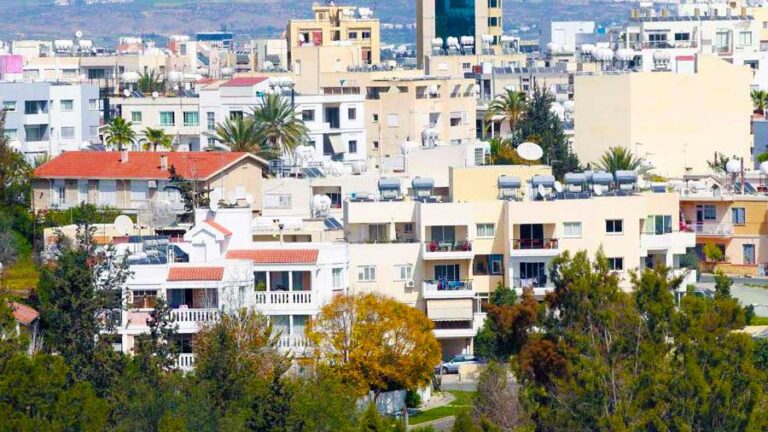
Price drops for high-end homes predicted

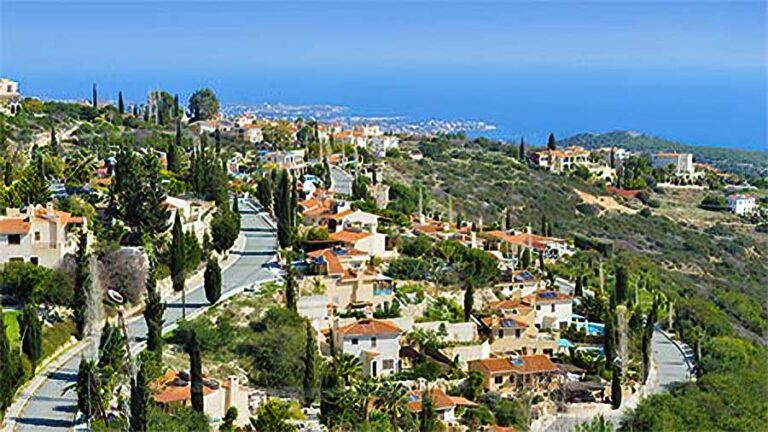
In the latest property data, the real estate landscape in Cyprus paints a picture of continuous growth, particularly in the apartment sector. However, a closer look reveals a potential plateau in the high-end market, specifically for properties priced at €500,000 and above.

During the third quarter of 2023, house prices in Cyprus maintained an upward trajectory, notably for apartments. Valuers anticipate a shift in the upcoming six months, foreseeing a decrease in the prices of predominantly expensive properties. Pavlos Loizou, CEO of Ask Wire, sheds light on this evolving scenario in an exclusive conversation with “K.”

Loizou highlights a dynamic property market in Limassol province, citing a surge in transactions for apartments across various price ranges until mid-2022. However, he notes a subsequent fluctuation with “peaks and troughs” from mid-2022 onwards. The most significant impact is observed in higher-priced apartments, witnessing the most substantial relative decline.

Analysing transaction data from January 2021 to September 2023, Loizou emphasizes changing consumer preferences. Initially, apartments below €300,000 dominated the market, commanding around 80% of transactions. Over time, this segment’s share decreased to 60%, while the price category from €300,000 to €500,000 experienced significant growth, doubling its market share.

A general upward trend in sales persisted until mid-2022, followed by fluctuations and a marked decrease in volume across the market from June 2023. Notably, higher-priced apartments bore the brunt of this decline.

Loizou suggests a shift in the composition of transactions, with properties valued higher than €300,000 constituting about 80% of the volume in January 2021. By September 2023, this figure decreased to approximately 60%. Surprisingly, the most substantial increase in transaction volume occurred in properties worth €300,000 to €500,000, rising from 10% of transactions in January 2021 to constituting 25% of the total transaction volume.

Discussing property prices, Loizou anticipates reductions for properties above €500,000 in the next six months. When asked about reductions in more “normal” property prices, he suggests “keeping a smaller basket,” indicating possible small decreases, around 3%, for these properties. Loizou concludes by noting that prices of expensive properties are likely to fall due to increased supply in this category and a decrease in foreign interest.

As the real estate market in Cyprus undergoes these shifts, the coming months will be crucial in understanding the evolving dynamics, especially for high-end properties.

First published in Knews, the English edition of Kathimerini Cyprus

Nightmare for new home owners as rates rise

Owning a home is fast becoming a nightmare for investors in Cyprus, especially young couples yearning for their first home, as the interest rate on housing loans has surged past the 5% mark, setting a decade-long record, according to Central Bank of Cyprus data.

Despite the European Central Bank applying the brakes since September 2023, fixing the rate for loans for household purchase at 4.05%, Cypriot banks persist in raising interest rates, putting additional strain on households.

Worldwide inflation accelerated higher much faster than anyone expected last year and it could well overshoot on the way down too, forcing central banks to cut rates much faster than currently expected.

“Not only are markets now fully pricing 150 basis points of cuts at the Federal Reserve this year, with other central banks to follow, they’re also pricing in a greater than 50% chance of 175, with the first heavily backed to come in March,” said Craig Erlam, Senior Market Analyst, UK & EMEA at OANDA.

Central Bank figures reveal that the average interest rate on new home loans in Cyprus has reached 5.04%, compared to 2.15% in January 2022.

In essence, this marks a 134.4% increase, or 289 basis points, over two years, translating to a financial setback of two and a half average salaries for households aspiring to secure their dream homes through Cypriot banks.

With 56% of workers earning gross incomes below €1,750 per month, the real impact of this increase becomes clear.

For a loan of €150,000, the rise leads to additional monthly charges of €361.25 or €4,335 annually, equating to two and a half monthly salaries for most employees.

Existing borrowers with non-fixed interest rate loans also face a significant burden.

For a €150,000 loan with a repayment schedule exceeding five years, the interest rate has risen to 4.36%, up from 2.04% in January 2022, marking a 113.7% increase or 232 basis points.

Extra charges

This results in extra charges of €290 per month or €3,480 per year.

Furthermore, interest rates on loans with repayment schedules between 1-5 years have risen by 142.2%, while for loans with a repayment schedule of less than one year, the increase is 102.6%.

Perhaps, the high cost of borrowing is the reason behind the steady decline in household loans in Cyprus, retreating from €12.11 billion in the third quarter of 2022 to €11.13 billion in Q3 2023, according to Sapienta Economics.

Meanwhile, property prices in Cyprus are reverting to pre-2013 levels, having experienced a significant surge in recent years.

Central Bank data indicates that the housing price index for the third quarter of 2023 stands at 91.4 points, approaching the 2012 level of 91.2, after dipping to 89.4 in the second quarter of 2023.

This signifies a return to levels seen 11 years ago, although the highest point was recorded in the third quarter of 2008 at 107.3 points.

The property price index has recovered a considerable portion of the losses incurred during the fiscal and banking crisis, now exceeding the 2006 low point by 24.5%.

The economic crisis post-2013 led to reductions in property prices, with the housing price index dropping to 77.8 points in 2014 and further decreasing to 74.4 and 73.4, respectively, in 2013 and 2014.

The stabilisation of new home supply, improvements in income categories, and increased demand from abroad have contributed to a significant price increase, fuelling a revival in construction activity.

However, the sharp rise in new property prices is largely attributed to the revaluation of construction raw materials, raising construction costs in conjunction with heightened demand from both domestic and foreign buyers.

Construction boom driven by demand for apartments

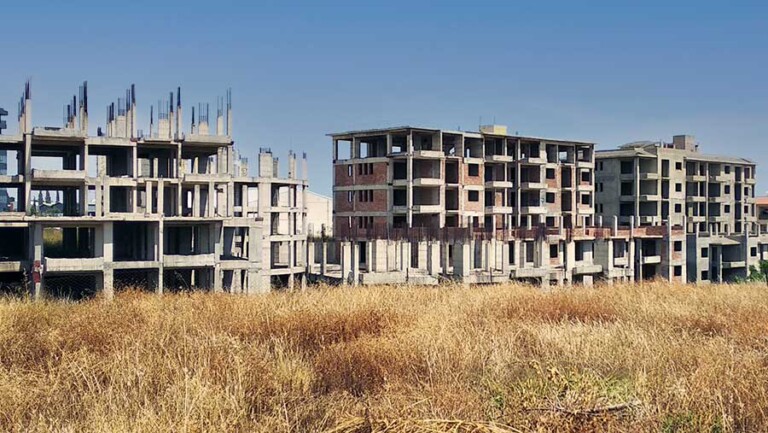
The construction sector in Cyprus is being driven by a rising demand for apartments from both local and international buyers, according to developers who are adapting to this evolving landscape.

Stelios Gavriel, the Secretary of the Federation of Cyprus Building Contractors Associations (OSEOK), told the Financial Mirror that developers are taking more and more residential building construction projects, as demand for apartments takes off.

“A growing number of people are opting for an apartment, breaking with Cypriot tradition of owning a house on the ground. Nicosia had the biggest demand for apartments, as Nicosians were more likely to opt for an apartment than their fellow citizens in coastal towns,” said Gavriel.

However, buyers, even those in areas were traditionally people opted for a house, are now turning to apartments.

“This is directly linked to recent developments which have pushed up construction costs, and the hike of interest rates. We have seen a turn to apartments across the island,” noted OSEOK’s secretary.

Gavriel said that developers expect the trend in favour of apartments to pick up pace in 2024 and the following years, noting that this is also inferred from recent surveys released by the Statistical Service Cystat.

Cyprus has seen a 6.9% reduction in the number of building permits issued during the first ten months of 2023, compared to the same period the previous year, according to a report by the statistical service.

“However, this unexpected trend, emerges amidst concurrent growth in the total value and area covered by these permits, as well as the number of residential units planned for construction,” he pointed out.

During the period January to October 2023, a total of 5,906 building permits were issued compared to 6,347 in the corresponding period of the previous year, a decrease of 6.9%. The total value of these permits increased by 17% and the total area by 3.6%.

The number of dwelling units recorded an overall increase of 10.3%, however, permits for detached and semidetached houses have dropped by 9.6% and 4%, respectively.

The number of permits issued for non-residential buildings has dropped by 14.2%, while permits for civil engineering projects has decreased by 19%.

On an annual basis, all cities show a decrease in the area of licensed projects, except for Nicosia and Limassol.

Production up 8%

At the same time, Cystat’s Index for Production in Construction during the third quarter of 2023 reached 186,29 units (base year2015=100,00), recording an increase of 7.9% over the third quarter of 2022.

By type of project, an increase of 9.4% was observed for buildings and a marginal decrease of 0.3% for civil engineering projects in the third quarter of 2023, compared to the same quarter of 2022.

“These two surveys give us a clear picture. Although the number of overall building permits is dropping, the area and value of projects are increasing, exactly because of demand for new apartments,” he explained.

Meanwhile, a significant decrease was observed in 2023 in the granting of new housing loans, amounting to approximately 20% on an annual basis, according to data released by the Central Bank.

Specifically, for the period January to September 2023, new loans amounted to EUR 746.2 million compared to EUR 932.4 million during the same period in 2022.

The upward trend in property prices continues.

According to the Central Bank, the reduction in demand for new housing loans was expected, following the unified restrictive monetary policy of the ECB, which has led to an increase in housing loan interest rates, thereby raising the borrowing costs for existing and potential new customers of domestic financial institutions.

Based on the latest monetary and financial statistics from the Central Bank, the average interest rate for housing loans reached 4.4% in the third quarter of 2023, compared to 4.3% in the second quarter of 2023 and 2.7% during the corresponding period in 2022.

“It is true that Cypriots are being priced out, as the influx of Ukrainian and Israelis has pushed housing prices upwards, with the cost of borrowing is also hiking. However, we are confident that a set of incentives for the construction of affordable housing units, will be evening things out a bit,” added Gavriel.

At the end of 2023, the Council of Ministers gave the green light to new construction incentives proposed by the Interior Ministry.

The objective is to make approximately 800 residential units available in the market at an affordable price for both purchase and rental within the next three years.

As part of a strategic initiative to stimulate affordable housing development, the government has introduced a ground-breaking housing policy.

Landowners with a building block exceeding 1,000 sq.m. and a building coefficient above 100% now have access to a lucrative 45% additional building factor. In contrast, plots below 1,000 sq.m. will see a 25% increase in property development.

These incentives are specifically tailored for developers, with the scheme aiming to promote affordable housing through additional building coefficient.

Out of the 45% boost, 25% is earmarked for affordable home construction, while the remaining 20% is left to the discretion of the developer.

FM apartments

House prices and rents increased between Q2 and Q3 2023

Eurostat reports that in the third quarter of 2023, both house prices and rents in the EU increased by 0.8% compared with the second quarter of 2023.

Compared with the third quarter of 2022, house prices in the EU decreased by -1.0%, while rents increased by 3.0%.

This information comes from data on rents and house prices published by Eurostat today. This article presents a handful of findings from the more detailed Statistics Explained article on housing price statistics.

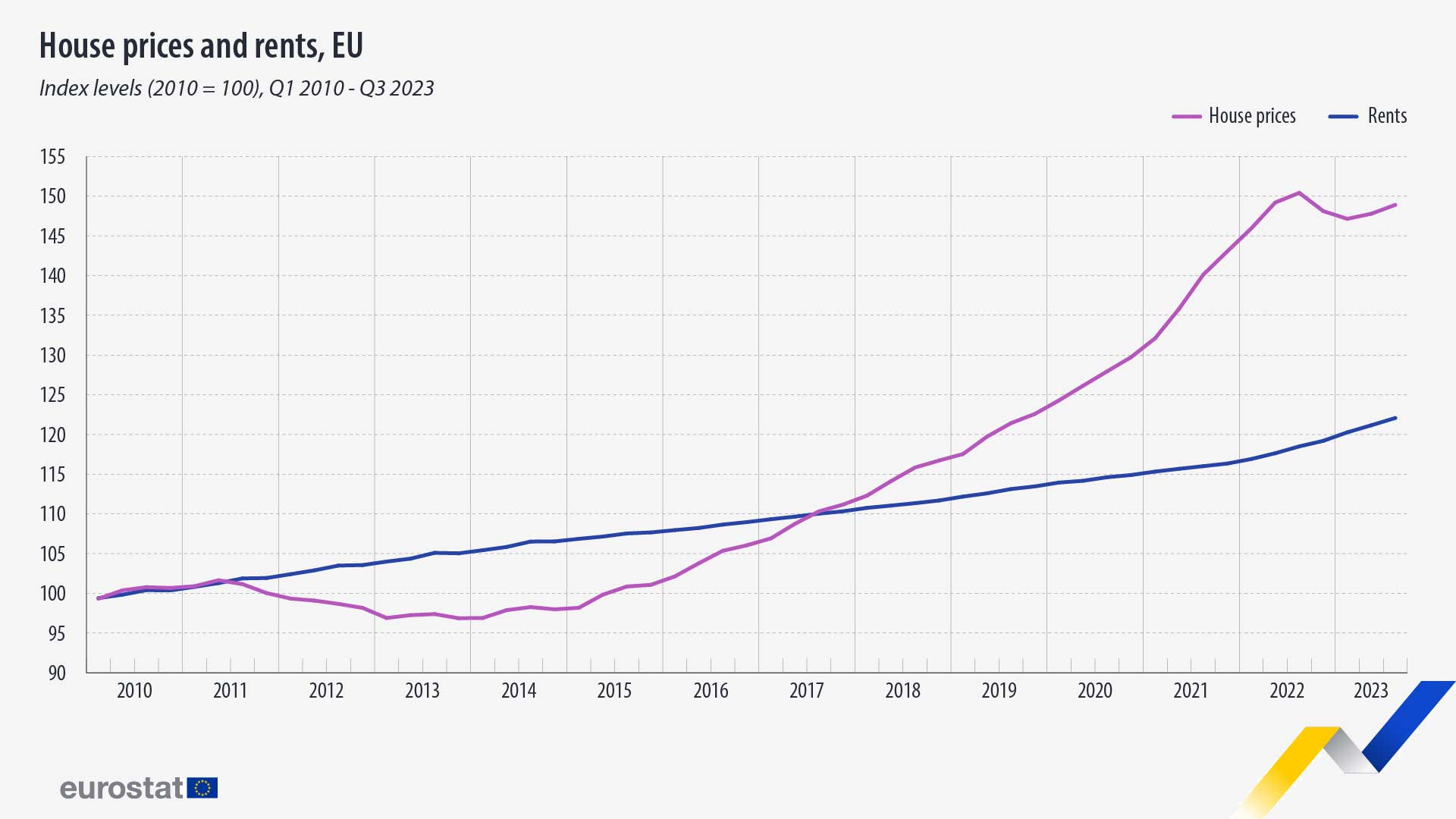
House prices and rents in the EU followed a comparable increasing path between 2010 and the second quarter of 2011. After this quarter, house prices and rents evolved differently. While rents increased steadily throughout this period up to the second quarter of 2023, house prices fluctuated considerably.

House prices and rents, EU

After a sharp decline between the second quarter of 2011 and the first quarter of 2013, house prices remained more or less stable between 2013 and 2014. A rapid rise followed in early 2015, and house prices increased faster than rents until the third quarter of 2022. Since the fourth quarter of 2022, house prices fell for two quarters in a row before rising again in the second and third quarter of 2023.

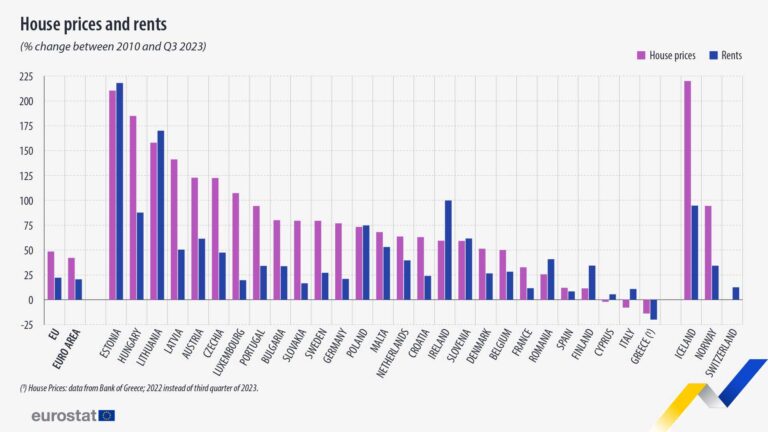
House prices more than doubled in Estonia, Hungary, Lithuania, Latvia, Austria, Czechia, and Luxembourg

Between 2010 and the third quarter of 2023, house prices increased by 48% and rents by 22%.

When comparing the third quarter of 2023 with 2010, house prices increased more than rents in 18 out of the 27 EU countries.

Over this period, house prices more than tripled in Estonia (+210%) and more than doubled in Hungary (+185%), Lithuania (+158%), Latvia (+141%), Austria (+123%), Czechia (+122%) and Luxembourg (+107%).

Decreases were observed in Greece (-14%, see methodological notes), Italy (-8%) and Cyprus (-2%).

Rents increased in 26 EU countries with the highest rises in Estonia (+218%), Lithuania (+170%) and Ireland (+100%). The only decrease in rent prices was recorded in Greece (-20%).

BoC Cyprus residential property price index third quarter 2023

Residential property prices in Cyprus continued their upward trend in the third quarter of 2023, with notable increases in apartment prices, according to the Central Bank of Cyprus (CBC).

The CBC’s Residential Property Price Index (RPPI) reported increases on a year-on-year and a quarterly basis compared to the previous quarters. According to official figures from the Department of Lands and Surveys, property transactions during the third quarter of 2023 also recorded a rise on an annual basis.

The heightened demand is attributed to domestic buyers, including those interested in buy-to-let investments, and foreign investors, particularly within the framework of the headquartering policy and other investments.

Regarding construction activity, there has been a decrease in the number of residential buildings for which building permits were issued during the period from January to August 2023 compared to the same period in 2022. This ongoing trend appears to be linked to the continued increase in construction and loan costs.

Overall, the increased demand, coupled with the limited supply of new properties in the market, appears to be the most significant factor contributing to the RPPI’s rise during the third quarter of 2023, as in previous quarters.

Changes in the Residential Property Price Index

The RPPI recorded an increase of 2.2% during the third quarter of 2023, compared to a 1.5% increase in the previous quarter. The third-quarter increase in the RPPI in 2023 is due to a 1.4% rise in house prices and a 3.6% rise in apartment prices.

On an annual basis, there was a 7.6% increase in property prices during the third quarter of 2023, compared to a 7.4% rise in the second quarter of the same year. Apartment prices recorded an 11.5% rise, while house prices rose 4.9%.

Higher residential property prices in Limassol and Larnaca

In the third quarter of 2023, residential property prices rose in all districts for the third consecutive quarter. Nicosia recorded an increase of 0.7%, Limassol 2.9%, Larnaca 2.8%, Paphos 2.4%, and Famagusta 2.8%.

A year-on-year increase was recorded in all districts. In Nicosia, residential property prices rose by 3.9%, in Limassol by 10.1%, in Larnaca by 10.5%, in Paphos by 7.6%, and in Famagusta by 6.4%.

The relatively high rate of increase in residential property prices in coastal districts appears to be due to demand from foreign buyers and investors, especially within the headquartering policy.

House prices

On a quarterly basis, house prices rose in all districts. Nicosia recorded a 0.3% increase, while Limassol, Larnaca, Paphos and Famagusta recorded increases of 1.4%, 2.5%, 1.1%, and 4.3% respectively.

On an annual basis, house prices also increased in all districts, with prices in Nicosia, Limassol, Larnaca, Paphos, and Famagusta rising by 3.8%, 5.1%, 8.3%, 3.1%, and 9.5%, respectively.

Apartment prices

On a quarterly basis, apartment prices rose in all districts with the exception of Famagusta, where they fell by 1.7%. Nicosia recorded a 1.5% increase, Limassol 4.0%, Larnaca 2.9%, and Paphos 5.2%.

A year-on-year increase was recorded in all districts with the exception of Famagusta, where they fell by 1.8%. Nicosia, Limassol, Larnaca, and Paphos recorded increases of 4.6%, 4.9%, 13.4%, and 18.5% respectively compared to the same quarter in 2022.

About the residential property price Indices

The residential property price indices for Cyprus are constructed by the Central Bank of Cyprus’ Real Estate Unit (REU), which is part of the Economic Analysis and Research Department, in collaboration with the member banks of the Association of Cyprus Banks (Bank of Cyprus, Hellenic Bank, Alpha Bank, National Bank of Greece, the Cyprus Development Bank, Societe Generale, Astro Bank, Ancoria Bank and Eurobank).

The indices are based on property valuation data collected since 2006 by the contracted banks, which receive the relevant information from independent property surveyors in connection with mortgage transactions, such as housing loans, mortgage refinancing and mortgage collateral. The data, which are representative of the Cyprus property market, cover all the areas under the effective control of the Republic of Cyprus (Nicosia, Limassol, Larnaca, Paphos and Famagusta) and refer to residential properties (houses and apartments).

The base period for all the indices is the first quarter of 2010 (i.e. 2010Q1=100). The Central Bank of Cyprus will be publishing the relevant data series on a quarterly basis. Further information and explanations on the methodology used for the construction of the various price indices is available in the methodology report.

Frequently Asked Questions: Residential Property Price Index

Further Reading

Central Bank of Cyprus: House Price Index Q3 2023 (English translation by Google)

House price index up 0.6% year-on-year

The Cyprus House Price Index (HPI) rose by 0.6 per cent on an annual basis in the third quarter of 2023 according to preliminary figures in a press release issued by the island’s Statistical Service (CYSTAT).

Compared to the second quarter of 2023, the HPI rose by 0.4 per cent in the third quarter.

The base year for the HPI is 2015=100 and the Index now stands at 110.65.

According to the CYSTAT, the Cyprus House Price Index (HPI) “is a quarterly index which measures the change in the average prices of residential dwellings. It captures all types of residential properties, both new and existing. The land component of the residential property is included.

“The data source used for both, indices and weights, is the Department of Lands and Surveys, Ministry of Interior. The data cover all areas which are under the control of the government of the Republic of Cyprus.

“Data are marked as provisional and are revised as soon as new information is available.”

In its press release, CYSTAT advised that “the fluctuation of the Index for the period between the third quarter of 2022 and the third quarter of 2023 as well as the quarterly and annual percentage changes are presented in the following table.”

Year Quarter House Price Index
(2015=100)
Quarterly Change
(Compared to the
previous quarter) (%)
Annual Change
(Compared to the same quarter
of the previous year) (%)
2010 Q1 114.37 -1.6 -6.6
Q2 112.79 -1.4 -6.9
Q3 112.39 -0.4 -5.7
Q4 112.05 -0.3 -3.6
2011 Q1 111.56 -0.4 -2.5
Q2 113.99 2.2 1.1
Q3 111.22 -2.4 -1.0
Q4 107.60 -3.2 -4.0
2012 Q1 106.40 -1.1 -4.6
Q2 106.02 -0.4 -7.0
Q3 110.14 3.9 -1.0
Q4 108.22 -1.7 0.6
2013 Q1 104.54 -3.4 -1.7
Q2 104.77 0.2 -1.2
Q3 103.05 -4.7 -9.3
Q4 100.78 0.9 -6.9
2014 Q1 98.08 -2.7 -6.2
Q2 103.55 5.6 -1.2
Q3 102.70 -0.8 2.8
Q4 101.56 -1.1 0.8
2015 Q1 97.52b
Q2 100.59 3.1
Q3 102.49 1.9
Q4 99.40 -3.0
2016 Q1 97.29 -2.1 -0.2
Q2 99.18 1.9 -1.4
Q3 101.87 2.7 -0.6
Q4 102.72 0.8 3.3
2017 Q1 99.64 -3.0 2.4
Q2 102.74 3.1 3.6
Q3 102.46 -0.3 0.6
Q4 105.24 2.7 2.4
2018 Q1 103.10 -2.0 3.5
Q2 104.01 0.9 1.2
Q3 103.12 -0.9 0.6
Q4 107.04 3.8 1.7
2019 Q1 107.93 0.8 4.7
Q2 112.73 4.5 8.4
Q3 105.64 -6.3 2.4
Q4 106.51 0.8 -0.5
2020 Q1 109.13 2.5 1.1
Q2 109.48 0.3 -2.9
Q3 104.21 -4.8 -1.3
Q4 109.10 4.7 2.4
2021 Q1 102.82 -5.8 -5.8
Q2 104.07 1.2 -4.9
Q3 106.55 2.4 2.2
Q4 103.28 -3.1 -5.3
2022 Q1 103.95 0.5 1.1
Q2 106.35 2.3 2.0
Q3 109.95 3.4 2.9
Q4 108.27 -1.5 4.7
2023 Q1 110.31 1.9 6.1
Q2 110.15 -0.1 3.6
Q3 110.65 0.4 0.6

b There is a break in the series in the first quarter of 2015 due to redefinition of the model variables.