EU sceptical over mortgage-to-rent scheme

Brussels may not be keen on greenlighting the Mortgage-to-Rent scheme, the latest lifeline to defaulted borrowers, despite authorities declaring it is ready to go.

News site Stockwatch reported the scheme has been lingering in EU hallways since last summer when the Anastasiades administration submitted it for review.

Quoting sources close to the Directorate-General for Competition (GDA) of the European Commission, Stockwatch said that one of the fundamental parameters of the scheme violates the bloc’s legislation on state aid.

The GDA is concerned over the clause allowing KEDIPES, the state-funded asset management company operating the scheme, to buy asset-backed mortgages at 65% of their values from banks.

It believes the suggested percentage is state aid, according to sources, as the tens of millions of euros that will be disbursed for the purchase of the affected properties is taxpayers’ money.

In addition, the GDA appears to be concerned about what happens should the scheme fail, leaving the government entangled in large debt, possibly affecting public finances.

The Commission rejected an earlier request by the Republic to include non-performing loans secured by a main residence in the scheme, the market value of which would be up to €350,000.

Finally, the GDA accepted the market value to be limited to €250,000, pointing out that based on the cost of living in Cyprus, a residence worth €350,000 cannot concern vulnerable households.

KEDIPES and the Finance Ministry insist that for the scheme to be attractive to local banks, the coverage percentage should not drop below 60%.

Last month, the former Coop Bank turned bad bank, KEDIPES, unveiled the blueprint of the scheme, claiming that it would be ready to launch.

KEDIPES will oversee the scheme after Brussels urged Cypriot authorities to create a company dedicated to managing it.

The scheme will start once Cyprus receives the final approval from Brussels, which was considered a formality.

Mortgage-to-rent for 4,000 borrowers

Mortgage-to-rent will benefit some 4,000 distressed borrowers, with the cost estimated at €400 million.

The plan is for KEDIPES to acquire the properties tied to the mortgage at 65% of their current value.

The value of the home must not exceed €250,000.

Beneficiaries are those on social benefits or deemed unviable for the state’s previous two schemes for defaulted borrowers — Estia and Oikia.

Rent will be adjusted annually based on a formula to be decided, while borrowers have the option of state aid in case of any increases they cannot meet.

Beneficiaries will pay rent according to the price at which KEDIPES bought the property and the agreement’s timeframe.

The mortgage-to-rent agreement entails a minimum of 14-year payment duration, while borrowers could submit a proposal to acquire the property after five years.

Beneficiaries over 65 will not be given a specific timeframe to pay off their mortgage.

Held hostage by struggle to get title deeds

As the issue of title deeds for trapped buyers drags on, one British expat living in Xylofagou is desperately trying to be issued his almost a decade since applying for it.

Briton Kenneth Beck, 75, is now looking to sell his flat and move back to England to be with his family but in keeping with many more the lack of a title deed is preventing him from leaving.

He first bought the flat in 2007 with the intention to retire. After seeing developer advertising, he made the choice to come to Cyprus, buying a flat at complex with a pool near the sea.

However, he did not imagine the complexity of owning a property in Cyprus, and shortly after he bought the flat, the developers went into voluntary liquidation, meaning anyone who had bought a flat was stuck without title deeds. For Beck this means he is now facing problems as it is only now he wants to sell and is having difficulty selling the property for it real value.

Beck was not alone in seeing his investment sink into a black hole; many buyers were left high and dry as companies collapsed with buyers unable to get their title deeds. This led to the government of Cyprus in 2015 passing the trapped buyers law to help those who for various reasons were unable to get title deeds for their properties. The government was faced with thousands of such cases.

Its solution with the law was to have the buyers fill out applications to the land registry department, which would begin investigating the cases and proceed with issuing the title deeds if their property matched what was written on plans.

The land registry told the Sunday Mail that in the case of Beck and the other residents of this apartment complex in Xylofagou the deeds were issued in 2019 to the developer even though it no longer existed as a company, following an application filed in 2015.

But the residents have yet to receive them. As the developer no longer exists as a legal entity they are now waiting for the land registry to issue them.

This has left Beck and all the other residents going back and forth from office to office including the Town Planning and Housing authority, which has told them that the developer failed to meet obligations laid out in the original plans of the building.

Town planning and the district office in Larnaca have told residents that works need to be done before the title deeds can be given to them. This has resulted in the residents in the building undertaking some of the works themselves.

Beck, who has been recently diagnosed with diabetes, has been trying along with the building’s residents committee to deal with the situation, but has been left feeling all he has achieved is shuttling from one government office to another.

His property has been valued at €80,000 but without the title deed in hand he can only sell it for half that value. Without the title deed, he has been told that his apartment would only go for €45,000.

Beck says he feels “held hostage” by the situation because he wants to go back to England and be closer to his family, especially now he needs more help taking care of himself.

At Beck’s complex, the Sunday Mail learned that around 60-70 people that have been affected by this situation and are still without their title deeds, and in many cases people just gave in and left or have since died.

Since buying his flat, Beck said he has applied for title deeds five times, both before and after the law was passed in 2015.

He feels he has been left in a position where the government departments responsible for issuing the deeds need to move forward and stop wasting time, leaving him to sort through file numbers and documents at a time when he is trying to leave the island.

Freeze on home repossessions defeated

A motion to discuss a new freeze on home repossessions was defeated in parliament on Thursday, with the House deciding instead that a legislative proposal on the matter be tabled to committee after the Easter holiday.

The motion was tabled at the last minute by opposition Akel, Greens MP Stavros Papadouris, and MP Costis Esftathiou while the House plenary was in session.

A vote was held on the matter, with the motion garnering 22 votes for, 27 against.

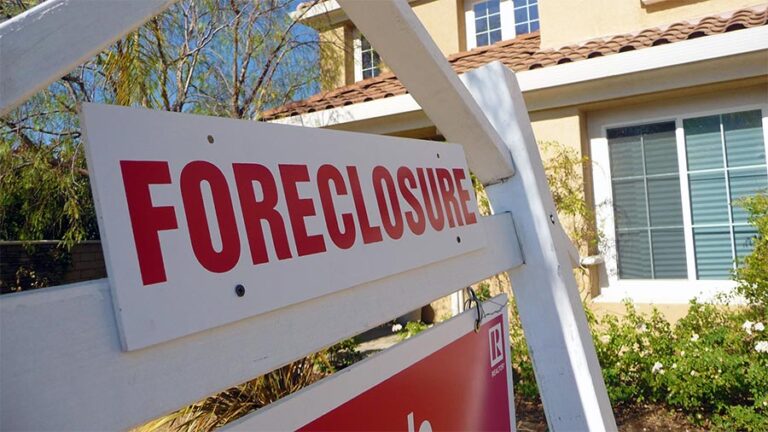
The outcome means status quo on the issue of foreclosures – they can proceed.

Last month parliament had voted against extending the freeze on repossessions – effectively allowing banks to resume the practice.

Speaking on the House floor, Akel’s Giorgos Loukaides said their intention in filing their motion was to protect vulnerable borrowers – especially now amid inflation but also rising interest rates, making mortgage payments even more difficult to keep up with.

Loukaides warned of a ‘tsunami’ in home repossessions if borrowers were left unshielded.

And he criticised the government for taking too long in delivering an alternative solution for distressed borrowers, such as the promised mortgage-to-rent scheme. That is intended to help homeowners at risk of losing their property due to mortgage arrears; allowing a person to voluntarily surrender ownership of their home to their lender. An entity buys the home from the lender and becomes the landlord. The borrower no longer owns their home but will continue living there as a tenant.

The scheme would need the nod from Brussels.

The mortgage-to-rent plan was seen as the previous administration’s lifeline to some 4,000 distressed borrowers, after the lack of success with the ‘Estia‘ debt relief scheme.

As for the home foreclosures, the last pause had already lapsed at the end of January – meaning that property repossessions have since legally resumed.

A series of temporary foreclosures freezes had been implemented since 2021, usually for a span of a few months.

The moratorium concerned primary residences whose estimated value did not exceed €350,000, business premises hosting companies whose annual turnover does not exceed €750,000, and agricultural plots with an estimated value not exceeding €100,000.

Cypriots priced out of Limassol as foreigners eye properties

Limassol (Cyprus) (AFP) – In Cyprus’s southern coastal city of Limassol, Russian and Ukrainian firms fleeing wartime conditions, and Israeli investors betting on real estate, have driven prices up and local residents out.

Eleni Constantinidou is one of them, pregnant when her landlord terminated her lease. Unable to find an affordable place in her hometown, the Cypriot was forced to move in with her parents, husband and child in tow.

In 2016, it cost her €400 to rent a beachfront apartment in Cyprus’s second city where about 176,000 people live.

Now, rent is “€1,500 at a minimum for a two-bedroom apartment,” she told AFP.

“Nothing is accessible for Cypriots anymore. The owners know this, and they are only looking for foreigners,” said Constantinidou, who is in her 30s.

By comparison, in the capital, Nicosia – inland and without a Mediterranean view – a two-bedroom semi-detached ground floor unit can still be rented for around €650 a month.

But Limassol – often nicknamed “Moscow on the Med” – has long been a magnet for Russian speakers.

In February 2022, as Moscow began its invasion of Ukraine, fintech companies began pulling out of the two warring countries and neighbouring Belarus.

Many settled in Limassol to take advantage of the favourable tax environment in Cyprus, and with the lucrative industry came a new class of moneyed professionals.

In May, Russian-language communications company Vestnik Kipra’s site counted 3,000 new IT specialists on its roster, a number that has only grown since.

As for Ukrainians, Limassol Mayor Nicos Nicolaides estimated more than 10,000 moved to Limassol since the war, “which is quite a big number.”

Dmitri Leonov, who works for a fintech company and relocated to Cyprus from Moscow before the invasion, said the average salary in the sector is €5,000.

“So, for them, paying €1,500 for rent is not a problem,” he told AFP. “It had a quite deep impact on the real estate market.”

He himself used to pay €1,500 for his apartment. Then the landlord said the rent was rising to €2,000.

The young father said he was “very lucky” to find another apartment within his budget, considering “more than 60 people” had applied for it.

‘Way too much!’

Rent in Limassol has surged by 23 percent in a single year, according to Ask Wire, a Cypriot real estate market analytics startup.

By comparison, it says rent in Nicosia went up 14 percent.

According to Marios Constantinou, head of property agency QuickLets, that increase has attracted “investors from Israel, who consider Cyprus a very good investment opportunity.”

The inflow has also caused a surge in sale prices.

“We’ve seen a lot of apartments being constructed to be sold for around half a million to €700,000,” Pavlos Loizou, founder of Ask Wire, told AFP.

He points on a map to an apartment in downtown Limassol: €475,000 for 100 square meters.

“That’s way too much!” Loizou said.

Behind such big-money projects are often foreign investors, “notably Israelis,” he said.

However, this “triangle” of “foreigners selling to foreigners, to develop and sell or rent to foreigners” is nothing new, according to Loizou.

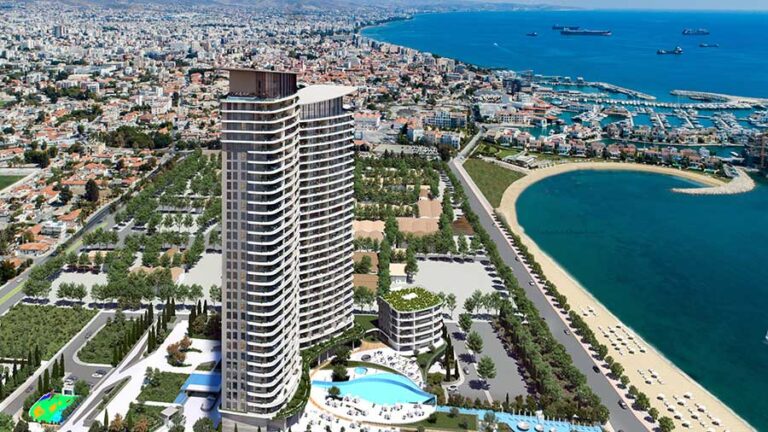
Since 2008, developers have barrelled through the island, transforming the Limassol skyline into tower blocks and luxury homes, making it the most modern-looking of Cypriot cities.

The island’s bloated banks granted developers huge loans without hesitation; a trend that helped push the country to the brink of financial collapse in 2013 following a crisis in neighbouring Greece.

“The economic system now is stronger, but it’s still dangerous when foreigners take your country for a financial playground,” Constantinou said.

According to real estate expert Antonis Loizou, 4,123 properties in Cyprus were sold to foreigners in 2022, up from 2,432 in 2020.

Social housing

Before it was scrapped in 2020, Cyprus’ “golden passport” scheme granted citizenship to thousands of foreign investors – many of them from Russia – in exchange for a €2.5 million investment, often a residential property.

The scheme has been disbanded for years, but not before it mired the country’s political leaders in controversy and left an indelible mark on Limassol’s housing market.

A $5 million listing of one such residence is set to earn a hefty commission for Florent Gastine, a French real estate agent who traded his life on the French Riviera for Limassol’s “booming” market.

Limassol Mayor
Mayor Nicos Nicolaides says he doesn’t want Limassol to be home only to white-collar workers

With a sea view, marble kitchen, and a gigantic swimming pool, the same Russian-speaking owner is offering another apartment for rent at €18,000 a month.

“This is the market price,” Gastine told AFP, explaining that the end of the golden passports scheme created a domino effect. Developers built fewer luxury units, which “pushed prices up.”

The only solution, according to Limassol Mayor Nicolaides, is to build social housing.

“We don’t want Limassol to become a city where only white-collar workers can live,” he told AFP.

“For Cypriots, it’s heart-breaking to think that they can’t live where they were born.”

© 2023 AFP

House prices rose 4.4 per cent in 2022

In the fourth quarter of 2022, house prices in Cyprus rose 4.4% compared with the same quarter of 2021, but fell 4.0% compared with the previous quarter according to Eurostat, the statistical service of the European Union.

Among the EU Member States for which data are available, seven showed an annual increase in house prices in the fourth quarter of 2022 of more than 10%.

The highest increases were recorded in Croatia (+17.3%), Estonia (+16.9%), Hungary (+16.5%) and Lithuania (+16.0%), while prices fell in Denmark (-6.5%), Sweden (-3.7%), Germany (-3.6%) and Finland (-2.3%).

Compared with the previous quarter, prices decreased in 15 EU Member States.

The highest increases were recorded in Croatia (+4.7%), Romania (+2.5%) and Lithuania (+1.9%) and the largest falls in Denmark (-6.5%), Germany (-5.0%) and Cyprus (-4.0%).

House prices in the Europan UNionBetween 2010 and 2022, house prices increased in 24 EU countries and decreased in three.

House prices more than doubled in Estonia (+199%), Hungary (+174%), Lithuania (+142%), Luxembourg (+136%), Latvia (+133%), Austria (+126%) and Czechia (+125%).

Decreases were observed in Greece (-14%), Italy (-9%) and Cyprus (-4%).

Over the same period, rents increased in 26 EU countries and decreased in one, with the highest rises in Estonia (+216%) and Lithuania (+160%).

The only decrease was recorded in Greece (-23%).

Over €1.5 billion worth of properties on the market

More than 7,000 properties, whose total value exceeds €1.5 billion, are currently available on the market from banks, property management companies and debt buyers, according to a sectoral analysis report by Cypriot fintech Ask Wire.

The fintech firm, which specialises in the in-depth analysis of real estate data, utilised its proprietary tool called Real Estate Dynamics (RED). The tool is able to provide detailed information about the number, type, value, and period of availability of property for sale in each district across Cyprus.

As can be seen from the data generated by the tool, 7,101 properties are available for sale, with a total value of €1.6 billion.

Most properties (42 per cent), which have a total value of €836 million, have been available for sale for a period of more than two years, while 1,498 with a value of €250 million have been available for sale for a period of 12-24 months.

“This is an indication that for a large number of properties, liquidity in the market is limited,” the company said upon the release of its findings.

The vast majority of properties (72 per cent) that have been put on sale by banks and loan management companies concern fields.

Their total value amounts to €786 million, which represents 50 per cent of the total value of properties available for sale throughout Cyprus.

Plots are the second largest category of real estate for sale, as they correspond to 14 per cent of the total amount. These properties have a total value of €297 million.

Nicosia leads the way

Nicosia accounts for the largest volume of properties available for sale with 2,432, corresponding to 34 per cent of the total.

Their value accounts for €794 million and exceeds 50 per cent of the total value of properties available for sale throughout Cyprus.

In second place is the district of Paphos, where banks and management companies are selling 1,656 properties worth €274 million.

This is followed by Limassol with 1,431 properties worth €219 million and Larnaca with 1,195 properties worth €216 million.

In the district of Famagusta, 387 properties are currently on sale with a total value of €66 million.

Ask Wire CEO Pavlos Loizou stated that “the company’s primary aim and purpose is to make life easier for all those involved in the real estate and land development sector”

“With the tools we have developed, we can provide them with the capacity to make informed decisions about sales, investment and growth opportunities,” Loizou added.

It should be noted that RED is a subscription-based tool that leverages technology to collect, process and map individual real estate transactions and listings, making them readily available to land developers, investors, brokers and appraisers.

The tool takes into account more than 22,000 listings and 140,000 transactions, allowing users to obtain a comprehensive, reliable and independent picture of the real estate market throughout Cyprus.