SOS for Limassol coast

A new holistic environmental risk assessment of the Limassol coastline is the largest-scale environmental research project for the city yet.

It was introduced to the public at last month’s second Blue Limassol Forum, co-organised by the Limassol municipality and Frederick University.

A timely study, as a total of 110 polluting incidents have been reported between 2017 until the first quarter of 2021 in Cyprus, of which the vast majority, 89 per cent, were recorded in Limassol.

This is crucial as coastal and maritime tourism is one of the basic pillars of the country’s economy, accounting for almost 12 per cent of GDP.

One of the main findings of the researchers is that only a small fraction of reported incidents is investigated and penalised, and the regulatory and monitoring process is highly fragmented among different government and municipal bodies.

To highlight just how complex the situation is, here is just one example the comprehensive study has investigated – high-rise buildings which during the past decade have become a prominent feature along the Limassol coast line.

Leaving them empty is problematic as is having them occupied.

When they are largely lived-in, traffic congestion takes over the area at certain times of the day, the study points out.

“The large income discrepancy between the occupants of the high-rise apartments and the general population of the city also creates social and functional implications which are noted by the local community,” the report added.

“On the other hand, a low occupancy rate results into the effective abandonment of the buildings leading to degradation of the city’s attractiveness and the erosion of its character.”

“In all cases, the very construction of the high-rise buildings exclusively near the coast has resulted in marine water pollution as water drainage from the foundations of the building sites is discharged into the sea.”

What makes this study, coordinated and presented by Angelos Menelaou, head of the maritime transport and commerce department of Frederick University, more feasible than others, which have often ended up on the shelves of government officials?

The researcher for one strongly believes this one will be implemented – and here is why.

“The holistic approach is the main asset of the research and has already attracted the interest of a number of reputable European universities which focus on examining the interaction of coastal cities and environment,” he explained.

“The Limassol bay and its coast is a unified space where the environment pressures of the activities interact and aggregate,” the paper explains. “The ‘spillover’ of the activities of one sector to another suggests that the overall impact on the sea and coastal environment of the various activities can be more than the sum of its parts.”

All in all, there is an urgent need for all sectors of the economy along the Limassol coast to operate and develop under a guiding strategy of data integration, improved reporting, and better use of technology, towards a holistic approach of sustainable development and environmental protection.

Perhaps most important, Menelaou is confident the project will work since it is “a product of Limassol residents”.

The risk assessment was not just the result of academics pursuing a research topic, but responded to the concerns of Limassol residents regarding threats to the coastal environment expressed in an extensive opinion survey which took place during the first Blue Limassol Forum event in May 2020. For this project, 90 organisations and 500 individuals were questioned.

“We recorded some serious citizens’ concerns about Limassol coastal and marine environment.  Their concerns were very much related to the intensive development of different business sectors and the obvious relevant increased environmental pressures to the coast of Limassol,” the assistant professor said.

“We were surprised that there was immediate collaboration from everybody we approached. The feeling is ‘we want this’.”

Mayor Nicos Nicolaides was the one who introduced the idea of the first holistic environmental risk assessment as a response and is ready to implement changes as outlined in the paper.

“The mayor said he will push and push. His serious and firm commitment to jointly work with all stakeholders and adopt an action plan based on the study’s findings and recommendations means that our work is impactful,” added Menelaou.

The deputy minister of shipping, Vassilis Demetriades, also voiced his support.

Their support will be needed – soon.

The paper warns the recent steep increase in population density places dangerous pressure on the already vulnerable environment because of the inadequacy of the existing infrastructure.

A comment by Menelaou is telling as well: “While all the mayors we have interviewed appeared to be interested in conservation and expressed concerns about the rapid development of high rising buildings, until today the construction of such buildings continues unabated. Nobody except the Limassol mayor said ‘this is my concern as a mayor and I have a major role to play as it regards changes of the structure of the city’.”

The paper, some 1,000 pages long, considered six sectors/industries currently active in the Limassol bay and assessed the risks they pose to the environment, and employed more than 25 researchers from Cyprus and abroad who allocated more than 20,000 working hours towards various tasks during two years.

Not only does it identify the threats arising from coastal construction, solid and liquid waste management, commercial shipping, oil and gas-related activities, fisheries and marinas and yachting, but it also provides a plethora of recommendations for each sector and for several risk areas which are interrelated.

The study was compiled during two years by Frederick University, the main contributor, with the help of risk management organisation DNV-Greece, the Cyprus Marine and Maritime Institute (CMMI), the Marine and Environmental Research Lab MER and the Development Agency of Limassol, ANELEM.

Further reading

Download The Blue Limassol Environmental Risk Assessment Report (Dropbox)
Passports revoked and law firms fined

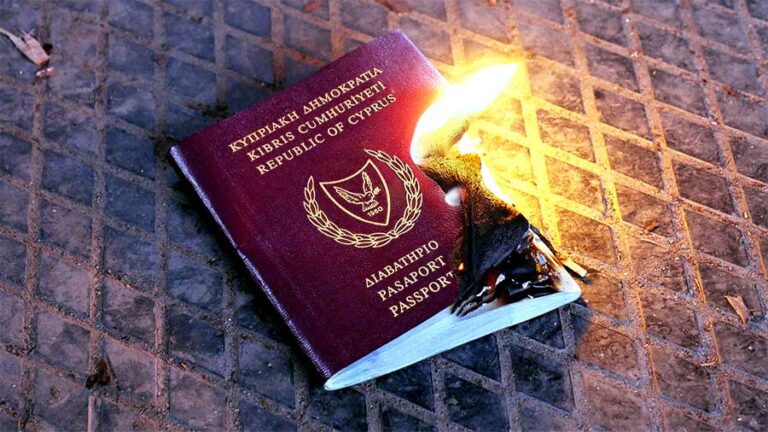
The Council of Ministers has decided to revoke the passports of four Russians and their families who were granted Cyprus citizenship under the island’s disgraced Citizenship by Investment (a.k.a. Golden Passports) scheme that was brought to an abrupt end in November 2020.

The four Russian individuals have been sanctioned by the European Union as a consequence of the Russian war in Ukraine. The four have been named as:

Mikhail Gutseriev, a major Russian businessman who was sanctioned for supporting the regime of Belarusian President Alexander Lukashenko.

Alexander Ponomarenko, chairman of the board of Sheremetyevo, Russia’s largest airport.

Vadim Moskovic, a member of Vladimir Putin’s inner circle with an estimated net wort of nearly US$2 billion.

Alexei Kuzmichev, one of the wealthiest people in the world, who according to EU regulators has “well established ties to the Russian president”

The 17 family members of the four have also had their Cypriot citizenship and golden passports revoked.

(A probe into the disgraced citizenship scheme revealed that more than half – 53% – of the 6,779 passports issued were done so illegally.)

Law firms breached money laundering regulations

The Cyprus Bar Association has fined four unnamed law firms for breaching numerous rules including those on money laundering.

The head of the Association told Phileleftheros that the fines were imposed following investigations; further cases are under investigation.

The fines range from €8,000 to €79,000 and the higher fine was imposed on one law firm involved in a ‘significant number’ of citizenships. The firm faced 45 allegations relating to breaches of the money laundering regulations.

As far as we are aware, none of the lawyers that breached the regulations have had their licenses revoked.


Building permits rise in number, value and area

0

The number of building permits authorized during January 2022 stood at 535. The total value of these permits reached €165.5 million and the total area 158.0 thousand square meters. These building permits provide for the construction of 640 dwelling units.

Compared to January 2021, the number of building permits issued rose by 8.3%, their total value rose by 3.4% and their total area by 10.1%.

However, the number of permits issued for new homes (dwellings) fell -8.8%.

The 534 permits were authorised for the following:

  • Residential buildings – 361 (a fall of 3.5% from the 374 issued in January 2021)
  • Non-residential buildings – 83 (an increase of 27.7% from the 65 issued in January 2021)
  • Civil engineering projects – 35 (an increase of 52.2% from the 23 issued in January 2021)
  • Division of plots of land – 46 (an increase of 58.6% from the 29 issued in January 2021)
  • Road construction – 10 (an increase of 233.3% from the 3 issued in January 2021)

Building permits for new homes

The 631 residential permits provided for the construction of 640 new homes (dwellings). These comprised 243 single houses, an increase 18.0% compared to the 206 authorised in January 2021, and 397 multiple housing units including apartments, semis, townhouses and other residential complexes; a fall of 20.0% compared to the 496 authorised in January 2021.

Of those 640 new homes, 222 are destined for Limassol, 216 for Nicosia, 112 for Paphos, 70 for Larnaca and 20 for Famagusta.

Building Permits Issued for the Construction of New Homes
(Number of Dwelling Units)

Month 2021 (Dwellings) 2022 (Dwellings) Increase/Decrease %age Change
January 702 640 -62 -8.8%
Totals 702 640 -62 -8.8%

According to the Cyprus Statistical Service “Building permits constitute a leading indicator of future activity in the construction sector.”

Further reading

Press release – Building Permits: January 2022

House price index fell 5.3% in 2021

The Cyprus House Price Index (HPI) fell by 5.3 per cent on an annual basis at the end of 2021 according to preliminary figures in a press release issued by the island’s Statistical Service (CYSTAT).

The HPI also reports that the price of residential properties in the fourth quarter of 2021 fell by 3.1 per cent compared to the previous quarter.

The base year for the HPI is 2015=100 and the Index now stands at 103.28.

According to the CYSTAT, the Cyprus House Price Index (HPI) “is a quarterly index which measures the change in the average prices of residential dwellings. It captures all types of residential properties, both new and existing. The land component of the residential property is included.

“The data source used for both, indices and weights, is the Department of Lands and Surveys, Ministry of Interior. The data cover all areas which are under the control of the government of the Republic of Cyprus.

“Data are marked as provisional and are revised as soon as new information is available.”

Year Quarter House Price Index
(2015=100)
Quarterly Change
(Compared to the
previous quarter) (%)
Annual Change
(Compared to the same quarter
of the previous year) (%)
2010 Q1 114.37 -1.6 -6.6
Q2 112.79 -1.4 -6.9
Q3 112.39 -0.4 -5.7
Q4 112.05 -0.3 -3.6
2011 Q1 111.56 -0.4 -2.5
Q2 113.99 2.2 1.1
Q3 111.22 -2.4 -1.0
Q4 107.60 -3.2 -4.0
2012 Q1 106.40 -1.1 -4.6
Q2 106.02 -0.4 -7.0
Q3 110.14 3.9 -1.0
Q4 108.22 -1.7 0.6
2013 Q1 104.54 -3.4 -1.7
Q2 104.77 0.2 -1.2
Q3 103.05 -4.7 -9.3
Q4 100.78 0.9 -6.9
2014 Q1 98.08 -2.7 -6.2
Q2 103.55 5.6 -1.2
Q3 102.70 -0.8 2.8
Q4 101.56 -1.1 0.8
2015 Q1 97.52b
Q2 100.59 3.1
Q3 102.49 1.9
Q4 99.40 -3.0
2016 Q1 97.29 -2.1 -0.2
Q2 99.18 1.9 -1.4
Q3 101.87 2.7 -0.6
Q4 102.72 0.8 3.3
2017 Q1 99.64 -3.0 2.4
Q2 102.74 3.1 3.6
Q3 102.46 -0.3 0.6
Q4 105.24 2.7 2.4
2018 Q1 103.10 -2.0 3.5
Q2 104.01 0.9 1.2
Q3 103.12 -0.9 0.6
Q4 107.04 3.8 1.7
2019 Q1 107.93 0.8 4.7
Q2 112.73 4.5 8.4
Q3 105.64 -6.3 2.4
Q4 106.51 0.8 -0.5
2020 Q1 109.13 2.5 1.1
Q2 109.48 0.3 -2.9
Q3 104.21 -4.8 -1.3
Q4 109.10 4.7 2.4
2021 Q1 102.82 -5.8 -5.8
Q2 104.07 1.2 -4.9
Q3 106.55 2.4 2.2
Q4 103.28 -3.1 -5.3

b There is a break in the series in the first quarter of 2015 due to redefinition of the model variables.

Home prices in Europe

Meanwhile Eurostat reports that rents have increased by an average of 16% and house prices by 42% in EU member states since 2010

Since 2010, house prices more than doubled in Estonia, Hungary, Luxembourg, Latvia, Czechia, Austria and Lithuania

When comparing the fourth quarter of 2021 with 2010, house prices increased more than rents in 19 EU Member States. House prices increased in 24 EU Member States and decreased in three, with the highest rises in Estonia (+156%), Hungary (+128%) and Luxembourg (+124%). Decreases were observed in Greece (-23%), Italy (-12%) and Cyprus (-9%).

When comparing the fourth quarter of 2021 with 2010 for rents, prices increased in 25 EU Member States and decreased in two, with the highest rises in Estonia (+171%), Lithuania (+113%) and Ireland (+74%). Decreases were recorded in Greece (-25%) and Cyprus (-1%).

European house prices and rents

Property sales hit 14-year high

Property sales in March, as measured by the number of sale contracts deposited at Land Registry offices, hit a 14-year high according to figures released by the Department of Lands and Surveys.

The total number of sales in March 2022 rose 33% compared to March 2021; the highest March figure recorded since 2008.

With the exception of Nicosia, sales rose in all districts with the highest number of sales recorded in Limassol, followed by Nicosia, Paphos, Larnaca and Famagusta.

Total property sales chart for March 2021
Total Property Sale Transactions – 2021/2022 Comparison

Sales during the first quarter of 2022 reached 3,009, a 52% increase on the 1,985 sales achieved during the first quarter of 2021.

The future

The future of the Cyprus real estate market is unpredictable. Rising inflation and increasing fuel prices have resulted in an approximate 10% hike in construction costs in recent months. Travel costs and the general cost of living and have risen, all of which adds up to make Cyprus less affordable.

Annual inflation currently stands at a 26-year high of 7.1% and interest rates are  expected to rise.

War in Ukraine

The impact of Vladimir Putin’s invasion of Ukraine on the market.

Speaking to the Cyprus News Agency the Chairman of the Real Estate Registration Council Marinos Kynageirou said “Many companies based in Ukraine and Russia are moving their staff to Cyprus, resulting in increased demand for housing units, especially in Limassol, a phenomenon that is expected to continue in the coming months.”

(Two days ago the video gaming company Wargaming, which is headquartered in Nicosia, announced its decision to leave Russia and Belarus.)

Antonis Louizou noted that “It is too early to say for sure to what extent the Cypriot real estate market will be affected by the war in Ukraine.”

Detailed analyses

Looking at each segment of the market in turn:

Domestic property sales

Although domestic sales in March saw an overall rise of 6% compared to March 2021, sales in Famagusta, Nicosia and Paphos fell. These falls are probably due to the conclusion of the subsidised purchases through the government scheme at the end of 2021.

The scheme provided an interest subsidy of 1.5% for a period of four years for loans not exceeding €400,000 for house purchases. As it takes 2 or 3 months to process applications for the scheme, it’s possible that we may also see falls in Larnaca and Limassol.

It’s also worth bearing in mind that the figures include an unreported number of ‘non-sale’ agreements such as loan restructurings, recoveries and debt-to-asset swaps agreed between the banks and defaulting borrowers. Unfortunately, the Department of Lands & Surveys doesn’t record these separately.

The highest number of sales was recorded in Limassol, followed by Nicosia, Larnaca, Paphos and Famagusta.

domestic_2203
Domestic Sale Transactions – 2021/2022 Comparison

Sales during the first quarter of 2022 reached 1,732, a 24% increase on the 1,399 sales achieved during the first quarter of 2021.

Foreign property sales

Property sales to foreigners (non-Cypriots) performed well with sales up 105% compared to March 2021 with sales rising in all districts with the exception of Nicosia.

Paphos achieved the greatest number of sales, followed by Limassol, Larnaca, Famagusta and Nicosia.

The interest shown by foreigners in buying their ‘home in the sun’ has increased following the Cyprus government’s decision to relax COVID restrictions, which now allows travellers who have been fully vaccinated or recently recovered from COVID to enter the country without any further testing on their arrival.

Total Foreign Sale Transactions – 2021/2022 Comparison

Sales during the first quarter of 2022 reached 1277; a 118% increase on the 586 sales achieved during the first quarter of 2021.

Foreign sales (EU Nationals)

Sales to EU nationals performed well with sales up 104% compared to March 2021 with sales rising in all districts with the exception of Nicosia, where the number of sales was unchanged.

Paphos recorded the largest number of sales, followed by Limassol, Famagusta, Larnaca and Nicosia.

EU_2203
Foreign (EU) Sale Transactions – 2021/2022 Comparison

Sales during the first quarter of 2022 reached 626; a 142% increase on the 260 sales achieved during the first quarter of 2021.

Foreign sales (non-EU Nationals)

Although sales to non-EU Nationals rose by 106% compared to March 2021, sales in Nicosia and Famagusta sell for the second consecutive month.

The largest number of sales were recorded in Limassol, followed by Paphos, Larnaca, Nicosia and Famagusta.

non-EU_2203
Foreign (non-EU) Sale Transactions – 2021/2022 Comparison

Sales during the first quarter of 2022 reached 646; a 99% increase on the 326 achieved in the first quarter of 2021.

Cyprus property sales 2000 to 2022

Work gets underway on Larnaca marina & port

2

With a budget of €1.2 billion, works on the Larnaca marina and port development, the largest infrastructure investment in Cyprus, started on Friday.

The first phase of the project has a span of five years and provides for all the required infrastructure, including a new road.

Plans for expanding and privatising the Larnaca marina have been plagued by years of delays and failure to find investors.

Kition Ocean Holdings Ltd, the Israeli-Cypriot consortium awarded the tender in 2020, aims to make space for 600 berths for yachts of up to 115m at the port.

Real estate giant Aroundtown SA joined the consortium last week. Its inclusion is pivotal to the project’s financing needs, as it is one of the largest high-value real estate investment companies in Europe.

The entire development will be divided into four phases across 12 years and it is estimated that the benefit to the local economy per year will be around €120 million.

According to Kition, minor repairs to the existing marina be carried out in coming days, while works on the yacht berths and yacht club will begin in the summer.

The first phase of the project will take approximately five years and will include the construction of a walkway at the marina.

Moreover, a road link to the popular Finikoudes area of Larnaca will also be built during the first phase.

The second phase will see the construction of buildings, including apartments, retail shops and entertainment and parking facilities.

An area to repair and maintain yachts and a five-star hotel overlooking Finikoudes area are also on the cards.

During the third phase, the consortium is planning to build a 360-degrees-view facility for visitors, as well as private villas with swimming pools and mooring space, while another hotel is also set to be erected on the marina’s northern side.

In the fourth and final phase, additional private villas will be added along with more commercial areas for retail shops.

Speaking to daily Phileleftheros, Larnaca mayor Andreas Vyras said the entire country, not just his town, will benefit from the construction of the project.

“This is an important day for us, a day we were all expecting for years and for which we have been fighting for decades,” Vyras said.

“The entire project will create from 3,000 to 4,000 jobs and will attract huge interest from foreign companies.

“Combined with the relocation of the fuel facilities to Vasilikos, the port and marina project will be a huge boost for Larnaca.”