Government urged to challenge EC’s ruling on property VAT

The finance ministry will collect more data as part of its drive to persuade European Commission to agree to the Republic’s proposal for the continuation of the arrangement for reduced VAT on the first residence.

Cyprus has been in dispute with the Commission over the VAT discount it offers for the purchase of a primary residence and last July an infringement procedure was set in motion that could end in a fine being imposed against Cyprus by the European Court.

Under the current arrangement, a buyer pays 5 per cent VAT on the first 200 square metres of a house or apartment of total area of 275 square metres. The Commission wants the 5 per cent discount to apply for the first 140 square metres of a 200 square metre residence.

Speaking after Monday’s discussion of the issue at the House finance committee, its president, Christiana Erotokritou said the Commission rejected Cyprus’ proposal insisting that its terms were adopted.

The committee, Erotokritou said, asked the finance ministry to collect more data to strengthen Cyprus’ case and challenge Eurostat’s findings, that the average residence was 140 square metres in area, did not reflect the housing conditions in Cyprus. She also said that the measure should be linked to the total price of a first residence.

The government had submitted a bill that was in line with the Commission’s directive but the majority of the parties oppose it, insisting the original arrangement remain in place.

Dipa deputy Alecos Tryfonides also bemoaned the fact that the Commission insisted on a transitional period for the lower VAT that would have a specific expiry date.

Tryfonides said Dipa was opposed to the government’s bill, but “will wait for the conclusion of the new consultations between the finance ministry and the VAT committee of the European Commission, before finalising our position.”

Greens deputy, Stavros Papadouris, said the “small positive step would be to secure a transitional period” while “the big negative” was that the Commission did not share the concerns of Cyprus.

The Technical Chamber (Etek) was also in agreement with the parties. Etek president Constandinos Constanti said the government should document its position at the Commission, because if the Commission’s 140-200 square metres proposal was approved, it would constitute “a stab in the dreams of many young couples to buy their own home”.

A whole generation will be called to pay for the mistakes of older generations, Constanti said.

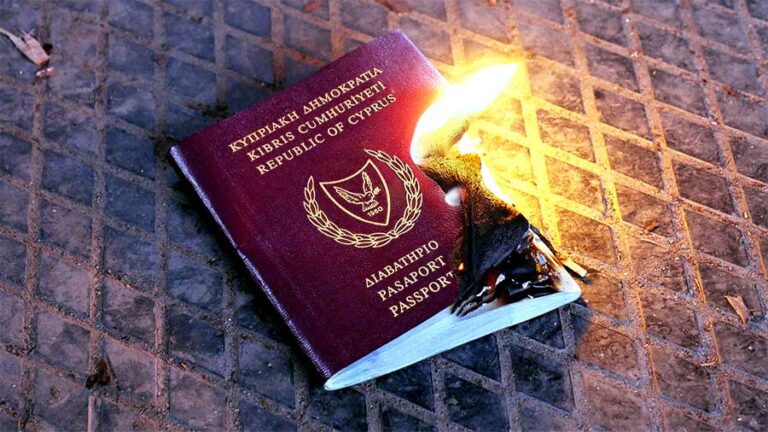
Revoking golden passports to Russians ‘impossible’

2

An EU recommendation to member states to recall passports issued to Russian and Belarusian oligarchs on the bloc’s sanctions list puts Cyprus in an awkward position.

Lawyers warn that if Cyprus recalls citizenships given to Russians through the now-defunct citizenship for investment scheme, the Republic could be dragged through the courts, paying out millions in compensation.

The EU has requested that all member states stop all CIS programs and call off any residence incentive plans to attract Russian or Belarusian investors.

In comments to news site Stockwatch, lawyer Achilles Emilianides said that retracting citizenship is a matter of national law, noting that the deprivation of citizenship is only justified if acquired through deceit, false representation, and concealment of facts.

Regarding the sanctions imposed on Russians, he argued they are economical and have nothing to do with citizenship, emphasising the EU has no power to deprive people of their citizenship.

Another barrister, Andreas Angelides, noted that revoking citizenship is not easy, and people affected would file lawsuits claiming millions in compensation.

He argued that Cyprus should point out to Brussels that passports given to Russian investors were given legally and cannot be revoked without breaking the laws of the Republic.

Christos Clerides, President of the Cyprus Bar Association, said there is no binding obligation on the Republic of Cyprus to proceed with revoking citizenship granted to Russians whose names are on the EU sanctions list, as these are recommendations and not regulations or directives.

Clerides said the impression that all citizenships granted under this investment program should be revoked had been wrongly created.

Golden Passports infringement process

He noted that EU recommendations on Russians included in the sanctions list have nothing to do with the EU infringement process against Cyprus regarding its golden passport scheme.

According to the EU recommendation, Member States should conduct assessments to decide whether citizenship previously granted to Russian or Belarusian nationals subject to sanctions should be revoked.

In carrying out the assessments, the Member States must consider the principles laid down by the Court of Justice of the European Union concerning the loss of EU citizenship.

They should also immediately revoke or refuse the renewal of residence permits issued under a residence permit program to investors of Russian or Belarusian nationals subject to EU sanctions in connection with the war in Ukraine, following an assessment.

Meanwhile, Brussels’ infringement process against Cyprus is still in progress.

The European Commission launched the process against the Republic for its ‘passports for cash’ scheme.

In November 2020, the Mediterranean island dropped the passport scheme after Al Jazeera aired a documentary showing reporters posing as fixers for a Chinese businessman seeking a Cypriot passport despite having a criminal record.

A public inquiry found the government broke the law countless times to grant citizenship to over 6,700 people from 2007 to 2020.

The damning report said that over half (53%) of the 6,779 passports granted were done so illegally, encouraged by a due diligence vacuum or insufficient background checks.

Cyprus’ passport scheme generated over €8 billion during its lifespan from 2007.

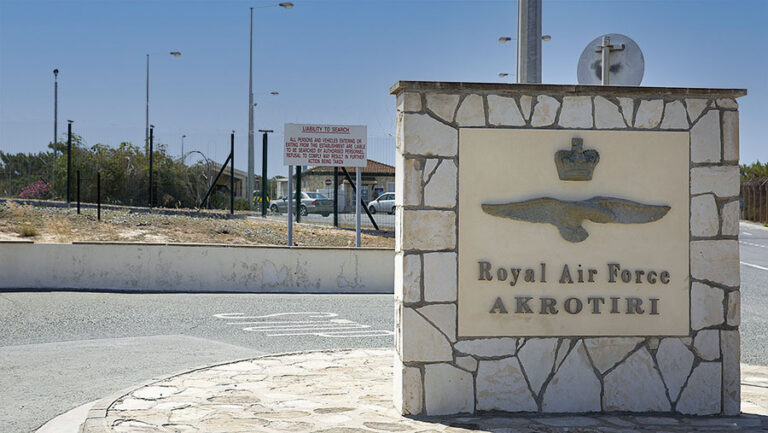
British bases title deeds delay ‘unacceptable’

0

Parliamentarians on Tuesday accused the administration of the Sovereign Base Areas (SBA) of “a display of sovereignty” in not approving the issuing of title deeds to refugees living in self-housing settlements.

The issue relates to refugees living in such settlements in the villages of Dasaki and Trachoni.

Legislators spoke of an inexcusable delay in the SBA not giving the nod to title deeds, even in cases where the applicants have gone through the proper procedures with the land registry and have all the paperwork in place.

Nicos Kettiros, chair of the House refugees committee, said that for the two villages in question the land registry has completed the title deed procedures as far back as 2018.

But the new administration of the SBA, without any legal justification, is not consenting to rubberstamping the title deeds – a departure from previous practice.

“In our view, the situation is unacceptable,” said Kettiros. “The land registry has effectively frozen the process of title deeds in the two communities due to this state of affairs, and the problem grows with time.

“Through the information given to us by the land registry, it is clear that the political administrator of the [British] bases is making a display of sovereignty, as he did a few months ago when he forbade [football club] Omonia from using the sports field in [Dasaki] Achna.”

It emerged that title deeds are being held up in 387 cases.

Edek MP Costis Efstathiou said the SBA authorities are now using the term ‘Crown Land’ when referring to the land inside the bases.

“If this is the policy of the English, if this is their position, you understand that it raises a major issue of sovereignty, and the Cypriot parliament and government must react,” he told reporters.

An official with the Department of Lands and Surveys told the committee that the written consent of the SBA governor is needed for the title deeds procedure to go forward.

This used to happen up until 2017. From 2018 onward, after the change in administration, the governor does not give his consent.

The committee will revisit the matter, and will be summoning the ministers of foreign affairs and the interior, as well as the attorney-general.

EU seeks halt of citizenship & visa sales to Russians & Belarusians

The European Commission called on EU governments on Monday to end national programmes to sell citizenship to investors, also known as golden passports schemes, and urged them to suspend the sale of visas to Russians and Belarusians.

The move follows a new push from the European Parliament to shrink and regulate the multi-billion-euro citizenship and visa industry which the EU has long considered a security risk.

It comes amid concerns that people hit by European Union sanctions over Russia’s invasion of Ukraine may be holders of EU golden visas or passports. read more

“Some Russian or Belarusian nationals who are subject to sanctions or are significantly supporting the war in Ukraine might have acquired EU citizenship or privileged access to the EU, including to travel freely in the Schengen area, under these schemes,” the European Commission said on Monday.

Since the start of the Russian aggression, which Moscow calls a special operation, the EU has blacklisted nearly 700 top politicians, businessmen and military staff accused of supporting the Kremlin read more.

The Commission urged an immediate end to existing national programmes for the sale of passports. Currently only Malta, Cyprus and Bulgaria have such schemes and they have all committed to ending them. Cyprus’ parliament has just voted to end its programme.

Brussels also said governments should check whether sanctioned people were holding a golden passport or visa they had issued.

The European Commission said it did not know whether sanctioned people were among the beneficiaries of the programme. A spokesman declined to clarify whether it had asked EU states to provide lists of people who had bought visas or passports.

Countries should determine whether to annul those passports and should immediately withdraw residence permits, the Commission said.

Several EU countries run golden visa schemes and have had golden passports programmes.

The Commission refrained from calling for the end of golden visa programmes, but urged strict checks and asked EU governments to suspend the granting of residence permits to Russians and Belarusians.

Reporting by Francesco Guarascio @fraguarascio; Editing by Edmund Blair and Philippa Fletcher

© 2022 Reuters. All rights reserved

Key projects underway in Larnaca, Nicosia

The Cyprus real estate and construction sectors are moving past the demise of the scrapped Citizenship for Investment Programme, turning their attention to the capital and the once neglected coastal town of Larnaca, while Limassol, with its high-rises and cosmopolitan lifestyle is still seeing part of the action.

Larnaca is headed for a major make-over with the €1.2 billion redevelopment of its marina and port soon taking shape, as the consortium awarded the contract, Kition Ocean Holdings is set to launch works on April 1.

Development in the town does not end with the much-awaited port-marina, as a number of projects are sprouting across the district.

Larnaca town is attracting new investments with a number of upscale tourist projects destined on the Dhekelia coastal front, once taken up by fuel and gas storage tanks.

Among the projects ready for completion is the Radisson Beach Resort on the Dhekelia Road, where the Princess used to be.

The Radisson Hotel Group has signed a deal with Larnaca’s Quality Group and SunnySeeker Hotels to have six branded hotels in Cyprus after the first one, the Radisson Blu opened near the port in Larnaca.

Meanwhile, the largest property owner on the Dhekelia coastal front, Petrolina Holdings, is ready to explore project development such as holiday homes or a hotel.

Recently, CSE-listed Petrolina Holdings set up a subsidiary company, Petrolina Bayfront, acquiring three plots from ExxonMobil on the Larnaca-Dhekelia road.

After dismantling their fuel tanks, Petrolina acquired ExxonMobil’s properties through a €30 million deal, which they plan to incorporate in their bayfront property development.

The news was confirmed to the Financial Mirror by a Petrolina Holdings’ senior representative: “PHL estimates that its investment through Petrolina Bayfront Ltd will contribute significantly to its effort to diversify and pursue operations in property development”.

With the participation of the local authorities, PHL has contracted renowned international firm Arup to design a concept area plan to serve as a guideline for sustainable land development of the area.

This plan also includes the land owned by PHL and the Lefkaritis Group of Companies.

Larnaca tourist village

US based NCH Capital (Cyprus) is also preparing to launch a multi-million tourist project in the region which will be built on the land currently occupied by the old Beau Rivage Hotel.

As told by local authorities, the project will see the construction of a hotel, and a tourist village with villas and commercial property.

Furthermore, mayor Andreas Vyras said the environmental authorities have granted their approval for the construction of two new 17-storey towers, for residential, office and commercial use in the municipality of Larnaca, a project owned by Avolo Properties Ltd.

The total height of the development will reach 75m, with some 1,169 underground parking spaces.

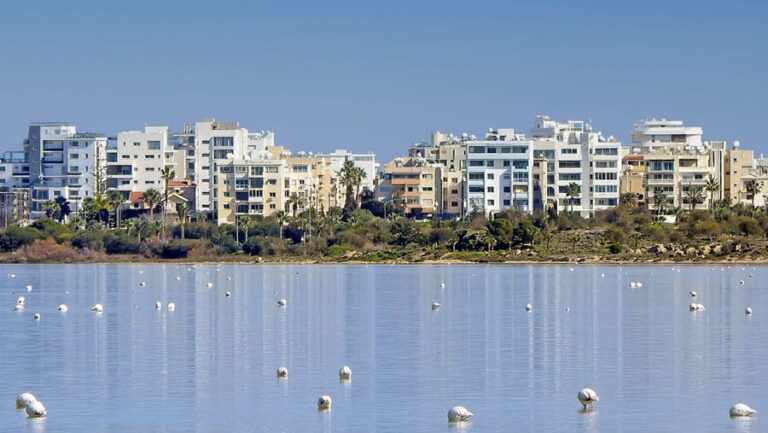
The proposed project is located at the southern end of the city of Larnaca, within the ‘Skala’ area near the Salt Lake.

In the capital, an investment in the healthcare is taking front seat, with an Israeli hospital in Lakatamia, in the suburbs of Nicosia. It was originally planned to be built in Engomi.

According to reports, the H.C. Management of Medical Centre PLC (MMC), in collaboration with Hadassah Medical Ltd, a subsidiary of the renowned Hadassah Medical Organisation, is proceeding with the design of the emblematic and innovative Hadassah Health Park in Nicosia.

Reports have it that the new major shareholder, Elhadi Holdings Ltd, is keen to move rapidly with the construction of the mixed development project, covering an area of over 100,000 sqm.

The project, according to information, has already secured the urban planning permit for the residential part, and the design of the hospital and commercial elements is at a very advanced stage.

The development will include integrated medical facilities, with long-term lease of buildings. In addition, seven residential buildings will be erected with apartments for sale, a university building, offices, shops and a specialised condo hotel unit.

Hadassah is reportedly planning to invest over €150 million in the entire project for a hospital in the capital and a rehabilitation centre in Limassol, which are expected to open their doors in 2024.

Cyprus Museum at old hospital

The project of building the new Cyprus Museum is now in the pipeline, following the recent announcement of the tender for the construction contract of the project.

The bidding period will last until July 1, and the contract is estimated to be signed by the end of 2022.

The total duration for the delivery of the project is 60 months. The new Cyprus Museum will be built on an area of 40,000 sqm. at the site of the old General Hospital, and it’s budgeted for €121.4 million.

Meanwhile, revamp works of the old GSP stadium in the heart of the capital are underway.

According to a municipality source, the €19.2 million revamp will include an urban square, green spaces, recreation areas and underground parking for 540 vehicles.

Tenders for the project were submitted back in May and awarded to Cyfield Construction-Development Consortium.

The revamp will be co-financed from the EU’s cohesion fund, the state budget and Nicosia municipality under the 2014–2020 programming period.

The old emblematic clock from the stadium has been preserved and will be the centrepiece of the project, along with a replica of an old KEO beer advertisement.

The capital will also see more tall buildings sprouting up, as the Environment Authority has given the green light for the construction of two residential towers 64 meters high on the premises of the Landmark Nicosia hotel.

The Landmark Nicosia is located within easy reach of Nicosia’s city centre, next to the business and shopping district and within walking distance of the capital’s historic sites and museums.

Meanwhile, construction activity is reportedly to pick up in Limassol, with multi-million investments in the once ignored area of western Limassol set to be pushed into the pipeline.

The area has gained momentum with the operation of the My Mall followed by the construction of the casino in Zakaki. The development of “City of Dreams Mediterranean – Integrated Casino Resort” will occupy a total area of about 350 acres and will include a luxury hotel, number of restaurants and bars, conference centre, shops, gym, spa, swimming pools, a small number of separate villas, car parks and landscaped areas with lawn and other plants / trees.

Reportedly, Cyprus Phasouri (Zakaki) Ltd has submitted a request for the separation of 78 plots, in an area adjacent to the City of Dreams casino.

Lanitis Farm Golf Ltd is also planning to launch its Lanitis Greens Golf Resort project. It is a mixed development project that includes real estate, a golf course, leisure areas such as spa and tennis courts, as well as shopping areas with restaurants and shops.

Earlier this week, the renowned Intercontinental Hotel Group and the Frantzis Group of Companies, announced this week their agreement to build a luxury 5-star hotel in the city, called the Intercontinental Limassol Hotel.

Cyprus real estate market should look to the West

1

With the war in Ukraine causing a range of short and long term issues, with the global economy likely requiring years to recover, Cyprus should shift its focus to the West for investment, particularly when it comes to the real estate market, fintech company WiRE FS CEO Pavlos Loizou said on Monday.

“In our view, the age-old strategy of occasionally focusing on specific markets outside of the European Union, with significant profit margins, is over,” Loizou said, stressing that property market professionals should have a more long-term view.

Loizou explained that over the past three decades or so, the Cypriot real estate market focused on trying to attract business from the United Kingdom (2000-2008), Russia (2008-2012), China (2012-2017) and the Middle East (2016-2018), dubbing the approach opportunistic, rather than aiming for a more sustainable way to develop the sector.

“As it should be in terms of politics, we believe that the time has come to act rationally and turn to the European market”, Loizou said.

While Loizou conceded that the European market is more competitive, harder to crack and offers smaller profit margins, it counterbalances these issues with more stability, more security, as well as its ability to remain largely unaffected by external factors such as war, and drastic changes in political leadership.

“We must now, as a country, turn our attention further to the West,” he stated.

Regarding the ramifications of the war, as well as its resulting sanctions, Loizou said that the Cypriot property market will likely be affected in both positive and negative ways.

An influx of foreign nationals from affected countries, including Ukraine, Russia and Belarus, has been observed in recent weeks, with more than 6,000 Ukrainians arriving to the island by March 18.

Additionally, there were around 2,300 Ukrainian tourists in Cyprus before February 24, while there are no exact figures regarding the people from Russia and Belarus who have travelled to Cyprus in recent weeks.

A large part of the people who have relocated to Cyprus concern employees who work in companies that were either based or had operations in the aforementioned countries.

These relocated individuals have now been temporarily transferred to hotel units in Cyprus, mainly in Limassol, with their companies seeking to both protect their staff members as well as their own business capacity.

This development may prove to have a beneficial effect on the local economy, since those relocated include younger people with high levels of educational attainment and professional experience, who may ultimately be integrated into the Cypriot labour market.

“If these people eventually stay in Cyprus, then they will definitely look for personal housing so we will see an increase in demand for residential real estate for rent,” Loizou said.

“If the companies that employ these people also decide that they will continue to operate through Cyprus, then, at a later stage, there will be increased demand for office space rentals, again focusing on the city of Limassol, where most foreign companies are based,” he added.

Regarding any negative consequences stemming from the conflict, these primarily concern Russian investors and business people.

With an estimated 10 per cent of major developments in Cyprus being funded by Russian capital, there is a likelihood that some of these projects may become frozen, at least for the time being, Loizou explained.

“Given that Russians made up a significant percentage of buyers of luxury real estate, mainly in Limassol and Paphos, this property market sub-sector will certainly experience some decline,” he said, attributing this both to the general uncertainty permeating the global economy, as well as the difficulty in moving funds from one country to another, especially with the exchange rate not favouring a conversion of rubles into euros.

Regarding Cypriot buyers, there is great concern around the rise in construction material costs, something which is pushing property prices up.

“This development can drive even more people to the already substantial secondary market, in which there is a sizable supply for all types of real estate, especially with the availability of properties by asset management companies further increasing,” Loizou concluded.