Discussions to reduce Title Deeds delays

4

The delay in issuing Title Deeds was one of the topics discussed at a recent meeting between the Deputy Director of the Department of Lands and Surveys and a delegation of businessmen representing the construction industry.

Title Deeds can take ten years or more to be issued as a result of building irregularities and the mind-numbing bureaucracy of the Land Registry and other central and local government departments.

The delegation’s spokesman proposed that the process of issuing Title Deeds could be accelerated if it got underway as soon as the shell of the building had been finished; this proposal would need a change to the law. The Land Registry advised that modifications to the process is already underway that will enable private surveyors take the responsibility.

Another aspect in need of urgent attention is the regime of charging the common expenses for jointly-owned buildings. The regime, in its present manifestation, allows those using the building to avoid paying their debt, passing it on to the builders, or owners.

The delegation acknowledged the progress made in computerisation, which enables the Land Registry to offer a better and faster service of the public and companies. However, it stressed that all the stages required for the completion of a sale need to be computerised and, in particular, the electronic verification and payment of any debts during the transfer of a property.

The delegation considered that further computerisation will have a positive effect on the market as a whole by removing the bureaucratic and time-consuming processes in operation today.

Title Deeds

Regular readers will recall that discussions took place between the Troika of international lenders that formed part of the bailout agreement in 2013. In April 2013, the Memorandum of Understanding (MOA) agreed between the Cyprus Government and the Troika called on the Cyprus Government to eliminate the Title Deed issuance backlog to less than 2,000 cases of immovable property sales contracts with title deed issuance pending for more than one year by the fourth quarter of 2014.

This was subsequently revised in the MOA issued in February 2014.

Building licensing and control

In November 2016 we reported that fundamental reforms to the complex procedures involved with the licensing and control of building development were planned by the Interior Ministry, who had been working with the Austrian Finance Ministry to develop proposals and recommendations based on best international practices.

The following year, the Greek language Phileleftheros reported that one of the proposals put forward was the creation of a single ‘service centre’ (one-stop-shop) that will issue ‘two in one’ permits in a bid to get rid of unnecessary red tape and minimise the number of departments dealing with permits.

Progress to date

However, plans to remove the unnecessary red tape involved in building licensing and control – and reduce the bureaucracy involved in issuing Title Deeds have made little progress.
Sales surged at year end

0

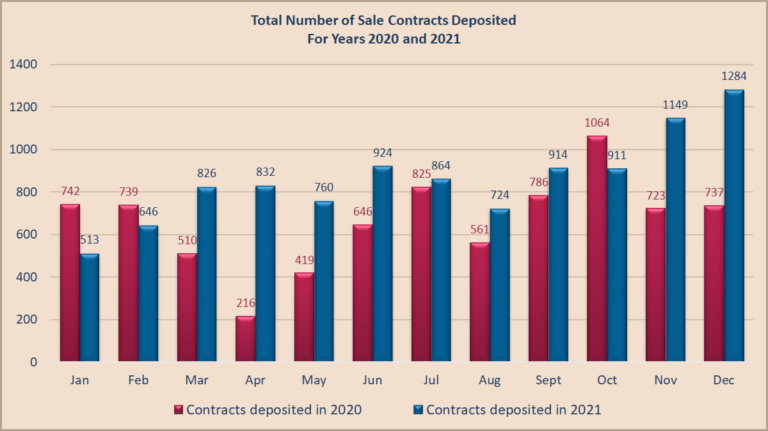
Property sales (as measured by the number of sale contracts deposited at Land Registry offices) surged in December recording the highest number for the last four years according to the property sales statistics published by the Department of Lands and Surveys.

Sales in December 2021 rose 74% compared to December 2020 with sales rising in all districts.

Property sales in Limassol rose 109% and in Nicosia they rose by 73%. Meanwhile, sales in Paphos, Larnaca and Famagusta rose by 66%, 51% and 27% respectively compared to December 2020.

Cyprus total sales 2021 vs 2020

The year-end surge may have resulted from a last-minute rush by Cypriots looking to take advantage of the government’s interest rate subsidy scheme.

In February 2021 ceiling for loans for house purchases was raised from €300,000 to €400,000 and the scheme provided an interest rate subsidy of 1.5% for a period of four years.

The subsidy scheme closed on 31 December.

Annual sales figures

The Department of Lands and Surveys’ statistics reveal that the number of property sales during 2021 surged 30% compared to 2020, with sales rising in all districts. despite the abrupt termination of the infamous ‘Golden Passport scheme‘ in November 2020 and Brexit.

Annual sales (10,347) have almost recovered to pre-pandemic number of 2019 (10,366.)

We expect that further analyses of property sales will be published by the DLS early next week.

Cyprus tops housing for investment but…

Cyprus has the highest percentage of its GDP invested in the housing sector compared with other EU Member States, according to the Housing in Europe report published by Eurostat.

In 2020, according to the report, 5.4% of the total EU GDP was invested in housing.

At 7.6%, Cyprus was top of the list for investment, followed by Finland at 7.1% and Germany at 1.1%.

At the other end of the scale, investment in Greece was 1.1%, Poland 2.0% and Ireland 2.1% and Slovenia 2.3%.

Cyprus houses larger than EU average

Cyprus ranked fourth in the size of house with 2 rooms per person (with the EU average of 1.6 rooms). Malta filled the top spot with 2.3 rooms, followed by Belgium and Ireland each of which had 2.1 rooms.

The countries with the least number of rooms were Romania (1.1 rooms), Croatia, Latvia, Poland and Slovakia (all with 1.2 rooms on average per person).

Quality of housing

The quality of housing can be measured in many ways. One is whether people live in an overcrowded home. In the EU in 2020, 17.8% of the population lived in an overcrowded home, a share which has fallen from 19.1% in 2010.

In 2020, the highest overcrowding rates were recorded in Romania (45.1%), Latvia (42.5%) and Bulgaria (39.5%), and the lowest in Cyprus (2.5%) and Malta (4.2%).

32% of the EU population live in an under-occupied home. The classic cause of under-occupation is older individuals or couples remaining in their home after their children have grown up and left. In the EU in 2020, nearly a third of the population (32.5%) lived in an under-occupied home, a share which has been almost stable since 2010.

In 2020, the highest rates of under-occupied homes were recorded in Malta (72.5%), Cyprus (71.4%) and Ireland (63.3%), and the lowest in Romania (7.1%), Latvia (10.3%) and Greece (11.0%).

When looking at the quality of housing, the report considered other aspects including the ability to keep the house warm, the lack of toilet and shower and a leaking roof.

In the EU in 2020, 8.2% of the population did not have the ability to keep the house adequately warm. The highest rates were recorded in Bulgaria (27.5%), Lithuania (23.1%), Cyprus (20.9%) and Portugal (17.5%), and the lowest in Austria (1.5%), Finland (1.8%) and Czechia (2.2%).

On average in the EU, 1.5% of the population lacked a toilet, shower or bath. This was most common in Romania (21.2% of the population), followed by Bulgaria and Latvia (both 7.0%) as well as Lithuania (6.4%).

Leaking roof

The final aspect the EU report considered in the Quality of Housing section of its report was the percentage of people living in a home with a leaking room.

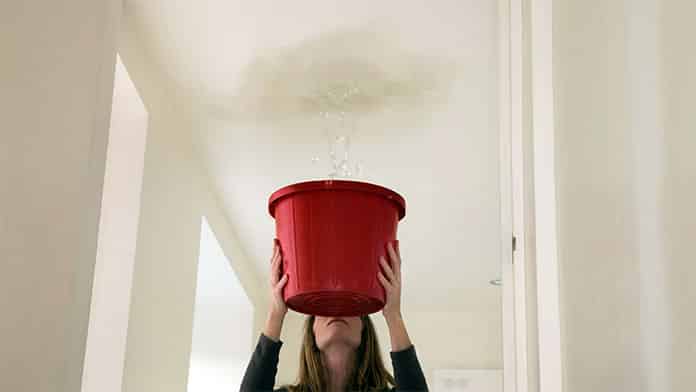
Judging from the number of emails I receive about this particular problem, it came as no surprise that 39.1% of the population of Cyprus live in a home with a leaking roof; almost three times the EU average of 13.1%.

Portugal came in second place with 25.2% and Slovenia came third with 20.8%.

Housing prices and rents

There has been a steady upwards trend in house prices since 2013 with particularly large increases between 2015 and 2020. In total there was an increase of 26% between 2010 and 2020. There were increases in 23 Member States and decreases in three (data for Greece not available) over this period.

The largest increases were recorded in Estonia (+108%), Hungary (+91%), Luxembourg (+89%), Latvia (+81%) and Austria (+77%), while decreases were registered in Italy (-15%), Spain (-5%) and Cyprus (-4%).

There has been a steady increase of rents in the EU between 2010 and 2020; 14% in total during the whole period. Increases were recorded in 25 Member States and a fall in two.

The largest increases were recorded in Estonia (+145%), Lithuania (+107%) and Ireland (+63%), while decreases were registered in Greece (-25%) and Cyprus (-5%).

Further reading

Housing in Europe 2021 Interactive Edition


Paphos property sales exceed €2.5 billion

Property sales in Paphos district exceeded €2.5 billion in value over the past five years, a report from independent real estate asset management and advisory firm WiRE has revealed.

The lion’s share of the sales took place in the Paphos and Peyia municipalities, with the two being responsible for property sales totalling €2.2 billion in value.

The remaining amount was spent on properties in Geroskipou and Polis Chrysochous, with the total number of transactions across all four municipalities reaching 9,000.

In the Paphos municipality, property sales exceeded €1.1 billion in value, with 5,364 transactions taking place during the past five years.

The average price for a property was €104,061, with the typical price ranging from €65,000 to €184,388.

Most sales took place in 2019 (1,239), while the majority of sales (2,880) involved properties with a maximum price of €110,000.

The most expensive property sale in the Paphos municipality during the past five years had a cost of €17.8 million.

In Peyia, property sales exceeded €1.1 billion in value, as was the case in Paphos, with 2,700 transactions taking place.

The average for a property in Peyia was €159,728, with the typical price ranging between €81,482 and €327,174.

Most sales took place in 2018 (587), while the majority of transactions (1,526) were worth up to €193,000 at most. The most expensive property sale in Peyia was worth €8.1 million.

In Geroskipou, property sales came close to the €300 million mark, with 740 transactions taking place.

The average price for a property in the municipality was €135,000, while the typical price range was between €84,750 and €340,979.

Most sales in Geroskipou took place in 2019 (185), while the majority of sales had a price ceiling of €257,000.

The priciest property in the municipality exchanged hands for a massive €23.5 million.

Finally, in Polis Chrysochous, property sales exceeded €113 million, with 600 transactions taking place.

The average price was €84,700, with the typical property ranging between €50,072 and €145,500.

Most sales took place in 2018 (161), while the majority of sales had a maximum price of €128,000.

Approximately 20 property sales exceeded €1 million in value, while the highest price recorded was €8.3 million.

According to the report, the total amount of property sales across Cyprus over the past five years approached €25 billion, with more than 100,000 transactions taking place.

Real estate in pandemic recovery mode

0

Cyprus’ real estate market continued its recovery this year, with some indicators exceeding pre-pandemic levels, according to a survey carried out by property analysts Delfi Analytics.

In comments accompanying the survey, Delfi Partners & Company said: “2021 was a year of correcting the anomalies caused by the pandemic in the market during 2020 when a significant number of transactions were postponed due to the prevailing uncertainty”.

According to Delfi Analytics, real estate transfers in the first 11 months of 2021 increased by 3.4% compared to the same period of 2019.

At the same time, sales documents decreased by 4.2%, while the number of mortgages dropped by 4.4%.

The value of mortgages increased by 82.2%, largely explained by the large increase recorded this year in Limassol; this may have resulted from a small number of high-value mortgages.

The lack of correlation between the value of mortgages to their total number points to the fact that a select few high-property mortgages have distorted the figures.

Delfi Analytics data suggests an increase in demand for used real estate, with 14,228 transfers recorded to November, an increase of 3.4% from 2019 and up 26.5% compared to 2020.

In contrast, submission of sales documents until November dipped 4.2% compared to 2019.

In the Nicosia district, most indicators were positive during the 11 months, with property transfers (27%) and sales (38%) higher than the corresponding period in 2019.

The number of mortgages also increased, while the value of mortgages compared to 2019 fell by 15%.

In Limassol, transfers increased from 2019 (2%) and 2020 (30%).

In terms of sales documents, there was an increase of 28% from 2020; however, there was still a gap of 11% on 2019 data.

In Limassol, the number of mortgages slightly increased, while the value of those mortgages increased dramatically by 300%.

An indication that a small number of mortgages were related to large loans.

Indicatively, while in 2019 and 2020, the mortgages amounted to approximately €900 mln, this year, they jumped to €3.2 billion.

But 2021 was not kind to Paphos real estate, at least not when compared to pre-coronavirus 2019.

During the first 11 months, property transfers were down by 20% from 2019, while sales and mortgages fell by 35% and 15% respectively.

In Larnaca, things were better; property transfers were down by 8% from 2019, while sales were up by 5%.

The number of mortgages was 11% down on 2019, although their value was 0.1% higher.

Finally, the real estate market in Famagusta moved mainly positively, as both transfers (+12%) and sales documents (+4%) and the number of mortgages (+4%) was higher than in 2019.

“In 2022, the course of the pandemic and any new variants such as Omicron will be crucial for both the real estate sector and the economy in general.

“We estimate the trend for the acquisition of used real estate will continue to increase as more properties are made available on the market by banking institutions and asset management companies,” said Delfi managing partner George Mountis.

Building permits increase in area but fall in value

0

The September 2021 figures show that a total of 768 permits were authorised during the month; an increase of 11.3% compared to the number authorised in September 2020. Their area rose 4.5% to 210.7 thousand square metres, while their value by 5.7% to €206.2 million.

The September permits provided for the construction of 907 new homes (dwelling units), an increase of 28.8% from the 704 new homes authorised in September last year.

The 768 permits were authorised for the following:

  • Residential buildings – 517
  • Non-residential buildings – 144
  • Civil engineering projects – 50
  • Division of plots of land – 46
  • Road construction – 11

New home construction

The 570 permits issued for the construction of residential buildings provided for the construction of 907 new homes, comprising:

  • Single houses – 327
  • Buildings comprising two units – 70
  • Residential apartment blocks – 457
  • Residential/commercial apartment blocks – 53

Of those 907 new homes, 331 are destined for Nicosia, 315 for Limassol, 132 for Larnaca, 104 for Paphos, and 25 for Famagusta.

Building Permits Issued for the Construction of New Homes
(Number of Dwellings)

Month 2020 (Dwellings) 2021 (Dwellings) Increase/Decrease %age Change
January 696 702 6 0.9%
February 680 663 -17 -2.5%
March 524 1,033 509 97.1%
April 339 955 616 181.7%
May 956 1,061 105 11.0%
June 976 998 22 2.3%
July 1,141 874 -267 -23.4%
August
790 554 -236 -29.9%
September
704
907
203
28.8%
Totals 6,806 7,747 941 13.8%

Building permits: year to date

During the first nine months of 2021, 6,008 permits were issued compared to 5,106 in the same period last year; an increase of 17.7%. The total value of these permits fell by -4.6%, while their total area rose by 7.6%.

These permits provided for the construction of 7,747 new homes, an increase of 13.8% compared to the 6,806 new homes authorised in the same period last year.

building statistics
Building permits authorised in 2019, 2020 and 2021

According to the Cyprus Statistical Service “Building permits constitute a leading indicator of future activity in the construction sector.”

Further reading

Building Permits: September 2021