EU demands respect for Cyprus Audit Office

The EU has come out in support of the Cyprus Audit Office and Auditor General Odysseas Michaelides in his efforts to investigate the island’s disgraced citizenship by investment (aka golden passport) scheme.

Those who have been following the Audit Office’s efforts will be aware of the outrageous allegations made against Odysseas Michaelides by the Cyprus government and the numerous hostile reports about him in the politically controlled local media.

President Nicos Anastasiades reportedly said that Mr Michaelides had allowed himself to be ‘weaponised’ by the opposition and that he was “obsessed” with investigating the citizenship-by-investment (CBI) scheme.

The president allegedly went on to say “Unfortunately, not once, but on several occasions, he has targeted state officials with inappropriate language, with inappropriate innuendo, or smeared various individuals,” and that “the situation is worsening, which gravely concerns me.”

The repeated blocking of the Audit office’s attempts to investigate the golden passport scheme has led many to believe that evidence, possibly involving senior government officials and others, has been swept under the carpet.

EU demands respect for Audit Office

In its support of the Cyprus Audit Office, the EU Contact Committee released the following statement yesterday:

The EU Contact Committee promotes effective external audit and accountability in the EU, and helps improve EU financial management and good governance for the benefit of its citizens.

The Contact Committee notes in this regard that one of its members, the Audit Office of the Republic of Cyprus, has recently faced substantial difficulties when performing audits on the Cyprus Investment Programme, notably:

  • restrictions regarding timely, direct and free access to all relevant documents and information deemed necessary for audits;
  • external attempts to influence its decisions concerning the publication of the corresponding reports.

The Cyprus Investment Programme allowed the Republic of Cyprus to grant citizenship in return for investments in Cyprus. The programme is relevant not only to the EU as a whole, but also to individual Member States, because of the internal market rules, notably those on the free movement of goods, capital, services and people. In order to ensure proper accountability, it is important to make it subject to public audit. The Contact Committee and its members therefore have a particular interest in the programme’s unobstructed and effective audit by the Audit Office of the Republic of Cyprus.

The acquis communautaire provides for an operationally, institutionally and financially independent external audit function, which is in line with the Lima and Mexico Declarations and with the standards of the International Organisation of Supreme Audit Institutions (INTOSAI). This includes the right for any supreme audit institution in the EU to:

  • determine its audit programme;
  • have unrestricted access to pertinent information;
  • report on its work; and
  • decide on the content and timing of its audit reports and on their publication and dissemination.

The Contact Committee considers any attempt to prevent the Audit Office of the Republic of Cyprus from properly carrying out its audits to be contrary to the fundamental principles of the European Union and the acquis communautaire, which places legally binding obligations on all EU Member States, and therefore calls on all relevant parties to respect the constitutional role of the Audit Office of the Republic of Cyprus and facilitate the implementation of its mandate.

(The Lima and Mexico declarations are also supported by UN General Assembly Resolutions A/66/209: Promoting the efficiency, accountability, effectiveness and transparency of public administration by strengthening supreme audit institutions: Promoting and fostering the efficiency, accountability, effectiveness and transparency of public administration by strengthening supreme audit institutions.)

Further reading

Statement in support of the constitutional role, mandate and independence of the Audit Office of the Republic of Cyprus


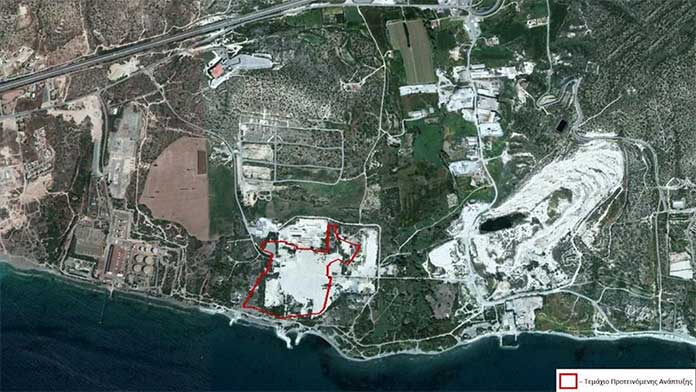
Project to redevelop Moni cement plant

Sarels Ltd. has submitted proposals to the Department of Environment for a project to redevelop part of the site of the old cement plant at Moni, which was demolished in 2014.

Moni is located on the southern coast of Cyprus, approximately 18km to the east of Limassol.

Moni project site
Photo credit: inbusinessnews.reporter.com.cy

The proposed project will cost in the region of €50 million and will comprise apartment buildings, detached houses, shops and a small church. The height of the tallest building will be around 65 meters. It will also include 320 parking spaces (7 of which will be allocated for disabled parking), plus around 20 parking spaces for bicycles.

The project will be divided into two phases; the construction of the detached houses to the south (in an area of 62,268m2), and the apartment buildings to the north (in 29,265 m2).

Moni project plan
Photo credit: inbusinessnews.reporter.com.cy

The project proposals include the following:

  • Apartments (in 7 blocks of four, five, six, seven and nine floors)
  • Detached houses, all with a basement, ground floor and one floor (total 84 houses)
  • Commercial spaces (6 shops)
  • Parking spaces (tenants and visitors)
  • Parking spaces (public)
  • Green public spaces
  • Community services
  • Swimming pools (84 in total)
  • Spa and wellness centre
  • Playground
  • Tennis court
  • Small church
  • Biological wastewater treatment plant
  • Public road (access to the plot)
  • Private roads (internal)
  • Public and private pedestrian street

Assuming the project gets the go ahead, it’s anticipated that construction work will start towards the end of 2021 and will take around four years to complete.


Cyprus files first golden passport prosecution

Cyprus has filed its first criminal prosecution in a disgraced citizenship by investment (aka golden passport) scheme abolished last year after an Al Jazeera’s corruption exposé, according to the state legal service.

“The first criminal case concerning the naturalisation of foreign investors and business people was registered at Larnaca district court,” it said in a statement on Friday.

The action against five individuals and four legal entities, facing a total of 37 charges, was taken based on the findings of an ad hoc committee, it said, without giving names.

At the first hearing, which is scheduled for 26th May, the defendants will face a total of 37 charges, including forgery.

“With instructions from the Attorney General, the police are examining other cases…some of which are at an advanced stage and are expected to be referred to the Legal Service for study and instructions,” the statement added.

The legal service said “sensitive details” would not be disclosed due to the “seriousness” of the investigation and to “safeguard” the probe into how passports were acquired through a cash investment.

Golden passport

Last November, the government dropped the “golden passport” scheme after Al Jazeera aired a documentary showing reporters posing as fixers for a Chinese businessman seeking a Cypriot passport despite having a criminal record.

Parliament speaker Demetris Syllouris and an opposition MP were secretly filmed allegedly trying to facilitate a so-called golden passport for the fugitive investor.

They later resigned, although both insisted they were innocent of any wrongdoing.

Al Jazeera reported that dozens of those who applied were under criminal investigation, international sanctions or even serving prison sentences.

Nicosia had long faced pressure from Brussels to reform the scheme over concerns it may have helped organised crime gangs infiltrate the European Union.

Cyprus had argued it had attracted valuable investment following the island’s 2013 economic crisis.

Nicosia issued thousands of passports under the scheme, allowing investors to acquire one in exchange for an investment of €2.5 million, netting over seven billion euros for Nicosia’s coffers over the years.

Money laundering allegations also dogged the programme.

Cyprus is still probing how passports were issued, to whom and under what circumstances.

Around 51 per cent of the 6,779 passports issued over 13 years from 2007-20 went to recipients who should not have qualified, the interim findings of an independent inquiry said last month.

The hefty report said authorities rubber-stamped citizenship requests without following due process or proper background checks.

It also made a recommendation that citizenship be rescinded in up to 66 cases.

The European Commission launched infringement procedures against Cyprus over the scheme last year, arguing that granting EU citizenship for pre-determined payments, without any genuine link to the state, undermined the integrity of EU citizenship.

Much to the chagrin of Brussels, the scheme attracted wealthy foreign investors because a passport from EU member Cyprus allowed free travel and residence within the 27-member bloc.

Golden passport scheme link to environmental disasters

At a recent press conference, the Green Party claimed that a number of projects in Cyprus linked to the “Golden Passport” scheme were constructed without the necessary environmental impact assessment and other studies resulting in environmental disasters.

President of the Green Party Charalampos Theopemptou referred to works carried out at the Sea Caves in Pegeia, the Sun City project in Ayia Napa, the City of Dreams in Zakaki, the Ayia Napa marina, the high-rise developments in Limassol and other projects.

The sea caves in Pegeia are the birthing habitat of the Mediterranean Monk Seal, which is listed as the most “critically endangered” marine mammal species in the Mediterranean by the International Union for the Conservation of Nature; there are only 700 Mediterranean Monk Seal left in the world. The sea caves are also a refuge for the lesser mouse-eared bat.

An audit office report states that a required Environmental Impact Assessment study was not carried out before the zoning was changed and the area’s building factor was tripled.

During the presentation, reference was made to the developments in or near the “Natura 2000” Network at Sotira regarding the illegal construction of additional floors in mixed tourist “Golden Passport” development (Sun City project – Christakis Giovanis) and other developments by Giovanis in the “Natura 2000” area.

According to information provided by the Greens, the directors of the tourism development company and their children were granted as Cypriot citizenship, while some were reportedly employed by the Anti-Concealment Crime Unit.

The construction of high-rise buildings in Limassol and elsewhere that were connected with the “Golden Passport” scheme were also referred to. No environmental studies were carried out and two permits were issued enabling tall buildings to dump 5 thousand cubic meters of liquid waste per day at sea for 2 years, resulting in the growth of algae that had a significant impact on the ecosystem and the accumulation of mud. Fire safety and rescue problems also came to light.

Regarding the City of Dreams at Zakaki, it was reported that at a meeting of the Audit Committee last October, the DG of the Ministry of Foreign Affairs stated that in 18 of the 23 cases of citizenship applications relating to this development “the Minister had given instructions to expedite the examination of these applications for to assist the investments that would be made in Cyprus.”

Regarding the Ayia Napa Marina, it was reported that the individuals who received “golden passports” related to the development did not meet the financial criteria resulting in a loss of €1 million from the public purse. The individuals were also granted citizenship by an express procedure and were not directors of the company at that time. (The became directors later.)

Furthermore, during the examination of their applications “as the necessary information was not available and in order to complete the file, the Finance Ministry requested and received information from the Registrar of Companies. After the passports were granted, four of the five people left the company”.

European Commission gets involved

In February, The European Commission called on Cyprus to enhance national rules on environmental impact of public and private projects:

“The Commission is urging Cyprus to fully transpose into national law the Environmental Impact Assessment Directive (Directive 2011/92/EU) on the assessment of the effects of certain public and private projects on the environment. The European Green Deal stresses the importance of Europe remaining on track to meet its environmental objectives.

“Cyprus has not correctly transposed some parts of the Directive which means that projects in Cyprus for which environmental impact assessments need to be carried out may be approved while not fully respecting the Directive. For example, Cyprus has not transposed its obligation to ensure that practical information is made available to the public on access to administrative and judicial review procedures. Neither has it transposed the obligation to lay down detailed arrangements for consultation.

“As the country has not yet complied with its obligations, the Commission is now sending a reasoned opinion. Cyprus has two months to reply and take the necessary measures, otherwise the Commission may refer the case to the Court of Justice of the European Union.”

Building permits record small recovery

The number of building permits authorised in Cyprus during February 2021 stood at 656; an increase of 11% compared to February 2020 according to the Cyprus Statistical Service.

The total value of these permits reached €170.1 million and their total area 155.9 thousand square meters and provided for the construction of 663 new homes.

The 656 permits were authorised for the following:

  • Residential buildings – 454
  • Non-residential buildings – 101
  • Civil engineering projects – 47
  • Division of plots of land – 46
  • Road construction – 8

Building permits for new homes

The 454 residential permits provided for the construction of 663 new homes (dwellings). These comprised 239 single houses, a fall of 9.5% compared to the 264 authorised in February 2020, and 424 multiple housing units including apartments, semis, townhouses and other residential complexes; an increase of 1.9% compared to the 416 authorised in January 2020.

Building Permits Issued for the Construction of New Homes
(Number of Dwellings)

Month 2020 (Dwellings) 2021 (Dwellings) Increase/Decrease %age Change
January 696 702 6 0.9%
February 680 663 -17 -2.5%
Totals 696 702 -11 -0.8%

Of those 663 new homes, 284 are destined for Nicosia, 174 for Limassol, 167 for Larnaca, 31 for Paphos and 7 for Famagusta.

Annual construction figures

During the first two months of 2021, 1,150 building permits were issued compared to 1,129 in the same period last year; an increase of 1.9%. However, their total value fell by 4.6%, their total area by 5.1% and a small fall of 0.8% in the number of new homes.

New homes

The 1,635 for which building permits for new homes were authorised during the first two months of 2021, provide for the construction of 498 homes in Limassol, 451 in Nicosia, 261 in Larnaca, 130 in Paphos and 25 in Famagusta.

Further reading

CYSTAT press release: Building Permits Feb 2021

Final Approval Certificate

There has been discussion recently about the Certificate of Final Approval (CFA) for someone to occupy a building or unit in Cyprus and whether such a thing is necessary.

It is quite an important topic with a lot riding on it. For example, one cannot occupy a house they bought without it, even if they have the title deeds and not having one can even allow for a demolition court order to go through.

Those who have experienced the procedure of securing such a certificate will have acquired a few white hairs in the process, both due to how long it takes and providing the authorities with all the minor details in information that they require.

Hotels are exempt from having to have the certificate, so why is it necessary when it comes to other buildings or units?

We would recommend the CFA is replaced with a certificate of “security and health”, to be issued by the supervising architect, who must coordinate with the fire authority, as well as the hygiene department.

Unfortunately, there is no easy solution to help owners or tenants of building units in Cyprus and this is why we propose the security/health certificate be valid for a period of six years from completion of a unit.

Depending on the CFA means that around 50-60 per cent of new building units may remain unoccupied due to lacking one, causing a financial hit.

If it were possible for the CFA to be secured as soon as a project is completed and withing a few days of the application this would be ideal. However, this is not the reality.

In one project we were developing, we had an issue with a neighbour a fence a neighbour had erected. It encroached on the area of our project by 4cm. It was minor and both parties agreed to accept the intrusion as it was, but it took a long time and the intervention of the local municipality to bypass it.

Another issue is whether a building can be legally insured without one and therefore an insurance company may refuse to pay up for any damage. Though I am sure they are more than happy to receive your payments until something happens, do not be surprised if in the end that you are not covered.

Having said that we recommend the CFA is replaced with a security and health certificate for a period of up to six years after completion, it is still imperative that applicants abide by the provisions of the building permit regarding the construction of infrastructure, avoidance of nuisance to neighbours, non-violation of seashore protection zones and so on.

Around 30 years ago a talented lecturer at the London South Bank University told us that “if a law is not working, legal ways are required to bypass it”. This is what we are attempting.

Antonis Loizou & Associates EPE – Real Estate Valuers, Estate Agents & Property Consultants