
Witness from Al Jazeera golden passports investigation threatened

The corruption trial linked to the Al Jazeera investigation into Cyprus’ controversial citizenship-by-investment scheme began on Monday, amid uncertainty over whether a key prosecution witness will testify remotely from abroad.

Tony Kay, a British estate agent involved in the Al Jazeera 2020 exposé, has declined to travel to Cyprus, citing health issues and threats against him. Prosecutors stated that Kay is willing to provide his testimony via videoconference.

The case implicates former House President Demetris Syllouris, ex-MP and businessman Christakis Giovani, and Giovani’s company director, Antonis Antoniou. They face five charges, including influence peddling and conspiracy to defraud, related to the naturalization of foreign investors.

State prosecutor Charis Charalambidou emphasized the importance of Kay’s testimony, which is critical for two of the charges against all three defendants. However, defence lawyers have opposed the use of remote testimony, and the court is set to rule on the matter next Wednesday. If prosecutors are unable to present Kay’s evidence, two charges could be dropped, fully exonerating Antoniou.

During Monday’s proceedings, three prosecution witnesses testified, including two police officers and an Interior Ministry official. The charges stem from alleged corruption in the naturalization applications of a Jordanian businessman, a Russian entrepreneur, and a Chinese investor with a criminal record, as detailed in the Al Jazeera investigation.

One charge accuses Syllouris and Giovani of accepting improper advantages for themselves and their associated companies – Nissini Ltd, Lanuza Ltd, and Fidescorp Ltd – to influence officials and expedite the citizenship application of Zaineh Ali Himli Armoush. Two other charges concern the naturalization of an individual identified as Gornovskiy, alleging that Syllouris and Giovani conspired to defraud the Republic of Cyprus by processing his application despite his lack of a residence permit.

The disgraced citizenship-by-investment (aka Golden Passport) scheme was terminated in November 2020.

Proposal to stop vulture attacks on loan guarantors

Following my rant about morally bankrupt Vulture Funds demanding payments to release Title Deeds of properties bought by trapped buyers, my jaw hit the ground when I read that an independent MP has proposed a bill to stop the vultures attacking loan guarantors.

Question. What’s the difference between a loan guarantor and a trapped buyer?

Answer. A loan guarantor owes money to the credit institution from which the money was borrowed – typically a bank. A trapped buyer owes nothing to any credit institution – they have paid for their property in full.

It’s bizarre that someone who owes money to a credit institution should be protected from the vultures, while the vultures are free to demand payment from trapped buyers for someone else’s debts and potentially seize their property!!

Details of the MPs proposal was published in Stockwatch, which I have translated from Greek below.

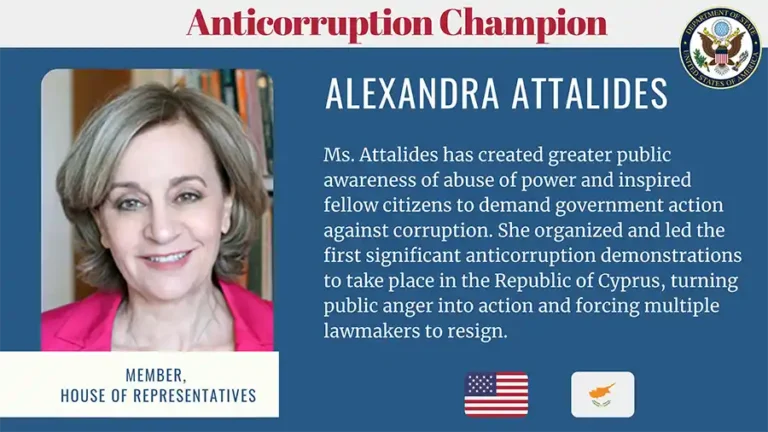
Independent MP Alexandra Attalides has submitted a draft bill to Parliament aimed at protecting the rights of guarantors when loans they guaranteed are sold to Vulture Funds.

According to the explanatory memorandum of the proposal, the purpose is to amend the law concerning Credit Servicers and Credit Purchasers and Related Matters. The goal is to release individuals designated as guarantors in credit agreements with credit institutions from any financial or other obligations arising from such agreements if the loan is sold or transferred to a company or entity (e.g., a Vulture Fund) other than the credit institution with which the guarantors originally entered into the agreement.

Ms. Attalides stated regarding the proposal that “unfortunately, the financial crisis, as well as the way banks handled loan issuance, turned a large proportion of these loans into non-performing ones.”

“Those loans that were not restructured were sold at low prices to Vulture Funds. Although these loans are covered by the value of the collateral of the primary beneficiaries, which has already come into their ownership, the release of guarantors from their obligations was not foreseen,” she explained.

She further noted that “this has left a large number of citizens liable to these companies, with devastating consequences for their incomes and well-being.”

An English translation of the draft bill can be found by clicking here.

Golden Passports police investigations criticised

The Nicosia Criminal Court ruling on Thursday exposed problems in police investigations into the “golden passports” scheme. Seven defendants were cleared of charges, while two were convicted of tax offences.

The court acquitted lawyer Fotos Tsangarides, Zavos Group’s financial director Michael Michael, the PHC Tsangarides LLC law firm, FullServe Secretarial Ltd, and lawyer Elli Michaelidou.

Zavos Group CEO Michael Zavos and his company Larina Estates Limited were cleared of charges related to naturalisation but found guilty on six tax-related offences, including evading VAT and filing false tax returns.

The court found they had wrongly declared VAT rates of 5% instead of 19% on apartment purchases, despite knowing there were management agreements. They also failed to report invoices worth €1,280 and €2,098,732.49 on sales of an apartment in Limassol’s Corniche building.

The case involved Mohamed Abdelrahman Mohamed Salem, an Egyptian national, and his children Esra and Baha, who were granted Cypriot citizenship in 2018 after buying €2 million apartments. Prosecutors alleged the developer refunded €500,000 to each buyer after naturalisation.

The defendants faced 18 charges, including conspiracy to defraud, VAT evasion, forgery, and providing false information. However, the court rejected claims they tried to bypass the requirements of the citizenship programme.

Police investigations criticised

In its 181-page decision, the court criticised the investigations, saying police focused too narrowly and asked leading questions during interviews. Judges Nicholas Georgiades and Nayia Oeconomou expressed these concerns, while Judge Maria Loizou gave a minority opinion.

“The investigation must be thorough and unbiased. Convictions cannot stand if there are reasonable doubts,” the ruling stated, adding that investigators had assumed money was refunded to buyers and shaped their questions around this idea.

Defence lawyers, including Tsangarides, George and Christos Papaioannou, Marios Apostolides, and Kostis Efstathiou, will argue for reduced sentences for the tax convictions on 24 February. Meanwhile, the Legal Service plans to appeal the acquittals related to naturalisation charges.

After the verdict, Tsangarides’s law firm criticised the prosecution for presenting “non-existent cases” based on “baseless claims” and accused them of manipulating witnesses, threatening legal action. The Law Office called these accusations “unfounded.”

This case was one of four prosecutions linked to the citizenship-by-investment scheme, which was ‘irrevocably terminated’ after an Al Jazeera investigation uncovered widespread corruption. The programme allowed foreigners to obtain Cypriot passports by investing over €2 million, but it faced heavy criticism from the European Union and caused public outrage in Cyprus.

Two further cases pending

Two further cases relating to the “golden passports” scandal are pending before the Criminal Court in Nicosia.

The first case arose following a report by Al Jazeera, with the accused including the former President of the House of Representatives, Demetris Syllouris, former AKEL MP Christakis Giovani, and a senior executive from Mr. Giovani’s company.

Among the accused in the second case are the former Minister of Transport, Communications and Works, Marios Demetriades, Andreas Demetriades, Dimitris Demetriades, George Demetriades, Eleni Simillidi, Jing Wang, Josef Friedrich Santin, Vasiliki Georgiou-Santin, the company Andreas Demetriades & Co LLC, and Delsk (Cyprus) Business Services Ltd.

The defendants – eight individuals and two legal entities – face 59 charges, including undue influence, bribery, corruption, conspiracy to defraud, money laundering from illegal activities, and violations of the Council of Europe convention on the criminalisation of corruption.

It’s worth recalling that, on 4 November 2022, the Criminal Court in Larnaca acquitted nine defendants – five individuals and four legal entities – in a case concerning the naturalisation of three Iranians. All defendants were cleared of the 36 charges against them.

Who is buying property in Cyprus?

The number of properties across all districts that have been bought by foreign nationals in recent years is significant, according to official figures provided by the Department of Lands and Surveys.

Based on figures submitted to the House of Representatives by Interior Minister Constantinos Ioannou, more than 37,000 properties have been sold to foreign buyers – including EU citizens and nationals from third countries – between 2021 and the end of 2024. During the same period, property sales to Cypriots exceeded 200,000.

UK nationals appear to lead in property acquisitions in Cyprus, consistently ranking among the top buyers across all districts. Russians, Israelis, Greeks, and Lebanese also rank highly among foreign nationals buying property in the country.

The Interior Minister provided the House of Representatives with detailed data on foreign property purchases, broken down by buyer nationality and district, following a request by independent MP Alexandra Attalidou.

Greeks, Britons, and Australians dominate in Nicosia

In Nicosia, Greeks top the list of foreign property buyers from 2021 to 2024, securing 1,626 properties. This includes 272 properties based on sales agreements and 1,354 from completed sales.

UK nationals follow, purchasing 1,584 properties (31 based on sales agreements and 1,555 through completed sales). Australians rank third, acquiring 545 properties, with 7 based on sales agreements and 538 through completed sales.

Cypriots continue to dominate the capital’s property market, holding 98,205 properties, compared to 5,236 held by foreign nationals.

Russians, Britons, and Israelis favour Limassol

In Limassol, Russians lead foreign property purchases with 2,561 acquisitions (1,269 through sales agreements and 1,292 from completed sales). UK nationals rank second with 1,840 properties (141 via sales agreements and 1,699 from sales), followed by Israelis with 1,154 properties (643 via sales agreements and 511 through completed sales).

Cypriots made 62,460 property purchases in Limassol during the same period, while foreign buyers acquired over 8,500 properties.

Paphos attracts Britons, Russians, and Israelis

In Paphos, UK nationals lead with 4,483 property purchases (290 through sales agreements and 4,193 from completed sales). Russians follow with 1,563 properties (666 via sales agreements and 897 through sales), while Israelis rank third with 1,291 properties (424 via sales agreements and 867 from completed sales).

In total, more than 10,000 foreign nationals purchased property in Paphos, compared to 28,484 acquisitions by Cypriots.

Lebanese, Britons, and Israelis interested in Larnaca

UK nationals also top the list in Larnaca, purchasing 2,743 properties (122 via sales agreements and 2,621 through sales). Lebanese nationals follow with 1,744 properties (958 through sales agreements and 786 via sales), while Israelis come third with 1,406 properties (925 through sales agreements and 481 via completed sales).

In Larnaca, 8,535 foreign nationals purchased property over the four-year period, while Cypriots acquired 33,819 properties.

Britons, Greeks, and Lebanese lead in Famagusta

Finally, in Famagusta, UK nationals again lead foreign purchases with 1,182 properties (139 through sales agreements and 1,043 via completed sales). Greeks follow with 165 properties (35 based on sales agreements and 130 through sales), and Lebanese nationals rank third with 131 properties (58 via sales agreements and 73 from completed sales).

Cypriots remain the primary property buyers in Famagusta, acquiring 16,966 properties over the past four years, compared to just over 2,000 acquisitions by foreign nationals.

These figures highlight the growing interest of foreign nationals in Cyprus real estate market, with the UK, Russia, Israel, Greece, and Lebanon being the most prominent countries of origin for buyers.

Stop vulture attacks on trapped buyers

Government intervention is needed to stop Credit Acquiring Companies, better known as Vulture Funds, demanding money from debt-free trapped buyers to release title deeds for the properties they purchased.

(“Vulture” is a metaphor that compares vulture funds to the behaviour of vultures, birds that prey on carcasses to extract whatever they can from their defenceless victims.)

Elikkos Elia, the permanent secretary of the interior ministry, said on Wednesday that “progress” is being made in addressing the challenges faced by Cyprus’ estimated 9,497 trapped buyers.”

But tell that to the 5,417 trapped buyers still waiting for their title deeds. While the government drags its feet, Vulture Funds are demanding money from some of them.

Who are trapped buyers?

These are people who paid for their homes in full, only to find out they couldn’t get title deeds because developers or previous owners had saddled the properties with mortgages. These buyers are now caught in a nightmare they never saw coming.

Here’s how buyers got trapped:

No legal advice – Some buyers chose not to hire a lawyer when purchasing property, trusting the honesty of the vendor and believing they were saving money. Without proper legal advice, these buyers unknowingly put themselves at significant risk of becoming trapped.

Poor legal advice – Lawyers instructed by buyers often failed to conduct proper due diligence. This would have uncovered issues like outstanding mortgages, other debts and legal disputes. (Due diligence involves checking title deeds, identifying debts, confirming the vendor’s reputation, and verifying a property’s condition and value.)

Conflict of interest – In some cases, lawyers worked in the interest of vendors rather than protecting their clients (the buyers). They used vendor-prepared contracts that heavily favoured the seller, leaving buyers exposed with very little to no legal protection.

Bank waivers

Buyers whose lawyers conducted proper due diligence discovered that their vendor had mortgaged the property. While some buyers walked away, others sought bank waivers – agreements where the lending bank waived its rights to repossess the property if the vendor failed to repay the loan.

While waivers allowed buyers to eventually obtain title deeds, they came with limitations. For example, if the buyer wanted to sell the property before receiving the title deed, the new buyer would need to apply for their own waiver, as waivers are not transferable.

Non-performing loans and Vulture Funds

To address their high levels of non-performing loans (NPLs), Cyprus banks sold much of this distressed debt to Vulture Funds.

  • Vulture Funds specialize in purchasing non-performing loans at a steep discount – believed to be between 15% and 20% of their original value.
  • This helped Cyprus banks reduce NPL ratios from 49% in May 2016 to a record low of 6.8% in August 2024. While this was a success for the banks, the consequences for buyers have been severe. These distressed debts included the underlying non-performing loans on properties purchased by trapped buyers.

Vulture Funds use aggressive tactics to recover more than they paid for these loans, including legal action, demanding repayments, and seizing assets like real estate.

Debt-free trapped buyers targeted by Vulture Funds

Buyers who are debt free are now being pursued by Vulture Funds. These funds are demanding additional payments, despite buyers having paid in full for their properties (and have proof of payment).

  • In one case, a Vulture Fund demanded over €20,000 from a trapped buyer.
  • In another, a trapped buyer was asked to pay €5,000.

These Vulture Funds also demand proof that payments were made directly into the developer’s bank account, even though developers ceased trading over 15 years ago and the records demanded are no longer available.

No transparency, no accountability

These Vulture Funds don’t tell buyers how much debt is linked to their property or how they calculated it. They operate in total secrecy, bullying people who have done nothing wrong.

Government must step in

This situation is scandalous. The government must stop these vultures from destroying lives by:

  • Banning them from targeting trapped buyers who have already paid for their homes.
  • Forcing complete transparency on debt claims.
  • Protecting debt-free trapped buyers from losing their homes.

Trapped buyers have suffered long enough – it’s time to end this exploitation once and for all!

Most acquitted in golden passports fraud case

A Nicosia criminal court on Thursday acquitted most of the defendants in a case concerning the disgraced Golden Passports scheme, ruling that the charges of conspiracy to defraud the state were not proven beyond reasonable doubt.

The case involved the naturalisation of a foreign national named Mohamed Salem, as well as two of his relatives – Bahaa Salem and Esraa Salem. Salem had invested in Cyprus to obtain a Cypriot passport.

In August last year, Salem and a further seven individuals saw their golden passports go up in smoke and their Cyprus citizenship revoked as investigators uncovered discrepancies in the personal data submitted to the authorities.

Salem himself was not a defendant in the trial. The defendants included property developers, businesspeople, and solicitors who had facilitated the citizenship application. At the time, the requirement for obtaining citizenship was a €2 million investment in real estate.

According to prosecutors, the defendants had allegedly conspired to defraud the state by submitting forged documents, falsely claiming the €2 million investment criterion had been met. The alleged offences occurred at various times between 2017 and 2019.

However, the court found no evidence of intent to defraud the Republic. Instead, it identified irregularities and mistakes in the documentation submitted.

As a result, the court acquitted the following defendants of the charge of conspiracy to defraud: solicitors Fotos Tsangarides and Elli Michaelidou, Michalis Michael – the director of the Zavos Group – and the companies PHC Tsangarides LLC and Fullserve Secretarial Ltd.

Nevertheless, the court found two of the defendants guilty of fraudulent avoidance of VAT. These were Michalis Zavos, CEO of Larina Estates Ltd, and Larina Estates itself.

The court determined that these defendants had deliberately concealed invoices relating to the sale of apartments. These properties, as it transpired, were not used as permanent residences by the foreign investor.

Under the applicable law, sales of real estate intended as permanent residences for the purposes of the naturalisation programme were subject to a reduced VAT rate.

The inquiry into the citizenship-by-investment programme, more commonly known as the Golden Passports scheme, was completed in June 2021.

A damning report put together by a probe committee headed by former supreme court judge Myron Nikolatos said over half (53%) of the 6,779 golden passports were granted illegally, encouraged by a due diligence vacuum or insufficient background checks.