Golden passports – a story that keeps on giving

Launched in 2007 and expanded in 2013 following the Cyprus banking crisis, the Golden Passports scheme was designed to attract foreign capital, boost the real estate market, and support economic recovery.

However, it was mired in controversy due to allegations of corruption, money laundering, and insufficient oversight.

In 2020, following an undercover investigation by Al Jazeera, which revealed how politically exposed persons (PEPs), criminals, and individuals under international sanctions were able to exploit the program – and intense pressure from the EU, Cyprus announced that its Golden Passports scheme was irrevocably terminated.

In 2021, former supreme court judge Myron Nikolatos delivered a damning 515-page report into the scheme, which identified that 51.81 per cent of around 3,500 cases examined had been unlawfully granted or involved violations.

Golden passports developments

This week saw the former Transport Minister, Marios Demetriades, who served in the first Anastasiades administration from 2014 to 2018, facing charges related to allegations of using his ministerial position to secure investors for his family’s law firm. His father, a former minister in a different administration, their law firm, and a public employee were also charged with bribery, corruption, and money laundering.

According to press reports, the attorney-general’s office is preparing two further cases related to the Golden Passports scheme. Although an earlier case against a Larnaca law firm involved in the citizenship by investment scheme was unsuccessful, the attorney-general has not given up.

Investigations into possible wrongdoing continue, although it is curious why it has taken so long to build these cases. At the very least, the authorities seem committed to pursuing the issue.

It remains uncertain whether this case will be successful. A successful prosecution, provided there is sufficient evidence, could improve public perception of the justice system.

However, the broader issue of corruption is still being neglected. It’s worth remembering that the citizenship by investment program flourished under the presidency of Nicos Anastasiades, with his family businesses reportedly benefiting significantly from it. This raises not just legal questions, but ethical ones, especially when the family of the head of state profits from policies he has both designed and promoted.

What’s more troubling is that the Anastasiades government continued the program despite objections from the European Commission about the rampant issuance of EU passports for financial gain.

Instead of halting the Golden Passports scheme, it was merely tweaked and allowed to continue. Was the president prioritizing his family’s financial interests – given their involvement in large construction projects and property sales to foreign investors seeking EU passports – over the interests and reputation of the Republic, which suffered yet another blow because of the Golden Passports scandal?

Given that Demetriades has been charged for using his ministerial status to attract clients to his family’s law firm, is it not possible that the president at the time could have done something similar? Or is it somehow acceptable that the president was taken on an all-expenses-paid holiday by a businessman whose extended family was later granted Cypriot passports? Perhaps this was merely a coincidence, not worthy of investigation.

Although Anastasiades has consistently maintained that his integrity is beyond reproach, he is currently under investigation by the Independent Authority Against Corruption. Whether this investigation will find any wrongdoing on his part remains to be seen.
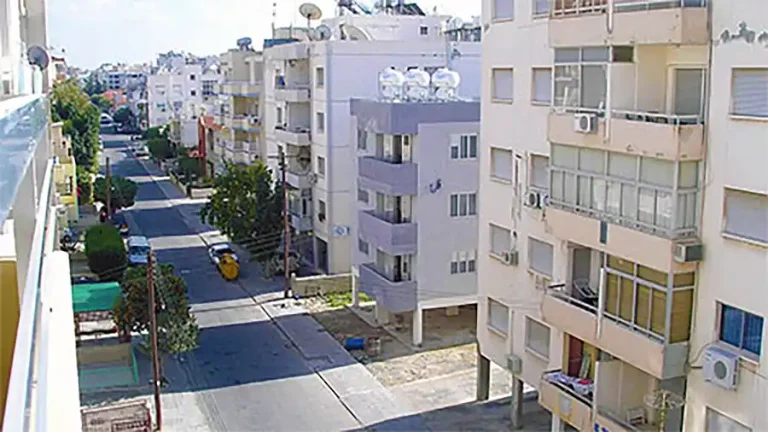
Rising costs push Cypriot property buyers towards apartments

The Cyprus property market saw apartments emerge as the preferred choice among buyers during the second quarter of 2024, according to a report released on Tuesday from the Cyprus Real Estate Agents Registration Council.

The council explained that this was driven primarily by the high costs associated with purchasing houses and limited financing options for local buyers.

The council’s quarterly real estate bulletin, based on data retrieved from the Land Department, includes an analysis focused on four main categories of properties. These are apartments, houses, plots, and fields.

The council said that it “aims to capture the average value of completed sales in each district and the number of transactions”.

The council also clarified that the average price data does not solely reflect sales in the urban centres of free Cyprus.

Instead, the figures presented are derived from all sales within each district’s geographical boundaries.

“The current market conditions have shifted buyer interest towards acquiring apartments,” said Marinos Kineyirou, President of the Cyprus Real Estate Agents Registration Council.

“This is primarily due to the significantly higher costs associated with purchasing a house, as well as the fact that local buyers’ incomes often do not allow them to secure bank loans for home purchases,” he added.

Moreover, Kineyirou also said that “we are seeing a growing interest from land development entrepreneurs in acquiring plots and residential fields”.

Apartments

During the second quarter of 2024, a total of 489 apartment transfers were recorded across Cyprus.

The majority of these sales took place in the Nicosia district, while the highest average apartment value was recorded in Limassol (€246,919), notably higher than in other districts.

Specifically, the average apartment value in Nicosia stood at €134,031, followed by Larnaca with €133,058, and Paphos with €122,846.

Meanwhile, in the Republic of Cyprus-controlled area of Famagusta, the average apartment value stood at €109,804.

Houses

“The analysis of house sales for the April-June 2024 period included 110 transactions across all districts of free Cyprus, except Nicosia, for which there was insufficient data available at the time of analysis,” the council said.

It added that in this category, the Larnaca district recorded relatively low activity, being surpassed by the free Famagusta area in sales volume.

The average value of the 31 house sales in Paphos was €398,857, while in Limassol, the 24 recorded sales had an average value of €362,429.

In Famagusta, the 35 house sales averaged €273,028, while in Larnaca, the average value for the 20 sales recorded stood at €205,035.

“It is worth noting that these figures represent transactions across the entire district, including rural areas, not just urban centres,” the council explained.

Plots

Nicosia dominated plot sales, accounting for 273 of the 666 transactions completed nationwide during the second quarter.

However, the highest average plot values were recorded in Paphos (€265,884) and Limassol (€260,613).

Nicosia followed with an average value of €198,737, Larnaca with €173,220, and Famagusta with €151,103.

“It should be noted that some plots may have large areas or include structures, contributing to the high recorded values,” the council said in its report.

Fields

In terms of fields, the districts of Nicosia (435) and Limassol (417) together recorded the most transactions (852 out of 1,501) nationwide in the first quarter of 2024.

In terms of average values, fields were the most expensive in Paphos (€170,873) and cheapest in Larnaca (€96,255).

The average values of fields in the other three districts stood at €144,359 in Famagusta, €135,392 in Limassol, and €104,752 in Nicosia.

“Again, it should be noted that some properties listed as fields may include structures,” the council concluded.

CM

Top property sales in July

0

The property market in Cyprus experienced a decline in high-value transactions during July, according to data by the Cyprus Land Registry analysed by Ask Wire.

The top 50 property sales in Cyprus totalled €55.7 million, a significant decrease from previous months. The most expensive property sold was a luxury house in Pegeia valued at €5.35 million.

Limassol emerged as the dominant district in terms of high-value property sales, accounting for six of the top ten transactions. However, the total value of these sales in Nicosia and Larnaca witnessed a substantial drop compared to June, indicating a slowdown in demand for high-end properties in these areas.

The 10 most expensive property sales across Cyprus had a total value of €27.2 million.

Limassol accounted for six transactions in the top ten sales, followed by Paphos District with three and Nicosia District with one transaction. The value of these transactions in Limassol District amounted to €14.3 million, in Paphos District to €11.5 million, and in Nicosia District to €1.4 million.

The 10 most expensive sales in July 2024

Property Type Sale Price District/Municipality
Community
House €5.35 million Paphos/Pegeia
Plot €4.5 million Paphos/Pegeia
Warehouse €4 million Limassol/Agios Antonios
Apartment €2.8 million Limassol/Mouttagiaka
Commercial Property €2.34 million Limassol/Katholiki
House €2.33 million Limassol/ Ayios Tychonas
House €1.7 million Paphos/Kato Paphos
Plot €1.5 million Limassol/Pano Platres
Apartment €1.38 million Nicosia’/Agios Andreas
House €1.3 million Limassol/Ayios Tychonas

Total value of the 10 most expensive sales/district

District Total Value of Transactions Percentage of National Total
Famagusta €3.4 million 6.1%
Larnaca €8.2 million 14.7%
Limassol €19.1 million 34.3%
Nicosia €8.3 million 14.8%
Paphos €16.8 million 30.2%
Countrywide €55.7 million

Pavlos Loizou, CEO of Ask Wire, stated:

“Six of the 10 most expensive sales in July involved houses and apartments, a trend we also see dominating the 50 most expensive transactions as 30 of these also involved houses and apartments.

“In July, we observed a decrease in the value of high-value property transactions compared to June, something attributed to the sharp decline recorded in Nicosia and Larnaca Districts.

“The top 10 most expensive sales in these two districts exceeded €20 million each in June, while in July it was reduced to €8 million. These losses could not be offset by the increases in high-value property sales in the other three districts of free Cyprus.”

Residential market shows signs of cooling

The island’s residential market is cooling down for the first time in four years, despite significant annual increases in property prices and rents across Cyprus.

Recent quarterly data suggest that this slowdown is evident in the stabilisation, and in some cases, slight decline, of house and apartment prices.

For the first time since 2020, the quarter-on-quarter increase in property prices is hovering close to 0%, with some areas even experiencing negative growth.

In Limassol, the island’s priciest city, apartment prices dropped by 0.5% in Q2 2024 compared to Q1, a notable shift from the 2% increase observed in Q1 from the previous quarter. This follows an even steeper 8% rise in the last quarter of 2023, indicating that the market’s momentum is slowing down.

Across Cyprus, apartment prices have shown signs of stabilisation over the past two quarters. Since Q2 2021, when the world began recovering from the coronavirus pandemic, apartment prices in Cyprus had been steadily rising, with quarterly increases ranging from 1% to 5% up to the end of last year.

However, in the past three quarters, these increases have been below 1%, with Q2 2024 seeing almost no change, signalling a significant cooling in the market.

In Limassol, the cooling trend is not limited to apartments. The cost of buying a house also edged down by just under a half of percentage point in Q2 2024 compared to Q1, following a period of stabilisation earlier in the year.

Over the past few years, house prices in Limassol have fluctuated, with quarterly increases ranging from minimal to 5%, peaking in mid-2023. The recent decrease suggests that the market may be entering a period of more subdued growth.

Larnaca stands out as the only district in Cyprus that has consistently seen price growth over the past three years, with quarterly increases fluctuating between 1% and 3%.

In Q2 2024, apartment prices in the coastal town notched up by 0.5% compared to the previous quarter, following a 1% increase in Q1. However, prices in all other districts have remained stable, further indicating a broader market slowdown.

Rentals: A Mixed Picture

The rental market across Cyprus, although hinting towards a cooldown, presents a mixed picture.

Overall, rental prices increased by 1% in Q2 2024, compared to the previous quarter, largely driven by significant rises in Paphos and Limassol.

Paphos saw a 5% increase in rental prices, while Limassol recorded a 3% rise. In contrast, rents in other districts, including the capital Nicosia, remained stable.

In Nicosia, rental prices have relatively stabilised, with a 3% increase in Q1 2024 followed by no change in Q2.

Limassol, however, continues to see upward pressure on rents.

Apartment rental prices in Limassol have been on the rise since 2021, with a 2% increase in Q2 2024, although this is a moderation from the staggering 10% rise in Q2 2023.

Meanwhile, rents for houses across the island have remained stable, suggesting a divergence in demand dynamics between different types of residential units.

Rental Market Pressures

Despite the cooling in property prices, the rental market remains under pressure, particularly in Limassol.

According to data from Danos International Property Consultants and Valuers, renting a one-bedroom flat in Limassol costs a minimum €850 per month, with two-bedroom flats starting at €1,300. Renting a three-bedroom flat in the district is becoming increasingly unaffordable for the average Cypriot wage, with rents around €1,700 per month.

In Nicosia, rental prices for a one-bedroom flat range from €550 to €650, while a two-bedroom flat costs at least €750 per month. However, prices vary significantly depending on location, with uptown areas like Engomi commanding higher rents.

Larnaca and Paphos offer more affordable rental options, but the increasing interest from foreign investors and high-tech companies in these coastal towns could drive up rents in the near future.

Annual Changes and Market Outlook

On an annual basis, the prices of apartments in Q2 2024 grew by 3.5%, while house prices remained stable. This annual growth reflects the sustained demand for housing in Cyprus, driven in part by foreign buyers.

In 2023, foreign buyers acquired 6,900 properties, marking a 16% increase from the 5,928 properties purchased in 2022.

High-end residential properties, particularly in Limassol, are expected to continue driving the market in 2024.

Limassol is likely to remain the dominant player in the luxury apartment and high-rise seafront tower segments, while Nicosia is expected to maintain a more modest yet stable market, attracting students, business owners, and government workers.

However, the cooling trend in the quarterly data could signal a shift in the market dynamics.

As supply steps up and EU interest rates begin to drop, local buyers may find more opportunities in the market, potentially balancing the high prices and interest rates that have previously outpaced Cypriot buyers.

About the author

Kyriacos Kiliaris is Chief Marketing Officer at Danos International Property Consultants & Valuers

Victim of the title deeds nightmare

The following letter was published in the Cyprus Mail and illustrates yet again the nightmare faced by many when trying to get their Title Deeds.

Its author isn’t a ‘trapped buyer’ but someone who cannot get Title Deeds for the property he purchased because it suffers from severe planning irregularities and other issues.


Title deed nightmare

I bought a property in Cyprus in 2007, but I am still not in possession of the title deeds as they are with my developer. I signed the contract of sale in August 2007 endorsed by two representatives of the development company.

My building had already been constructed and I had many meetings with my lawyer about my deeds and he told me on each occasion that everything was OK, but the land registry had a backlog.

I also applied to the land registry about three times paying €10 each time to obtain my deeds but to no avail.

There are restrictions on the property as follows:

  • The block where my apartment is has been built in the wrong place.
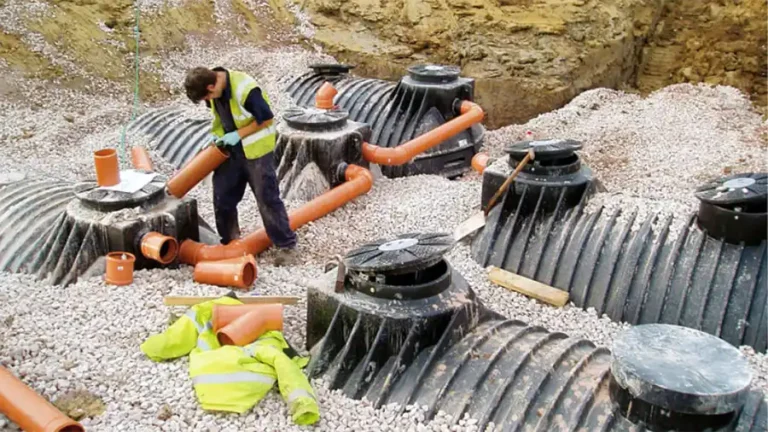
  • There is no chemical plant to go with the cesspit.
  • There are no completion certificates from the site civil engineer or architect.
  • The roads have not been completed.
  • The site has not been completed.
  • The site is illegal.

I have been told that I can pay to have all these restrictions removed from my title deeds. I will not do this because while it means I can sell the property to someone else; these restrictions will still be in place.

Lionel Grancourt


(Thousands of other buyers are in a similar position to Lionel; here’s an article I wrote on the subject – Sewerage blocks Title Deeds. There are ten or so apartment blocks in Paphos with the same problem, all of which were built by the same developer who is no longer in business.)

Gross injustice

To overcome the issues listed, Lionel and others in his block need to club together and pay to correct the planning infringements and any other remedial work required to issue ‘clean’ Title Deeds, while the developer responsible for causing the issues gets off scot-free.

Lionel and his neighbours may then sue the developer (assuming the company’s still in business) to recover their money

The simplest solution to this gross injustice is for the planning authority to impose fines on the ‘criminal’ (i.e. the developer responsible for the planning infringements) sufficient to pay for the remedial work required to issue a clean ‘Title Deed’, plus a further amount to dissuade the ‘crook’ from repeating his misdemeanours.

Are clean Title Deeds safe?

Although it’s usually safe to buy properties that have been issued with a ‘clean’ Title Deed, it’s not always plain sailing.

Lional writes that “the block where my apartment is has been built in the wrong place”, I suspect his block encroaches on someone else’s property.

Friends in Limassol and Larnaca, who had ‘clean’ Title Deeds, discovered their properties encroached on land belonging to their neighbour. Both had the option of losing part of their property or compensating their neighbour for the encroachment.

In an unrelated case I heard that a couple, on returning from a holiday, discovered that part of their garage had been demolished because it encroached on their neighbour’s land.

Generally, encroachment affects land that has not been surveyed for many years (or where developers have conveniently ‘forgotten’ to survey the land on which they’re building).

Surveyors today use modern theodolites, which can measure the land to within a few millimetres using GPS and electronic distance meters (EDM.) These are far more accurate that the technology used in the past. As a consequence, land appears to have ‘moved’, encroaching on a neighbouring property.

To avoid potential encroachment issues, I advise anyone buying land or an older property in a village to have its boundaries checked by a registered surveyor even though the property has been issued with a clean Title Deed.

New ‘Photovoltaics for All’ plan in September

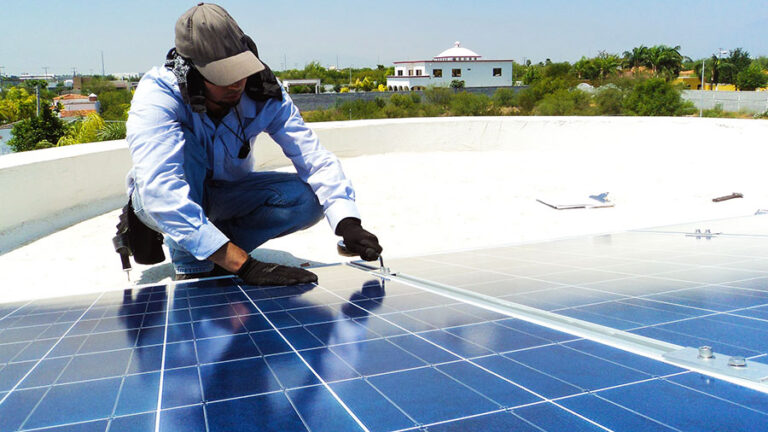
The Energy Service is working intensively to finalise the second ‘Photovoltaics for All’ plan, which is expected to be announced next month and will cover an additional 3,000 applications.

George Tsiametis, a senior officer at the service, told StockWatch that “applications for category A3, which concerns the ‘Photovoltaics for All’ plan, have closed, as all 6,000 applications have been completed and around 100 systems have already been fully installed and connected.”

At the same time, he reminded that two other plans for the installation of photovoltaics are running, as well as the roof thermal insulation plan. He urged vulnerable groups to be careful and apply for the plan that concerns vulnerable groups.

He pointed out that under this specific plan, the entire amount is covered by a grant, while in the ‘Photovoltaics for All‘ plan, the grant amounts to only €1,000 and the remaining amount is given as a loan.

Mr. Tsiametis explained that “the new plan is being evaluated based on all criteria, such as the amount of the subsidy in the existing plan, so that where necessary, the required improvements can be made.”

He also described the existing plan as successful, noting that within five months, the 6,000 applications have been covered, while more than 5,000 applications have already been evaluated.

(‘Photovoltaics for All’ is a government program aimed at promoting the installation of solar panels (photovoltaics) in homes.)