Successful bidder for Paphos marina by end 2024

The tender process for the Paphos marina is expected to be completed at the end of 2024, at which time the successful bidder will be known.

Giorgos Mais, the president of the Paphos Chamber of Commerce and Industry (EVE Paphos), clarified that the procedures regarding the submission of bids for the consultancy services for the project have been completed.

Mais said that if no objections were made by the end of April 2024, the appraisal and awarding of the bid is expected to proceed, after which the tender documents will be prepared.

By the end of 2024, the tendering process should be concluded, and the successful investor will be known.

Despite long delays and setbacks, Mais emphasized that the Paphos marina is of utmost importance to the area.

It is expected to enhance the tourism product, bolster nautical tourism, and support the other marinas in Cyprus.

Mais revealed that he had recently communicated with the President, who assured him that the procedures would be expedited and that the Deputy Ministry of Tourism and the government in general will do whatever is necessary to move the project forward as soon as possible, since as Nikos Christodoulides pointed out, it’s part the state’s strategy for tourism.

Three financial organisations have submitted bids for consultancy services for the Paphos marina project in the Potima bay area of Kissonerga.

Once the consultancy organisation has been selected, they will be responsible for preparing the tender documents, to find a strategic investor for the project.

Paphos marina – the long and winding road

Since an initial study was carried out more than 30 years ago, the Paphos marina project has been stalled by bureaucracy and legal battles:

The tender for the marina was first announced in 2007 and since then has faced numerous delays and objections from vying consortium and companies.

In 2008 the project was awarded to the Pandora Group (Leptos) following a hotly contested bidding process with Aristo and Pafilia.

But Aristo, the runner-up in the contest, objected to the award alleging irregularities in the submission of documents required for the tendering process.

Aristo’s objection was upheld and a committee was set up to examine the situation. Subsequently Pandora’s contract was annulled and the contract to build the marina was awarded to Aristo.

Pandora then decided to take the matter to the Supreme Court on several legal grounds. It claimed that it was not consulted during the revision procedures where their initial tender was re-examined.

In December 2015 the Supreme Court ruled in favour of Poseidon Grand Marina of Paphos, a joint-venture in which Aristo was a major stakeholder – Poseidon were subsequently awarded the contract in May 2016.

But although it had won the legal battle the Poseidon consortium failed to supply adequate evidence of its ability to finance the project and Pafilia, which was next on the list of tenders, was asked to provide evidence that it could fund the construction and running of the marina.

Poseidon appealed to the Supreme Court that the committee responsible for overseeing the Paphos marina tender process was unlawful – and in January 2018 their appeal was upheld.

In 2018 the Council of Ministers appointed a ‘new’ Marina Management Committee to examine documents submitted as part of the marina tender process and has just awarded the contract to Pafilia.

But in October 2018, Pafilia decided to withdraw its interest.

The government announced a new tender in 2021.

Authorities had picked a winner, but the process was challenged once more in the courts by Ernst/Young Cyprus, and the project was put on ice.

The Cyprus Tender Review Committee later rejected the appeal.

The tender was awarded to a consortium of Deloitte Ltd and Triton Consulting Engineers SA, who were tasked with preparing the related study.

Construction was expected to start at the end of 2021, but the project never took off the ground.

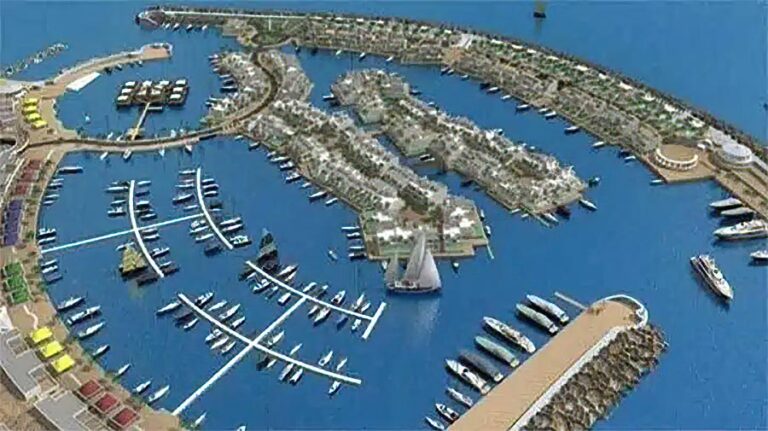
If and when the Paphos marina is built, it’s expected to have a capacity of 1,000 berths. The project will take approximately three years to be completed. In addition to berthing for 1,000 vessels, the project will include more than 42,000 square metres of residential and commercial developments.


Property prices & rents for 2024

The prices of apartments and houses are not expected to decrease in 2024, and rental prices are also unlikely to decline. However, there are cities that will be exceptions to this general trend.

According to data presented by Phileleftheros from Danos and Associates office (prices vary based on location, view, age, and other specific characteristics and specifications of the properties. They are relative and not absolute), in Nicosia, the selling prices of apartments and houses are expected to remain at €3,000 to €4,500 per square meter, as they were in 2023 and the previous two years.

In the Famagusta district, the average selling price of apartments and houses is calculated at the same levels as in 2023, ranging from €3,000 to €4,000 per square meter. It is noted that this price has remained unchanged since 2020.

In Limassol, the estimates from Danos office suggest that in 2024, the selling prices of apartments and houses will be €4,000 to €5,500 per square meter, similar to 2023.

Comparing prices with previous years, significant changes are evident.

For example, in 2020 and 2021, the selling price per square meter was €3,500 to €6,000, while in 2022, it was €3,500 to €5,000. The two cities expected to see an increase in selling prices of apartments and houses are Larnaca and Paphos.

For Larnaca, the estimates indicate that the sale per square meter in 2024 will be €3,500 to €4,000, up from €2,500 to €3,500 in 2023.

In Paphos, it is estimated that the selling price of apartments and houses in 2024 will be €2,500 to €3,500 per square meter, compared to €2,000 to €3,000 per square meter in 2023. As for rental prices, no major surprises are expected, although there are cities where prices will not remain stable but will increase in 2024, according to data from Danos and Associates office.

© 2023 In-Cyprus.com

EC Report for Cyprus analyses the economic situation

The Cyprus Post-Programme Surveillance Report for Autumn 2023, which has been prepared by the European Commission’s Directorate-General for Economic and Financial Affairs  analyses the Country’s economic situation.

Although the report is generally positive, the European Commission highlights the need to improve the management of non-performing loans (NPLs).

Executive summary

The 15th post-programme surveillance mission to Cyprus took place from 25 to 29 September 2023. This mission involved European Commission staff in liaison with European Central Bank (ECB) staff. European Stability Mechanism (ESM) staff participated on aspects relating to the ESM’s Early Warning System.

Economic growth in Cyprus is set to slow down over the coming years following a strong recovery post-COVID-19. Real GDP growth is expected to slow to 2.2% in 2023 from 5.1% in 2022. Domestic demand and tourism continue their strong growth performance, but external demand for financial and business services is being negatively affected by global developments such as the ongoing Russia’s war of aggression against Ukraine. Growth is expected to continue on a moderate path in 2024 and 2025 at around 3%. This will mainly be driven by sizeable investments in the areas of energy, education, health and tourism, in part supported by the RRF. The Cypriot labour market remains robust, with employment continuing to increase and unemployment expected to fall to its lowest level in over a decade, below 6% by 2025. Inflation is set to decelerate markedly to 4.1% in 2023 after reaching a peak in 2022 at 8.1% and is set to further decelerate over the coming years. However, core inflation is projected to remain elevated, partly due to the automatic wage-indexation system pushing up prices. The current account deficit widened in 2023 as external demand for non-tourism services is moderating. The deficit is expected to only gradually narrow in the following years.

The fiscal position remains strong. The general government balance posted a sizeable surplus of 2.4% of GDP in 2022. In 2023, revenues have remained buoyant, while expenditure has also increased, albeit to a lesser degree. According to the Commission’s autumn 2023 forecast, the general government surplus is expected to decrease somewhat before increasing again over the coming years. There are some potential risks to the fiscal outlook, such as possible new or extended measures, notably in case of a new surge of energy prices, and the contingent risks from the banking sector.

Cypriot banks recorded strong profits in the first half of 2023, benefitting from higher policy rates and the sector’s capital position remains solid. The bulk of the income gains derived from the banks’ excess liquidity placed with the ECB and to a lesser extent from a swift passthrough of the higher interest rates on variable-rate loans and a slower passthrough to deposit rates. As a result, Cypriot banks benefit from interest margins that are much wider compared to the rest of the euro area. The banking sector’s capital position remains solid, comfortably surpassing minimum requirements. Asset quality has improved, mostly because of Non-Performing Loans’ (NPL) sales achieved over the last few years by the systemic banks. Further progress depends also on the ability of the smaller banks to deleverage. The past transfers of NPLs out of the banking system to the balance sheets of the credit acquiring companies (CACs) still burden the economy through private indebtedness. Macroeconomic risks have increased moderately for Cypriot banks as higher interest rates and rising living costs weaken borrowers’ capacity to service their loans.

Further progress in the management of NPLs requires an effective foreclosure framework. This is important for legal certainty and to maintain payment discipline as it provides lenders leverage over uncooperative borrowers. Repeated suspensions of the foreclosure framework have hampered its efficacy. This can impact the efforts to reduce NPLs and as a result the robustness of the Cypriot banking sector. The effective implementation of the foreclosure tool is also important for the success of schemes like the mortgage-to-rent scheme, designed to protect the primary homes of vulnerable households.

Cyprus retains the capacity to service its debt. Despite a number of challenges, the economic, fiscal and financial situation in Cyprus is sound overall. According to the debt sustainability analysis, Cyprus faces low risks in the short and long terms, while medium-term risks appear to be medium. The government’s gross financing needs for 2023 and 2024 are low thanks to significant projected primary ( 3 ) On 8 December 2023, the Cypriot Parliament adopted legislation related to the foreclosure framework and the NPL resolution, which could not yet be analysed for the purpose of this report. iv surpluses. Repayments of the principal on ESM loans will start in 2025 and will conclude in 2031. Cyprus has a very large cash buffer and continues to enjoy favourable market perception. Its sovereign debt rating was upgraded by three rating agencies in 2023, now being at least two notches within investment grade area by all four main rating agencies.

Cyprus property market unaffected by regional conflict

Amidst the ongoing Israel-Gaza conflict, concerns about the safety and stability of Cyprus for potential property investors have surfaced.

However, Cyprus property market stakeholder Chris Michael released a statement assuring that despite its proximity to the conflict in Israel, Cyprus remains a secure and stable destination for real estate investments.

He cited the 2023 Global Peace Index, underscoring Cyprus’ stability, which rates the island at a ‘high’ state of peace.

In this context, this rating, he explained, places Cyprus alongside renowned investment hubs like Spain, Italy, and Germany, while highlighting the island’s commitment to maintaining a peaceful atmosphere amidst regional tensions. This assurance serves as a strong testament to Cyprus’s appeal for prospective property investors.

Michael said that he considers the 2023 Global Peace Index’s acknowledgement of Cyprus’ ‘high’ state of peace “to be highly significant for prospective property investors”.

“This places Cyprus in esteemed company alongside other desirable investment locations like Spain, Italy, and Germany. The contrast with France, which is recorded as being in a ‘medium’ state of peace, accentuates Cyprus’s unwavering commitment to fostering and preserving a peaceful environment,” Michael said.

“This endorsement adds an extra layer of assurance for those considering property investment in Cyprus, reaffirming the island’s stability and attractiveness in the real estate market,” he added.

What is more, he cited recent data which showed that a significant 46 per cent of property transactions in 2023 involved foreign buyers, marking the highest proportion since 2007.

He noted that this surge not only reflects trust in the island’s safety but also underlines its potential as a lucrative investment destination.

In addition, he stated that Paphos emerged as the preferred district among foreign investors, followed by Limassol, Larnaca, Nicosia, and Famagusta.

In the first two months of the current year, property sales surged by 31 per cent, reaching a total of 1,069 sales – a remarkable increase compared to the previous year.

He noted that this steady growth trend indicates a flourishing Cypriot market, with property sales soaring by 45 per cent since 2019.

“These recent trends show a significant surge in Cyprus real estate, capturing the interest of holidaymakers and investors alike,” Michael said, noting that “the market is experiencing unprecedented growth not seen since 2008, with foreign investment now constituting nearly half of all real estate ventures in Cyprus”.

“The study also identifies Russia and the UK as the dominant groups of foreign nationals showing keen interest in purchasing property in Cyprus and showing no sign of slowing down,” Michael concluded.

Top ten most expensive sales in November

The real estate market in Cyprus witnessed significant activity in high-value property transactions during the month of November 2023, according to data released by Ask Wire, a Cypriot firm combining real estate expertise with technology-driven insights.

Ask Wire’s analysis revealed the ten most expensive property sales completed in November, totalling €22 million.

The most expensive sale was a mixed-use building in Paralimni, which fetched €4.8 million.

Among the top 50 transactions, with a combined value of €52 million, the Limassol district led the way with four transactions in the top ten, followed by three in Nicosia, and one each in Larnaca and Famagusta.

In Limassol, transactions came up to a total of €9.56 million, followed by €4.23 million in Nicosia, €3.4 million in Larnaca, and €4.8 million in Famagusta.

The overall value of the 50 most expensive properties sold in November reached €52 million, with 51 per cent attributed to properties in Limassol and Nicosia.

Pavlos Loizou, Managing Director of Ask Wire, remarked on the data, stating, “November saw substantial movement in the high-value property market”.

“Among the top 50 sales nationwide, 19 properties were valued above €1 million, six sales fell between €900,000 and €999,000, three between €800,000 and €899,000, and five between €700,000 and €799,000,” the Ask Wire CEO added.

Cyprus real estate soars despite challenges

The real estate market remains robust and is on track to becoming the best-performing year since 2008, according to a report by Danos/BNPRE Group.

The report, covering the second semester of 2023, reveals a 23% increase in sales compared to the second quarter of the same year, reaching a record high in the past 15 years with 7,689 sales.

The total forecast sales contracts for 2023 are expected to surpass 15,000, exceeding the previous record of 13,409 in 2022.

During the second quarter, 5,974 transactions took place, totalling €1.52 billion in property sales.

Real estate contracts of sales

In comments to the Financial Mirror, Panos Danos, CEO of Danos/BNPRE Group, said that Cyprus’ real estate market is experiencing significant recovery despite the economic uncertainties arising from the energy crisis, the conflict between Russia and Ukraine, and the recent conflict between Israel and Hamas.

“There is resilience of the real estate market and increasing challenges that consciously arise and should not be underestimated.

“The real estate sector significantly contributes to the Cypriot economy, and it is crucial for the government to find ways to support and maintain its momentum,” said Danos.

Need to remain vigilant

He noted that there was a decrease in both the value and volume of transactions compared to the first quarter, urging the sector’s stakeholders to remain vigilant.

On an annual basis, the volume of transactions remained similar to the corresponding period in 2022, while the value of properties sold increased significantly to €1.2 billion.

Nicosia and Famagusta were the only districts experiencing an increase in property values during the second quarter compared to the first quarter.

Cyprus building permits

Despite a decrease in the volume of sales transactions, Nicosia recorded a value of €299.8 million, while Famagusta saw an increase in both value (€59.7 million) and the volume of sales transactions (303).

Limassol witnessed a substantial decrease, with the value of properties sold dropping by €200 million compared to the first quarter, reflecting a significant decline in sales volume.

In Paphos and Larnaca, there was a decline in the property market during the second quarter.

Paphos experienced a more significant decrease in both value and volume of sales compared to the previous quarter, while in Larnaca, the volume of transactions increased, but the value of properties sold was slightly lower.

Mainly apartments

The driving force behind the market remains apartments, with a growing interest from foreign companies relocating their operations and staff to the island, particularly in coastal areas.

The data indicates that 9,000 apartments were transacted during the year, representing a 29% annual increase.

Cyprus’ housing market continues to grow, fuelled by strong domestic demand and returning foreign investors.

The nationwide residential property price index rose by 7.42% (5.41% inflation-adjusted) in the year to Q2 2023, with a quarterly increase of 1.46% (1.15% inflation-adjusted) in Q2 2023.

Overall, the real estate market in Cyprus remains dynamic, driven by both domestic and foreign demand.