Paphos luxury resort linked to alleged Russian tax fraud

A luxury resort in Paphos built near environmentally sensitive land on the coast of Paphos got its first financing from companies said to be linked to an alleged tax fraud in Russia, according to the Organised Crime and Corruption Reporting Project (OCCRP).

In a report published this week, the OCCRP claims that one of the first buyers of a villa at the Cap St Georges resort was a company owned by Dmitry Klyuev, named by British-American financier Bill Browder as the alleged ringleader of a criminal group behind an alleged – by Browder – tax fraud in Russia known as the ‘Magnitsky Affair‘.

The OCCRP said one of the companies originally behind the resort was part-owned by Russian businessman Igor Sagiryan, whose Panamanian company received $2 million from Klyuev-owned companies.

“These Klyuev-owned companies had themselves been paid by companies that received proceeds of the fraud, according to exhibits presented by the US Department of Justice in a US civil case.”

The Cap St Georges development was advertised as a plan for 50 houses near protected areas of the Akamas peninsula. Today it includes a hotel and 200 private villas.

Credit: ZDF – The luxury villas at Cap St Georges had early investors linked to a notorious Russian tax fraud.

According to the OCCRP, in March 2007 a company called Alpha Arch Investments Limited was incorporated in the British Virgin Islands, “apparently to manage investments into the eventual development of Cap St Georges.”

The OCCRP goes on: “Cypriot company Melkov Limited bought one of the first villas for €3.3 million in October 2009. Reporters could not find documentation of Melkov’s ownership for that month, but Klyuev is named as the company’s controlling shareholder in a December 2009 management agreement with a Cypriot fiduciary services firm. Melkov purchased the villa ‘A1’ from Silfona Developments, a Cypriot company ultimately owned by Alpha Arch.”

In December 2015, Alpha Arch’s subsidiaries sold the Cap St Georges real estate for €16 million to companies owned by Cypriot businessman George Ioannou.

“Since then, the resort has grown into a sprawling development of 200 private villas with swimming pools, a hotel with 202 rooms, and accompanying sewage treatment plants,” writes the OCCRP.

“Advertisements and billboards around Cyprus identify the luxe resort’s developer as Korantina Homes, a company owned by Cypriot businessman George Ioannou.”

Contacted by the OCCRP, Ioannou said that when developing that area, “we were very cautious in abiding to all enforced regulations including environmental restrictions so that the development will not interfere or harm the natural beauty of the area.”

The OCCRP said that from 2016 to 2022, Ioannou’s companies made at least €170,000 in political donations, including every party continuously in parliament in the past decade except the development’s critics – the Green Party. Theano Kalavana, chairwoman of OPEK, a Cypriot think tank, told the OCCRP the donations were “generous” by the standards of Cypriot political giving.

Asked to comment on this, Ioannou said that all his political donations had been “below the maximum extent of contribution allowed by law” and that each donation was “transparent and is public data.”

Other than Klyuev, the OCCRP report names no sanctioned Russian nationals.

Why Cyprus Must Change its VAT policy on homes

0

Inspired by Greece’s success, there’s a proposal to fully suspend VAT on houses in Cyprus, mirroring Greece’s 0% VAT on new homes from January 1, 2020, to end of 2024.

Former EU states like the UK have maintained a zero-rating VAT policy on new residential properties.

Meanwhile, current EU members like Luxembourg have a super-reduced 3% VAT rate for construction and renovation on new main residences, capped at €50,000 VAT amount, per home.

The VAT proposal

We recommend a temporary suspension of VAT for at least 2-3 years on homes that used as the main residence or alternatively, a super-reduced VAT rate of 3%. For the proposed 3% rate, we suggest revising the policy to include “reasonable” (higher) home size criteria and by accounting family size.

Moreover, to eliminate regional price disparities and simplify the process, we advocate for the complete removal of property values as criteria. The definition of a medium-value property varies among regions and types, making a uniform criterion impractical. Instead, we propose introducing a VAT tax benefit cap of €50,000. For residential buy-to-let properties, we recommend either a temporary suspension of VAT or the introduction of a special (low) reduced VAT rate for 2-3 years.

This prompts an interesting question: Could Cyprus potentially benefit from such a proposal, a similar initiative as Greece, the UK, or Luxembourg.

More affordable homes will result

The potential benefits of applying such a policy on homes in Cyprus are vast. The market is expected to experience a surge in demand and supply for newly built properties, stabilizing prices faster. This phenomenon will also make resale properties more affordable, fostering fair competition between new and resale options.

More homes for rent and more affordable rents would be achieved

The increase in the supply of rental properties will naturally correct rental values, making housing more affordable in the medium term. Moreover, the suspension and reform will compel those currently exploiting the reduced VAT rate to report rental income, contributing to a fair and transparent tax system.

Smarter VAT policy on homes will also assist in addressing Cyprus’ low birth rate

The current VAT policy for new homes in Cyprus, capped at 130 sq.m and values up to 350,000, falls short in combating low birth rates, among others. A more effective solution, drawing inspiration from successful practices in other European countries, involves eliminating or improving size restrictions.

This strategic shift has the potential to significantly boost Cyprus’s birth rates by fostering larger families.

More new homes mean more greener future

More new homes mean a greener future, with reduced energy consumption and environmentally friendly living spaces, aligning with global sustainability goals.

The definition of a “new” property needs to be revised

Addressing the outdated classification of a resale property is critical for the success of this reform. Currently, Cyprus categorizes an “old” property as one that is 10+ years old. This differs significantly from other EU countries, such as France, where an old property (exempt from VAT) is any property completed more than 5 years ago. Some countries even have thresholds as low as 2-3 years.

By revising Cyprus’ definition of an old property from 10 years to 4 or 3 years, several benefits arise. Owners who bought or will buy a home with reduced VAT will have the option to sell or rent their property well before the lapse of 10 years, without facing the burden of onerous VAT penalties. Property companies will also be able to sell unsold stock under better conditions.

This change will provide all buyers with larger property options (more supply) and better-quality homes to choose from.

A Win-Win Proposal: VAT suspension without negatively affecting government revenues

While critics argue that government income would suffer from this VAT suspension, counterbalancing measures are proposed. First, increasing transfer fees for second property purchases by eliminating the 50% discount could partly compensate for the temporary VAT loss. (the majority of sales are subject to transfer fees).

However, most importantly, the suspension of VAT on homes, or the implementation of a super-reduced VAT, not only strengthens citizens’ purchasing power but also reduces the government’s need to spend on subsidies for housing, rent or on other items like petrol and electricity in the first place, for example.

When consumers are relieved from VAT on homes, the money they save essentially takes the place of traditional subsidies (directly and much more effectively). This not only makes homes more affordable for households but also decreases the need of government’s expenditure on subsidies. In simple terms, by adjusting VAT for homes as we suggest, the government can efficiently support citizens in affording homes without negatively impacting public finances.

This approach redirects savings to directly enhance the economic well-being of citizens, eliminating the need for substantial government expenses that were previously designated for subsidies. Moreover, this approach boosts consumption, benefiting businesses, and, in turn, these businesses contribute taxes that further support government finances.

It’s a win-win that enhances both individual well-being and overall economic stability.

About the author

Charalambos Pitros holds a PhD in Real Estate Economics and is a Member of the Royal Institution of Chartered Surveyors (MRICS), of the European Real Estate Society (ERES) and of the Cyprus Scientific and Technical Chamber (ETEK). He is a Lecturer in Real Estate at American University of Cyprus (AUCY) and a Chartered Surveyor Valuer at Zyprus Real Estate – Property Valuers & Estate Agents.

The views and opinions expressed in this article are solely those of the author.


The nightmare of buying & selling property in Paphos

Over the last twelve months I have had to console weeping or irate clients, explain and justify the unjustifiable and manage unprecedented situations of “homelessness”. One might wonder if I am a social worker or psychologist, sadly I am only a property lawyer based in Paphos.

If you have bought or sold property in Paphos in the last 12 to 18 months, you will most likely understand what I am talking about Property transactions are taking an unprecedented length of time to conclude, reaching an average of 10 to 12 months from start to completion.

There are delays every step of the way regardless of how diligent the parties in the transaction may be. I will not refer to the length of time it takes to get bank clearances for the funds to be used in any property purchase as this is perhaps the only “legitimate” delay which in my opinion can be justified. If everything else worked correctly, the banking delays could be “absorbed” without much effort.

Biggest hurdles & delays in Paphos

The biggest hurdles and delays we face nowadays are mainly caused by the Paphos government offices, namely the Inland Revenue, the District Office and the Paphos Land Registry.

Just reminisce to the pre-covid era, where buying or selling a property used to take on average around three months from start to finish. The buyer paid his reservation deposit which took the property off the market usually for a reservation period of 30 days. Property due diligence searches were conducted, and contracts prepared and signed by the end of the reservation period. The signed contract would be taken to the Inland Revenue to be stamped which was done on the spot. Thereafter, the seller applied for his tax clearances and the buyer (if not an EU citizen) would also apply for a Council of Ministers’ permission; both the tax clearances and the Council of Ministers’ permission being issued usually within two weeks from application.

The completion date, where the seller and the buyer met at the Land Registry to pay the final balance of the purchase price, transfer the title deed, and receive the keys, was any working day of the parties’ choosing (and as per the contract) provided they got to the Land Registry early in the morning and submitted their transaction documents. All paperwork being in order, the transaction would complete on the same day. Oh, for the good old days!

Currently in Paphos, to get a contract stamped by the Inland Revenue takes four to eight working days. To receive a Council of Ministers’ permission takes an average of four to six months, to get a tax clearance certificate from the Inland Revenue an average of three months. To be allowed to go to the Land Registry for completion, you must submit all paperwork to the Land Registry for “pre-examination” and then wait for the Land Registry to book you a completion appointment and this currently takes around six weeks.

These timeframes vary depending on the time of year, how many civil servants are on holiday and may have locked their office door with a pile of pending applications on their desks, etc.

In the meantime, frustrated buyers and sellers and their respective lawyers are struggling to push the paperwork from department to department, to expedite procedures and to “gain” a couple of days from one process and to move onto the next.

Buyers are desperate to move into their new homes, sellers are desperate to move onto to new pastures, containers arrive, “property chains” are created and frustration reaches the highest peaks. The property lawyer must juggle, console and justify and on the other hand cajole civil servants and meet expectations.

Clients always ask me how long the purchase or sale process will take. I used to be able to answer … I now smile rather vaguely and promise the only thing that I can promise, which is that we will do the best that we absolutely can under the circumstances.

The post-covid era leading up to the time of writing this article has been “the nightmare before Christmas” for everyone who has anything to do with the property market, starting primarily from buyers and sellers of property, lawyers, developers and estate agents.

Being a problem solver by nature, it would be impossible for me to finish this article without offering my suggestions on how the situation can improve rapidly in the short term and without asking for drastic measures like hiring more civil servants or digitalising procedures.

Starting with the examination of the Council of Ministers’ applications, which I understand are currently being processed by one person only. As there is evidently a backlog, it would be an instant boost of efficiency if at least one other person at the Paphos District Office is designated to assist in the processing of the applications until the backlog is resolved and processing times can go back to being a couple of weeks. Of course, processing times will need to be monitored to ensure that “help” arrives before things get out of hand again.

The Inland Revenue could also quite easily speed up processing times at least for stamping of contracts. This service was offered “on the spot” in pre-covid times; one had to queue up at the desk and be served when his turn arrived, made the payment, and got the contracts sealed.

During covid, a new system was initiated which theoretically should have made the process more efficient as payments are now made electronically (which means there is no need to have a civil servant to receive payment) and subsequently contracts are left in a box at the Inland Revenue for the physical seal to be placed on them, and contracts can be collected once they have been stamped.

Unfortunately, it is currently taking four to eight working days to have contracts stamped. Once again there is only one person responsible for stamping contracts and it appears that this person also deals with other matters and sometimes is asked to cease the stamping of contracts for a period, which creates a backlog.

The post-covid process for stamping contracts is an improvement in that it uses less resources at the Inland Revenue and has the potential to work very well for citizens if only the management of the department can appreciate that certain persons are in key positions and those positions must always be properly manned. This means that the person responsible for stamping contracts should not be asked to do other jobs if it means delaying the stamping process.

These are only a couple of suggestions of small changes which can have a great impact on the whole “chain” which is the property market in Paphos.

I am writing this article (evocative of letters to Santa) and secretly hoping that the next day will be one of “light” and “revelation”, where someone in government will decide to make a positive change in the situation or to “fix” any small part of the distortion that we call government services in Paphos.

About the author

Eleni Philippou, LLB, LLM, TEP, is an advocate at Polycarpos Philippou and Associates LLC


Our top 10 news stories and articles of 2023

Cyprus Property News welcomed just under 900,000 visitors over the past year and, as we approach Christmas and the New Year, here are the top 10 articles and news reports that have attracted the most interest from you, our readers, over the past twelve months.

Here are our most popular top 10 news stories and articles of 2023 in reverse order:

10. Female lawyer struck off the roll – A female lawyer (who was not named) was struck off the role by the Cyprus Bar Association’s Disciplinary Board following a hearing that found her guilty of professional misconduct.

(By failing to publish the name of the ‘female lawyer’ the Cyprus Bar Association throws the public’s suspicion on all female lawyers in Cyprus, which could potentially damage their reputation and their businesses.)

9. EU regulations could make or break real estate sector – The European Parliament passed a new bill that aims to tackle climate change by reducing carbon emissions.

This new legislation has significant implications and costs for the Cyprus real estate market, where there is a large stock of buildings that are over 30 years old and require energy upgrades.

8. Looking ahead to 2023: House prices in Cyprus – In this article, Pavlos Louizou MRICS VRS considered the factors that will affect house prices in Cyprus in 2023 given inflationary pressures and other factors including Russia’s war in Ukraine.

7. New Jointly-Owned Buildings law approved – A new jointly-owned building law was approved by the Council of Ministers that aimed to resolve the problems with Management Committees including owners who refuse to pay their communal fees.

The draft bill has now been passed to parliament where MPs discussing and considering proposed amendments.

6. Cyprus’ swimming pool saga continues – The long-running problem with the laws and regulations relating to swimming pools continue to damage tourism and the Cyprus property market.

5. Swimming pool legislation upgrade – It seems that a new bill is expected that will (hopefully) resolve many of the problems is on its way. Legal services is currently reviewing the new bill that will categorise swimming pools into three distinct groups. (However, it’s unclear how the laws and regulations will change for pools serving apartments and other building complexes where owners share the use of a ‘public’ pool.)

4. How to get a license to rent your property – a new law was introduced in 2020 requiring those wishing to rent their property as self-catering accommodation and short-term holiday rentals to obtain a license. This article describes the process by which owners can apply for a licence to rent their property.

The top 3 of my top 10 stories and articles

As most of my readers are UK nationals, it’s not surprising that the top 3 stories of my top 10 all relate to the impact of Brexit on Brits and other non-EU nationals wishing to live and/or retire to Cyprus.

3. Cyprus permanent residency rules revised – Details of the investment needed and the annual income emanating from abroad and other ‘quality criteria’ that non-EU citizens and their dependents require to get the right to reside in Cyprus permanently.

2. Cyprus raises bar for expat retirees – Changes that came into effect on 2nd May 2023, tightened the criteria for obtaining residency permits, which included a hefty increase of 66% on the assured annual income an expat retiree must have to apply for the fast-track procedure.

1. Brexit shatters retirement dreams – ‘Taking back control’ was one of the well-known slogans used by Brexiteers. It claimed that Britain’s sovereignty, its ability to make its own laws and control its borders had been eroded by its membership of the EU and that these would return after Brexit.

But Brexiteers didn’t warn Brits that ‘taking back control’ works both ways enabling EU member states to control their borders.

Music video of the year

This year I’ve chosen a video of “Imagine”, which was written by the late John Lennon and recorded on his 1971 album of the same name.

This version is performed by the American acapella group ‘Pentatonix’ that was formed in 2011 and who featured in my 2019 music video of the year.

The lyrics encourage listeners to imagine a world of peace, tolerance and respect, without materialism, without borders separating nations, and without religion.

May I take this opportunity to wish you a Merry Christmas
and a Happy and Healthy 2024.


Civil engineers call for legislation after balcony collapse

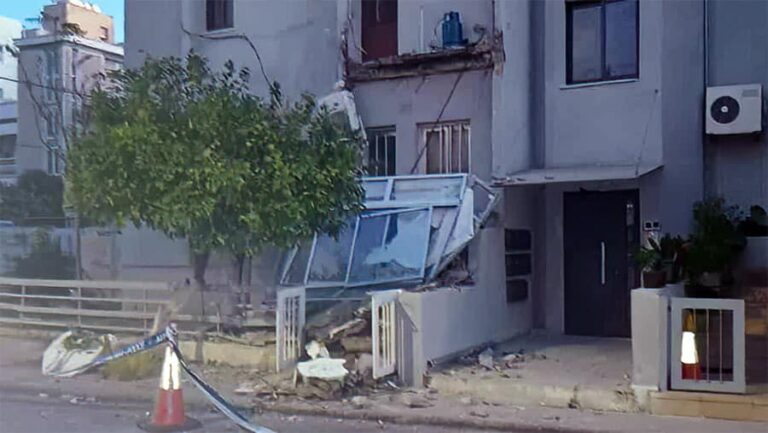
The Cyprus Association of Civil Engineers (Spolmik) on Thursday called on lawmakers to act and create legislation for regular building inspections, in light of Wednesday’s balcony collapse in Limassol.

The balcony had fallen off a residential building in the early hours of Wednesday morning. No one was injured.

They said Cyprus’ ageing stock of buildings, many of which are not properly maintained, coupled with the fact that extensions are regularly built on buildings without the requisite study, licensing and supervision, results in failures and collapses of structures.

For this reason, they said, it is “imperative to legislate for the regular inspection of buildings”.

Additionally, they called on the relevant authorities to “take action” on the matter, given that they have “the legal responsibility for the licensing of construction … and also for the implementation of measures and the promotion of actions to remove dangerous building practices.”

They also said private citizens who undertake construction and renovation projects on their own property “must consult a civil engineer”.

They added that civil engineers exist to “advise them and provide services for a proper study, plan and supervision of the safe execution of the works for any required repair, maintenance, and strengthening of the earthquake proofness of the loadbearing elements of a building, as well as the restoration of non-loadbearing elements.”

In addition, they encouraged people to “assign works to qualified professional contractors and craftsmen who have the necessary training, know-how, human resources and equipment”.

Circling back to their calls for legislative action to ensure the safety of buildings going forward, they said that new legislation should go hand in hand with “the development of a maintenance culture and the development of a culture of professionalism.”

They also made reference to the Scientific and Technical Chamber (ETEK), who had themselves spoken out on the matter on Wednesday evening.

ETEK had said “the country stands at a critical point for implementing measures to prevent such incidents and safeguard human lives,” and called upon the relevant authorities to “take the necessary actions to ensure the safety of buildings falling under their jurisdiction”.

“The existing buildings are often aged and poorly maintained, a situation exacerbated by a lack of maintenance culture observed in Cyprus,” they added.

Earlier, the Limassol municipality had said there were “serious issues regarding the responsibilities of those involved in the maintenance and repair” of the building where the balcony collapsed.

They had also said that the building had undergone maintenance as recently as 2019, carried out by its owners, but that “from today’s judgement, it seems that [the maintenance] was ineffective.”

“The maintenance that was done created a misleading impression regarding the dangers of the building and serious issues have been raised regarding the responsibilities of those involved in its maintenance and repair procedures,” they added.

Is AI in real estate a disruptive or transformational force?

0

The integration of Artificial Intelligence (AI) in real estate and more specifically in property valuations marks a transformative era in the industry.

Without data, AI does not exist. AI’s capabilities in data analysis, prediction, and automation are revolutionising how properties are valued, managed, and traded.

Data revolutionises property valuations, market trend analysis, and consumer preference understanding, enabling precise appraisals and informed investment strategies. Real estate professionals use data to personalise client services, enhancing satisfaction and engagement.

In property management, data optimises operations, reducing costs and boosting efficiency. It also fuels innovation in areas like smart city planning and sustainable development. However, challenges in data accuracy, privacy, and security remain crucial.

AI excels in processing and analysing vast amounts of data, including historical price trends, neighbourhood demographics, and market conditions. This allows for more accurate and comprehensive property valuations.

Predictive analytics, powered by AI, can forecast market trends and property prices with accuracy. Machine Learning and Artificial Neural Networks (ANN) have been tested in academia and in practice. This enables investors and property professionals to make informed decisions based on future market predictions.

AI systems can tailor property searches and recommendations. The integration of AI, data analytics and CRM systems creates a powerful synergy that enhances property management, market analysis, and customer engagement, revolutionising the way real estate businesses operate and interact with clients.

On the other hand, AI is significantly disrupting the industry by introducing innovative technologies that are transforming how real estate professionals interact with data, manage properties, and engage with clients. Key areas of disruption include:

  1. Automated Valuations and Market Analysis: This shift is streamlining appraisal processes and reshaping the role of traditional valuation experts. However, the International Valuation Standards Council in a publication in November 2022, stated that AVMs are not yet suitable for residential valuations, as the inspection and the judgement of the valuer are more important than the data at this stage.
  2. Enhanced Customer Experience: Through AI-powered CRM systems, real estate businesses can offer personalised property recommendations and communications based on client preferences and behaviour patterns.
  3. Efficient Property Management: AI is automating routine tasks in property management, such as maintenance scheduling, tenant screening, and rent collection, leading to increased operational efficiency and cost savings.
  4. Predictive Analytics: Predictive models forecasting market trends and investment outcomes can identify potential high-growth areas, investment risks, and optimal pricing strategies.
  5. Virtual Property Showings: AI-enabled virtual and augmented reality tours are changing the property viewing experience, allowing potential buyers to explore properties remotely in detail, especially significant in the post-pandemic world.
  6. Smart Contracting and Transactions: AI is facilitating smoother, faster real estate transactions through smart contracts on blockchain platforms, enhancing security and transparency in property dealings.
  7. Challenges and Ethical Considerations: AI’s disruption in real estate also raises challenges, including concerns over data privacy, potential job displacement, and the need for regulatory frameworks to manage the ethical implications of AI technology.

AI in Real Estate – A swot analysis

As the topic is so broad and millions of relevant studies have been conducted so far, it would be better to provide a SWOT analysis of AI integration in real estate.

Strengths

  1. Efficiency and Speed.
  2. Data Processing and Analysis.
  3. Predictive Analytics.
  4. Automation.
  5. Personalization.

Weaknesses

  1. High Initial Costs: Implementing AI technology can be expensive, making it less accessible for smaller real estate firms.
  2. Complexity and Maintenance: AI systems require continuous updates and maintenance, demanding additional resources and technical expertise.
  3. Dependence on Data Quality: AI’s effectiveness is heavily reliant on the quality and quantity of data, and poor data can lead to inaccurate analyses and decisions.
  4. Potential for Job Displacement: The automation capabilities of AI could lead to the displacement of traditional roles in the real estate sector.
  5. Lack of Human Touch: AI cannot entirely replicate the personal touch and expert judgment that a human real estate professional provides, especially in negotiations and understanding nuanced client needs.

Opportunities

  1. Market Expansion.
  2. Innovation in Services.
  3. Collaboration with Tech Industry.
  4. Enhanced Customer Experience.
  5. Sustainable Development.

Threats

  1. Technological Disruption: Rapid technological changes can render current AI systems obsolete, requiring constant adaptation.
  2. Data Privacy and Security: Handling vast amounts of personal and sensitive data poses significant privacy and security risks.
  3. Regulatory Challenges: The evolving nature of AI might outpace current regulations, leading to legal and ethical challenges.
  4. Market Overreliance: Excessive reliance on AI-driven predictions and valuations could lead to market distortions or bubbles.
  5. Public Perception and Trust: Misunderstandings or mistrust of AI technology can affect its adoption and effectiveness in the real estate sector.

A balanced approach that leverages AI’s capabilities while mitigating its risks is essential for its successful integration into the real estate sector.

In conclusion, AI’s impact on the real estate sector is profound, offering numerous opportunities for innovation and efficiency. However, navigating its challenges responsibly is crucial to fully realise its potential in transforming the industry.

Despite failures, AI is here to stay

AI has firmly established itself as a cornerstone of modern technological advancement, signifying a major shift in business, society and daily life. Its rapid evolution and integration across diverse industries underscore its lasting impact and potential for future growth.

From revolutionizing healthcare through predictive diagnostics, to transforming finance with algorithmic trading, AI’s applications are vast and varied.

Moreover, AI is pivotal in addressing global challenges, such as climate change and public health, by processing and analysing data at a scale and speed unattainable by humans alone.

Consumer experiences are also being reshaped by AI, with personalised services becoming the new norm, driven by AI’s ability to understand and predict user preferences.

As AI continues to evolve, blending more seamlessly with everyday technologies and services, its role is not just transient but a fundamental aspect of the future landscape.

AI’s adaptability, efficiency, and continuous learning capabilities make it an indispensable tool in the journey towards more innovative, informed, and efficient societies.

Excerpts from a presentation at the Property Valuers’ Association seminar on “The Property Market of Cyprus and Greece – Current Valuation Trends” in Nicosia on December 8, 2023. The Financial Mirror was media sponsor of the event.

About the author

Dr Thomas Dimopoulos is Assistant Professor in real Estate and Head of the Real Estate Department at Neapolis University Paphos. He is also the founder and Director of AXIA Chartered Surveyors, Director and cofounder of Real Geosolutions and Homessurv, and member of the European Board of the IVSC. He served as Chairman of RICS Cyprus from 2017 until 2022 and as a board member of the Property Valuers’ Association (SEEAK).