Soaring rents harm job market

0

There is a Catch-22 when seeking a high-paid job, especially in Limassol, where exorbitant rents are a turn-off.

This results in people having second thoughts when considering a career move to the fast-paced cosmopolitan town, especially those seeking a job in the non-forex sectors.

Market forces determine the disparities in the jobs sector, and there is nothing anyone can do about it.

However, in the absence of rent controls, the state has no policy whatsoever regarding lower-income households.

To appease the public backlash when the ‘golden passports‘ saga got out of hand, the administration introduced a half-measure, whereby a fraction of the investment would go towards low-cost housing.

This clearly displayed the government’s weakness in determining the social impact from the frantic urge to sell luxury homes and apartments at exactly €2.5 million per unit (corresponding to one golden passport).

As generous as it may sound at first, this part of the citizenship-for-investment programme was a total flop.

Constructors were not keen to allocate part of their new developments to low-cost housing, with the measure interpreted as ‘cheap’ housing, meaning a studio or tent-sized one-bedroom being sold at low cost.

Who would be the beneficiary, and who would determine this measure?

And how to ensure low-cost housing (a.k.a. affordable housing) would not be rented out at exorbitant rates due to high demand from students or young professionals?

A teacher, say, seeking a career move to Limassol would think twice about accepting a job, either in state or private schools.

The same applies to entry-level professors in local colleges and universities. All of this explains why there is an uneven shortage for certain positions.

The same situation could evolve in Paphos, where the Technical University of Cyprus (TEPAK) plans to operate a tourism school by September 2023, while the American University of Beirut invests in a campus in the heart of town.

This has landlords delighted that they can now hike their rents, and they will get away with it, justified by the laws of supply and demand.

However, the Mayor of Paphos should think about keeping a fair balance between encouraging investment into his town while not discouraging students and academics dissuaded by greedy landlords.

To his credit, the mayor has done a tremendous job to rejuvenate the commercial centre of the town and continues to clean up the mess tolerated by his predecessors over the decades.

Contributing to the demise of downtown Paphos is the inability of state service to deal with core issues, such as abuse of Turkish Cypriot-owned properties by non-beneficiaries, lack of evictions and government officials turning a blind eye.

The government claims we are on a growth path of strong recovery, not giving the full picture; this is based on the pandemic’s traumatic impact on the economy and society in general.

While encouraging across the board investments as a way of helping the economy get back on track, we must not lose sight of the needs of the middle to lower working classes, many of whom are struggling on a single household salary and see no real benefits from the trillions supposedly pouring into state coffers.


Transaction value reached €3.8 billion in 2021

PwC Cyprus has launched its latest Cyprus Real Estate Market publication, which provides insights on the performance of the sector during 2021, demonstrating strong signs of recovery, despite the disruption caused by the pandemic and the termination of the Cyprus Investment Program (“CIP”), as of 1 November 2020.

According to PwC’s analysis, total transaction value reached €3.8 billion during 2021, recording an annual increase of 26% (-14% drop compared to 2019). In terms of volume, properties transacted during 2021 reached 19,100, up 32% on the previous year and even surpassing 2019 levels by 11%, driven by a surging domestic demand.

Transaction volume value
Source: PwC Cyprus

The districts of Nicosia, Limassol and Larnaca recorded double-digit increases in transaction value terms during 2021, compared to 2020, with Limassol accounting for 42% of the total value of transactions. Although the recovery of the market is evident across all districts, the value of transactions during 2021 appears reduced when compared to pre-pandemic levels (i.e. 2019), with the exception of Nicosia, which is the only district that experienced growth. This is mainly due to Nicosia being a market predominantly driven by the local segment, which has been a key driver in the recovery and growth of the sector during 2021.

Residential transaction value €2.4 billion in 2021

The residential segment demonstrated strong signs of recovery with the value of transactions for apartments and houses reaching €2.4 billion during 2021 (Apartments: €1.3 billion and Houses: €1.1 billion), demonstrating an overall increase of 16% in terms of value and 23% in terms of volume, compared to 2020. Land assets proved to be the key drivers of the market during the year, with the value of land transactions reaching €950 million, contributing 44% to the overall growth in transaction values of the sector. In terms of volume, a total of 7,300 land transactions were recorded during the year, recording a significant annual growth of 43%.

Despite the termination of the CIP, a total of 139 transactions of residential properties €1.5 million were recorded in 2021, representing a 21% drop compared to 2020. In terms of sales value, the high-end residential property sector (€1.5 million) totalled €380 million during 2021, corresponding to a 5% decrease compared to 2020. This indicates that although lower in volume, transactions are on average of higher priced assets.

Perhaps the most resilient segment of the sector during 2020 and 2021, was that of residential properties between €100k and €300k. This is mainly a consequence of strong demand for primary residences, as well as increasing activity for private-rented housing (particularly apartments) and buy-to-let transactions. In terms of transaction value, residential properties within the particular range totalled c.€1.1 billion during 2021, representing a 33% increase compared to 2020 and a 15% increase compared to 2019.

Properties acquired by foreigners up 24%

During 2021, properties acquired by foreign nationals increased by 24% on an annual basis. From August 2021 onwards, monthly transactions by foreigners appear to consistently surpass pre-pandemic levels, demonstrating the overall momentum of the Cyprus real estate market.

Construction costs up 11%

Looking at the construction sector, the continuous hike in the cost of material prices has been ceaseless during 2021, recording an annual increase of 11%, mainly driven by inflation in the price of metallic products (c.23%) and products of wood, chemicals and plastics (c.10%). Despite these increases, during the first 10 months of 2021, the volume of new building permits appears increased (17%), whereas the value of such permits dropped by 8% compared to the same period in 2020, indicating that new developments were on average of a smaller scale.

Commenting on the publication, Mr. Constantinos Constantinou, Partner in Advisory at PwC Cyprus, noted that “despite the disruption caused by the pandemic and the termination of the CIP, as of 1 November 2020, the Real Estate & Construction sector maintained its position as one of the fastest growing sectors of the economy, fuelled by increasing levels of transaction activity from a surging domestic market”.

Swiss franc loans see significant reduction

5

Swiss franc (CHF) loans have fallen significantly in recent years following loan restructurings carried out by the banks according to a report from the Cyprus Central Bank.

The Central Bank reports that Swiss franc loans totalled €243 million at the end of September 2021, a fall of approximately €1.8 billion (88%) from €2 billion in December 2015.

Loans to non-financial corporations have fallen by 98%, while loans to households have fallen 81%.

The number of borrowers with the Bank of Cyprus, the Hellenic Bank and the Alpha Bank at the end of September stood at 1,339, a fall of 77.1% from 5,844 in December 2015.

The large fall in Swiss franc loans of the three banks is due to the ongoing servicing/repayment of existing loans and partly to the conversion/restructuring of the loans to euros.

According to the Central Bank’s report, during the third quarter of 2021, €467 million Swiss franc loans were written off or repaid.

The total borrowing in CHF for main residences fell €288 million in December 2015 to €85 million in September 2021, approximately €27 million of which relate to loans less than €250,000.

As of last September, the three banks had CHF loans amounting to €196 million, of which €123 million related to loans to households (€96 million mortgages).

Loan repayments amounted to €271 million with households having repaid € 162 million (of which €93 million related to secondary residences and € 49 million related to main residences.)

Non-performing CHF loans have fallen by 89% since the end of 2015, with loans to households falling by 82%.

Swiss franc loans in Europe

Many Britons allege they were mis-sold Swiss franc when they bought property on the island as holiday homes or permanent residences. Several organisations, legal firms and individuals have been helping them negotiate settlements with the banks with varying degrees of success.

The stress of the situation has led to three suicides to my knowledge and numerous marriage breakups. One of the organisations helping Brits is currently being prosecuted in the UK following investigations into numerous complaints brought by its clients.

In 2014, Hungary forced its banks to convert its foreign exchange mortgages into the local currency (the Hungarian Forint). In 2015, Croatia followed suit.

In 2019, a decision by the European Court of Justice enabled Polish borrowers to repay the balance of their debt in zloty, at the original exchange rate, rather than in Swiss francs.

I understand a number of Brits with CHF loans have also taken their complaints of alleged mis-selling to the European Court of Justice.


Coronavirus helps establish anti-corruption agency

0

The coronavirus pandemic has had an unexpected benefit of ‘encouraging’ Cyprus to establish an anti-corruption agency.

Cyprus was ranked in 52nd place out of 180 countries in Transparency International’s 2021 Corruption Perceptions Index having fallen from 42nd place in 2020 and from 30th place a decade ago in 2011.

A poll conducted by state broadcaster CyBC in 2021, found that 28% of the sample of 1,400 people thought that corruption was the number one problem in Cyprus, with the COVID-19 pandemic coming in second place with 26% – and 52% of those interviewed believed that Cyprus is a country where corruption will always be present.

In 2020 Cyprus ended its ‘Golden Passports’ scheme that granted citizenship to wealthy foreign investors after corruption allegations that followed an undercover investigation by Al Jazeera brought world-wide attention to the problem. A subsequent report into the scheme revealed that more than half the 3,000 citizenships granted between 2007 and August 2020 were unlawful.

Cyprus had been talking anti-corruption legislation for four years with little progress being made.

European Commission weighs in

But anti-corruption legislation was placed high on the agenda after the European Commission weighed in by sending a letter of formal notice to Cyprus for failing to correctly transpose EU Directive 2017/1371 on the fight against fraud to the Union’s financial interests by means of criminal law. (The deadline to transpose this Directive into national law expired on 6 July 2019.)

On Thursday, after a lengthy debate and four years of talking, MPs finally passed a law establishing a national anti-corruption authority.

The final push came from Brussels with the first tranche of funding through the Recovery and Resilience Facility designed to mitigate the economic and social impact of the coronavirus pandemic.

It seems that every cloud has a silver lining.


Larnaca port & marina redevelopment on track

0

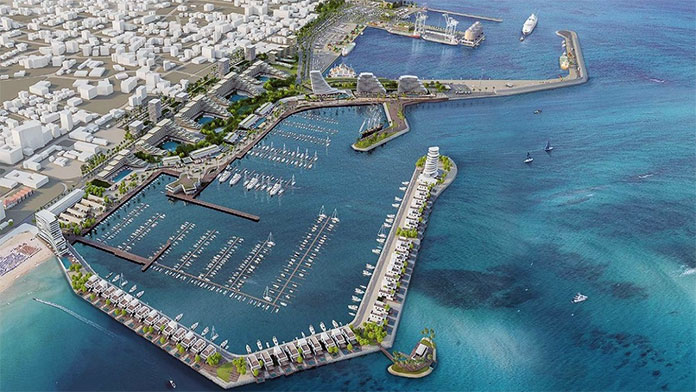
Work on the much-awaited Larnaca port and marina €1.2 billion redevelopment is on track, with Cyprus soon reaping the benefits.

Transport Minister Yiannis Karousos visiting the port Friday along with MPs, said the planned Larnaca marina and port development will not only benefit the town but the entire Cypriot economy.

Speaking onsite, Karousos said the visit was aimed at confirming the marina’s progress while meeting with representatives of Kition Ocean Holdings Ltd, the Israeli-Cypriot consortium awarded the tender in 2020.

“Everything is proceeding according to plan, and I can assure the site will be ready to be handed over to contractors to begin building work on April 1,” Karousos said.

The minister reminded the €1.2 billion redevelopment project is the largest infrastructure investment in Cyprus being carried out, adding that it will help pump around €120 million per year into state coffers.

The first phase starts in April with upgrading existing service buildings in the marina to offer boat owners a first taste of the overall project.

Services offered to boat owners will include smart upgrades by introducing applications and services accessible through their smartphones.

The head of the House Transport Committee, Marinos Moushiouttas, said that the development would benefit everyone.

“It will be a jewel for Larnaca and Cyprus in general. The Committee is monitoring the project’s progress; we are ready to help whenever needed.”

Larnaca Mayor Andreas Vyras thanked the minister and the Committee for their interest to support the project.

“Investors are doing everything they can to proceed as planned.

“What I want to say is that as Larnaca, we are looking forward to this project.

“We have been fighting for decades to see this project come to life, and we are pleased to see it ready to take off.”

It is estimated the project will generate revenues of around €12 billion for the government.

It will create about 4,000 new jobs, calculating those directly tied to the marina operations and businesses that will open outlets in the commercial areas.

The work will be carried out in four phases over 15 years.

The BOT project will see the government receiving fixed rent and a percentage of the revenue through a concession agreement with the port/marina operated on a 40-year lease and the real estate acquired on a 125-year lease.

After 40 years, the port and marina can be handed back to the government.

Reconstruction of the existing marina will accommodate 650 yachts and offer facilities such as boat repairs.

The upgraded marina will also accommodate mega yachts up to 150m.

Construction includes the Marina Yacht Club with offices, cafes, event venues, sailing and diving schools.

An upgraded Larnaca port will accommodate ships up to 450 metres in length, such as luxury cruise ships, energy exploration vessels, military, and other merchant ships.

Taxpayers will pay ‘Golden Passport’ VAT deficit

0

Taxpayers may be asked to pay the VAT shortfall that ‘Golden Passport’ investors and other home buyers who paid the lower VAT rate of 5% but who should have paid the full VAT of 19% on their property purchase.

Cyprus’ decision to violate EU Directive 2006/112/EC by applying a reduced VAT rate of 5% on the first 200 square metres of all dwellings bought as principal and permanent residences has got it into hot water with the European Union.

The Directive lists the supplies of goods and services to which member states may apply reduced rates, one of which is the “provision, construction, renovation and alteration of housing, as part of a social policy.”

But in Cyprus, the reduced rate is applied regardless of the income, assets and economic situation of the beneficiary, the members of the family that will reside in the dwellings, and the maximum total area of the dwellings concerned.

In July 2021, the European Commission sent a letter of formal notice to Cyprus for its failure to properly apply EU VAT rules for dwellings, giving Cyprus two months to take “appropriate steps.”

The risks and implications of Cyprus violating EU Directive 2006/112/EC were known in 2020. In October that year, the Auditor General warned that Cypriot taxpayers would be required to cover the VAT saved by investors who bought passports through the disgraced ‘Golden Passport’ scheme by acquiring expensive homes, revealing that the law passed by parliament in 2015 was implemented in such a way that investors would also pay VAT at the reduced rate. (In October 2021, the European Commission sent a letter of formal notice to Cyprus regarding its ‘Golden Passport” scheme; proceedings are ongoing.)

The inspector of taxes in 2020, Giannis Tsagaris, stated that if the European directive concerning VAT for the acquisition of housing is applied incorrectly, Cyprus will be asked to pay lost income from own resources, to cover the difference between reduced and normal VAT rate saved by investors.

Based on information available in 2020 investors paid €125 million in VAT while at the standard rate of 19%, they would have paid four times the amount, leaving ordinary taxpayers to pay the €375 million deficit.