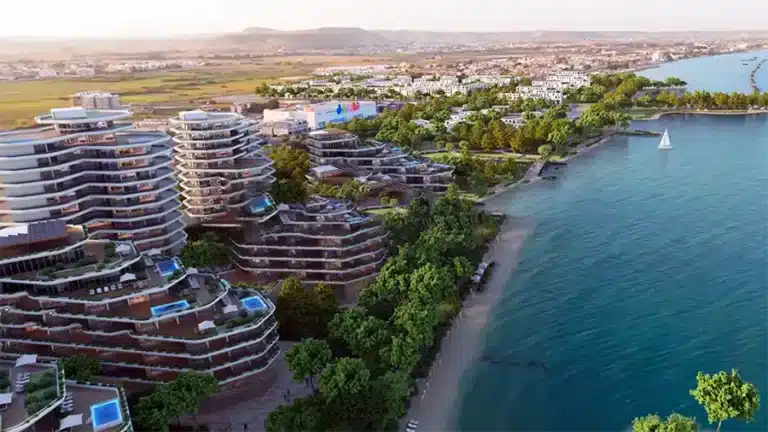
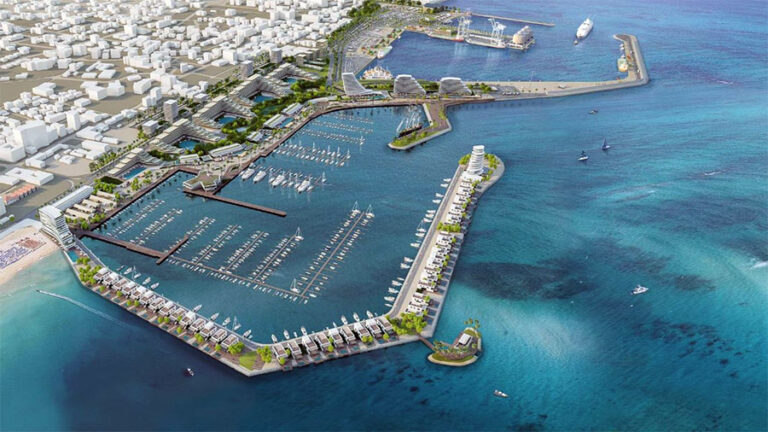
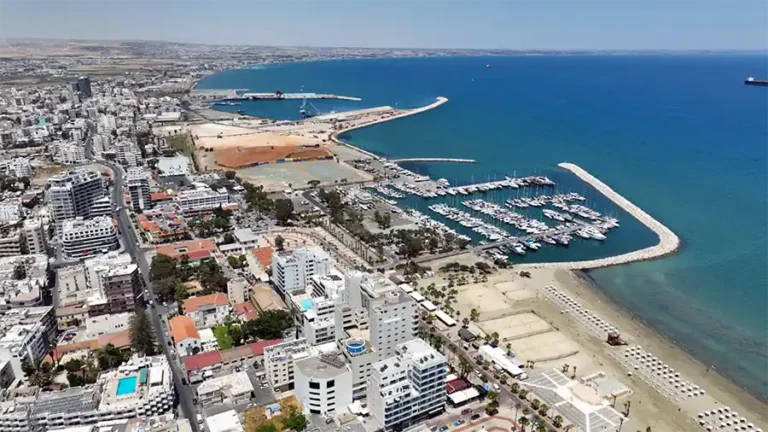
A €415 million redevelopment programme aimed at transforming Larnaca Port, Marina and surrounding waterfront has been unveiled, setting out a long-term vision to create one of Cyprus’ largest mixed-use coastal regeneration projects.
Presented by the Cyprus Ports Authority to the Larnaca City and District Development Committee, the roadmap outlines a phased programme beginning in 2027 and extending to 2045. Between €200 million and €250 million of the overall investment is expected to come directly from the Cyprus Ports Authority, with the remaining funding expected through private sector investment.
The masterplan proposes the modernisation of the commercial port, a major marina upgrade and the redevelopment of adjacent land to reconnect Larnaca’s waterfront with the city centre.
Hotels, leisure and commercial development planned
The redevelopment is designed to create a modern, sustainable and internationally competitive waterfront destination that combines port operations, marina services, tourism, business facilities and public spaces while ensuring the Cyprus Ports Authority retains ownership and strategic control of key infrastructure.
Private investment opportunities are expected to include:
- Hotels
- Conference and exhibition facilities
- Restaurants and cafés
- Leisure and entertainment venues
- Sports facilities
- Centres of excellence
- Public open spaces
- New parking areas
The project also places significant emphasis on improving the public realm through landscaped green areas, pedestrian walkways and cycle routes, creating stronger links between the marina and the heart of the city.
Three major projects form the masterplan
The redevelopment programme has been divided into three interconnected projects.
The first focuses on the marina, surrounding land and public spaces, with an estimated investment of €190 million between 2027 and 2036. Plans include extensive landscaping, new parks, pedestrian and cycling routes, additional parking, the relocation of existing boatyards to more suitable sites and the introduction of tourism, commercial, cultural and leisure developments.
The second project is the €20 million upgrade of Larnaca Marina, scheduled for completion by 2036. This will include refurbishment of existing infrastructure, new marina facilities, expanded berthing capacity and improvements to support the growing leisure boating sector.
The third and largest element is the €205 million modernisation of Larnaca Port over approximately 20 years. The plans include upgraded equipment and infrastructure, new operational buildings, a modern passenger terminal, improved environmental performance, measures to reduce dust generated by cargo handling, gradual port expansion for both commercial and passenger traffic, and the demolition of outdated warehouses and buildings.
Government action required before development begins
Before the detailed masterplan can be finalised, the roadmap identifies three key actions required from the Cypriot government.
These include transferring state-owned land within the port and surrounding waterfront to the Cyprus Ports Authority, transferring additional adjacent government-owned land, and terminating the 2020 lease agreement covering Larnaca Port to enable the government to grant the port concession to the Kition consortium.
Cyprus Ports Authority Chairman Zenonas Apostolou said there is political commitment to complete the necessary land transfers, adding that President Nikos Christodoulides has personally pledged support for the process.
Speaking during the presentation, Mr Apostolou described the roadmap as the first comprehensive action plan for the unified development of Larnaca Port, Marina and neighbouring land.
He said the proposal moves beyond broad ambitions and instead delivers “a realistic action plan” with clearly defined implementation stages, practical timelines and measurable objectives.
According to Mr Apostolou, the Cyprus Ports Authority will act as the lead organisation responsible for coordinating, supervising and delivering the project in partnership with government bodies and private investors.
He added that the long-term ambition is to create a landmark waterfront development that will serve future generations while becoming a reference point for regeneration projects across Cyprus.
Local authorities welcome realistic timetable
Larnaca Mayor Andreas Vyras welcomed the roadmap, describing it as a strong foundation for moving the long-awaited project forward.
While acknowledging that residents have waited many years for redevelopment of the port and marina, he said realistic delivery timescales are essential to ensure the project progresses from planning into construction.
Mr Vyras confirmed that a public meeting involving the whole municipality will be held in September to update residents on the proposals and gather community feedback before the next stages of the project proceed.
The roadmap itself is the result of extensive consultation, combining the Cyprus Ports Authority’s technical expertise with recommendations from previous government studies and input from local stakeholders, with the aim of delivering a financially viable and widely supported regeneration programme for Larnaca.
If delivered as planned, the €415 million investment will transform Larnaca’s waterfront over the next two decades, creating a modern coastal district that combines maritime operations with tourism, commercial activity, public amenities and sustainable urban development.
View the presentation of the Larnaca port and marina roadmap (Greek)