Home Blog Page 22

Labour shortages threaten delivery of new homes in Cyprus

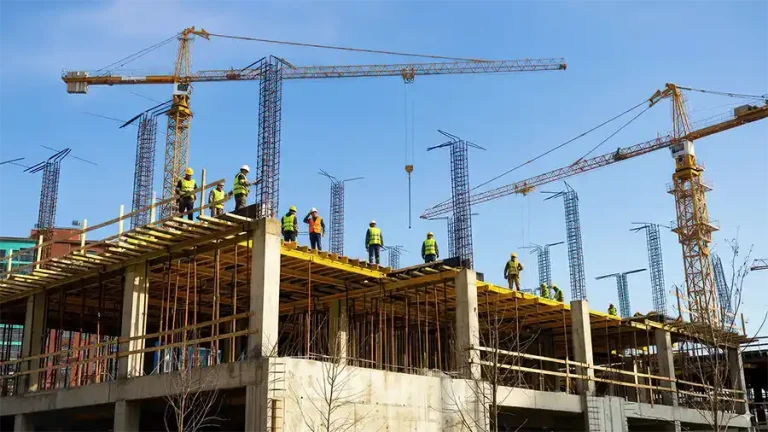
Labour shortages in Cyprus’ construction sector are raising fresh concerns about delays to new residential developments and the future supply of housing, industry stakeholders have warned.

The issue was highlighted during a discussion organised by the Cyprus Federation of Building Contractors Associations (OSEOK) on April 2, where government officials, industry representatives and policymakers examined the impact of workforce gaps on both private and public construction projects.

New housing developments under pressure

Construction professionals said shortages across key trades are slowing progress on new housing developments, potentially tightening supply at a time when demand for residential property remains strong.

Developers and contractors also cautioned that limited availability of skilled workers is extending project timelines and increasing construction costs, factors that could ultimately influence property prices and housing affordability.

Participants also pointed to administrative challenges when recruiting workers from third countries, calling for more streamlined procedures to help ensure projects can secure the workforce needed to stay on schedule.

Calls for clearer framework to attract overseas labour

A central theme of the discussion was the need for a structured framework to attract skilled construction workers from outside the European Union.

Stakeholders said any policy approach should balance labour market demands with legal obligations, ensuring fair competition and appropriate working conditions across the sector.

OSEOK president Stelios Gavriel said addressing workforce shortages is vital to maintaining continuity in residential development and ensuring a stable pipeline of new housing.

He also noted the potential contribution of asylum seekers through a regulated, time-limited employment framework consistent with existing legislation.

Government examines ways to address labour shortfall

Government representatives said dialogue with industry bodies is ongoing as authorities examine ways to address labour market constraints affecting the construction sector.

Officials said migration policy aims to support productive sectors of the economy, including residential construction, while remaining within established legal frameworks.

Measures already introduced to ease labour shortages were discussed, along with additional policy options currently under review in consultation with industry stakeholders.

Cooperation key to maintaining housing supply

Industry representatives concluded that coordinated action between government and the construction sector will be essential to maintaining a steady supply of new homes.

With demand for housing continuing, stakeholders said timely policy responses will play an important role in supporting residential development and preserving long-term market stability.

More refugees set to get title deeds for homes

Greek Cypriot refugees living on state housing estates whose homes have minor irregularities will soon be able to obtain title deeds, Interior Minister Constantinos Ioannou said on Tuesday.

The proposed legislation is expected to go before the cabinet on Thursday before being submitted to parliament. The move is set to resolve long-standing legal uncertainties affecting displaced families living in government-supported housing.

Once issued, title deeds will allow homeowners to transfer property to their children or secure mortgages. However, selling the property will not be permitted until minor planning irregularities are addressed.

State schemes continue supporting displaced persons

Government refugee settlements and self-housing programmes remain central to Cyprus’ long-term housing strategy for displaced persons.

Self-housing schemes provide plots of land or financial assistance to eligible applicants, enabling them to build permanent residences. Since 1976, more than 14,000 plots have been allocated under these programmes.

Increased assistance near the Green Line

Ioannou also confirmed that refugees seeking to purchase or construct homes near the Green Line or in disadvantaged areas will soon qualify for increased state support.

Under the revised framework, households with at least one refugee member could receive up to €65,000 – representing a 20 per cent increase in assistance.

The Service for the Care and Rehabilitation of Displaced Persons currently operates with a €50 million budget, with government considering further grant increases in 2026.

Ktizo scheme to replace unsafe refugee housing

The minister provided an update on the Ktizo housing scheme, confirming that two new apartment buildings will be completed in May, followed by four more by the end of the year.

Launched in April 2023, the €130 million long-term programme aims to upgrade or replace ageing refugee apartment blocks considered unsafe. The initiative offers incentives to tenants to relocate to improved housing.

Across government-controlled areas, 358 refugee apartment buildings have been recorded. Of these:

  • 245 are considered in satisfactory condition
  • 70 require maintenance
  • 43 face structural issues deemed beyond viable repair

Some residents have warned that deteriorating conditions leave buildings at risk of collapse.

Government aims to increase stock & reduce prices

Ioannou emphasised that broader housing policy remains focused on addressing the imbalance between supply and demand, which continues to push up real estate prices.

Government efforts are aimed at increasing housing stock to help stabilise property prices and improve affordability.

Cyprus rents surge 40% amid growing housing crisis

Cyprus is experiencing one of the most acute housing pressures in the European Union, with rents increasing between 30% and 40% over the past five years. The figures highlight growing affordability concerns as housing demand continues to outpace supply across key urban centres.

Drawing on data discussed at a housing policy discussion in Nicosia, the country is expected to require approximately 43,000 additional homes over the next decade. Rising property costs have coincided with widening income disparities, with a significant proportion of the population considered at risk of poverty or living close to the poverty threshold. Analysts estimate that nearly half of residents fall within low or lower-middle income brackets, intensifying the urgency of policy intervention.

Lack of strategic housing policy raises concerns

Housing experts and policymakers have pointed to the absence of a comprehensive national housing strategy as a key factor contributing to worsening affordability conditions. Calls have been made for a more coordinated approach centred on social housing provision, targeted financial support for first-time buyers, and rental assistance schemes for lower-income households.

Proposed measures include the creation of a unified housing authority, financial support tools for young households without sufficient capital, incentives for affordable residential development, and tighter regulation of large-scale property acquisitions by foreign investors. Concerns have also been raised about accelerated property foreclosures, with warnings that repossessions of primary residences could increase further in 2026.

Industry observers note that housing policy must remain flexible and adequately funded to address evolving demographic needs while ensuring access to affordable accommodation for vulnerable groups.

Supply initiatives aim to boost affordable housing stock

Government-backed initiatives are seeking to expand housing supply through urban planning incentives and Build to Rent schemes designed to encourage private sector participation. Current development applications are expected to deliver more than 2,500 residential units within the next two years, including around 400 designated as affordable housing.

Additional plans involve the construction of approximately 500 affordable rental homes on state-owned land, representing investment exceeding €75 million. Developments will be delivered through public-private partnerships, with the state retaining responsibility for management.

Authorities are also progressing accommodation projects for students and workers in sectors such as tourism, retail and manufacturing, where demand for affordable rental housing has increased significantly. Programmes encouraging the renovation and reuse of existing buildings are expected to contribute to a faster expansion of available housing stock.

Licensing reforms aimed at simplifying planning procedures could accelerate housing delivery timelines, allowing thousands of households to secure accommodation sooner than previously anticipated.

Cyprus records high share of housing difficulty in EU

Recent Eurostat data indicates Cyprus has the highest proportion of residents experiencing housing-related financial difficulty in the European Union, exceeding 11% compared with the European average of below 5%. Analysts suggest the imbalance between investment-driven development and housing accessibility for local residents has contributed to sustained upward pressure on prices.

Policymakers have emphasised the importance of treating housing as both an economic and social priority, warning that reliance solely on market mechanisms risks reinforcing inequality in access to accommodation.

Coastal cities experience strongest price increases

Larnaca and Limassol have recorded particularly sharp price growth in recent years. Rental costs for mid-sized apartments in Larnaca have risen from approximately €500 per month five years ago to between €1,200 and €1,500 today. Property purchase prices have also increased substantially, more than doubling in some cases.

Local authorities estimate that a significant proportion of new residential developments are aimed at international investors, while a large share of centrally located properties has been converted into short-term rental accommodation. This shift has further restricted supply available for long-term tenants, contributing to rental inflation.

With mortgage affordability criteria requiring loan repayments to remain below 40% of household income, many younger households face increasing barriers to home ownership.

Policy debate focuses on long-term market stability

Municipal authorities and policymakers are exploring planning reforms and funding mechanisms aimed at supporting social housing development and encouraging the use of vacant properties. However, local government budgets remain limited, restricting the scale of potential interventions.

Some policymakers have suggested introducing tighter regulation of short-term rental activity in high-demand areas, reflecting similar measures implemented in several European cities.

As demand for housing continues to grow, the effectiveness of coordinated public policy will play a critical role in determining whether Cyprus can improve affordability conditions and stabilise its property market over the coming years.

Cyprus targets unfair contract terms in landmark reform

Cyprus has taken a notable step towards strengthening borrower protections after Parliament approved legislation enabling courts to review unfair contract terms in all loan agreements regardless of when the agreements were signed, a change expected to resonate across the island’s mortgage and property markets.

The reform introduces retrospective scrutiny of potentially abusive clauses, offering borrowers increased legal recourse in disputes with lenders and reinforcing the regulatory framework governing real estate finance.

Retrospective review strengthens borrower protections

Under the newly adopted legislation, courts will be empowered to examine contract terms for unfairness irrespective of the date of agreement, addressing a longstanding gap in consumer protection. The amendment modifies the Consumer Protection Law to ensure earlier contracts are also assessed under current legal standards.

The proposal was submitted by Stavros Papadouris, leader of the Green party, and approved with 26 votes in favour and 6 against from MPs present from the Democratic Rally party (DISY).

Legal analysts suggest the change could provide relief for borrowers whose mortgage or loan agreements included clauses that disproportionately favoured lenders, a common issue following the financial crisis era.

Alignment with EU consumer protection framework

Speaking before Parliament, Mr Papadouris highlighted the legislative history underpinning the reform. European Directive 93/13/EEC on unfair contract terms was transposed into national law in 1993, followed by Cyprus’ 1997 legislation addressing abusive clauses.

Further progress was made in 2021 through the introduction of the broader Consumer Protection Law, which for the first time provided a basic framework safeguarding consumer interests.

However, gaps remained concerning agreements signed before the law entered into force. The latest amendment seeks to harmonise national legislation with European legal principles requiring courts to examine unfair contract clauses ex officio.

Legal precedents highlight contract terms issues

The lawmaker referenced case law developments across European jurisdictions demonstrating judicial obligations to assess potentially unfair terms independently.

Particular attention was drawn to litigation involving Société Générale Bank, where a court ruled that 13 of 14 contractual terms were abusive; a decision reached quicker than in comparable cases involving larger systemic banks.

According to parliamentary discussions, several cases involving major lenders have remained pending for years despite decisions by the Consumer Protection Service dating back to 2015.

Property security implications for homeowners

Independent socialist MP Costis Efstathiou noted that the reform provides borrowers with a modest but valuable legal tool when facing powerful creditors, potentially helping households safeguard property assets.

Given the central role of mortgage lending in Cyprus’ real estate market, the legislative change may influence dispute resolution strategies, legal due diligence processes and contract drafting standards across the property sector.

Cross-party consensus on final contract terms text

The bill was reviewed extensively by the Parliamentary Committee on Commerce between November 2024 and March 2026, allowing both the executive and legislative branches to agree on a final text.

Legal experts anticipate that the reform will increase scrutiny of historical mortgage agreements and could lead to further litigation as borrowers reassess contractual obligations under the strengthened framework.

Cyprus moves to legalise illegal buildings

I came across the following article in philenews. Initially I thought it was an April fools, but as it comes from a reliable source, must be accurate.

And having checked further, it is accurate and not fake news!

In essence the article is about a draft bill that’s been issued for public consultation. If approved by parliament, it would allow property owners in Cyprus who have built without approved building permits to have those buildings legalised, provided they meet certain technical and regulatory requirements.

Furthermore, the draft bill would also apply to buildings currently under construction – or even those yet to begin – until the legislation is formally examined and approved.

In most civilised countries, building without proper authorisation leads to immediate enforcement and, if necessary, demolition. The rule of law is clear: compliance is expected, and violations carry real consequences.

Yet this is Cyprus, where too often the opposite message is sent. Instead of accountability, we see leniency and instead of deterrence, we see tolerance. And instead of consequences for wrongdoing, we too frequently witness a system that rewards those who ignore the rules, which undermines fairness for everyone who follows them.

The initiative has been prepared in collaboration with the Cyprus Scientific and Technical Chamber (ETEK), with eligibility dependent on complying with structural integrity, energy performance and building services standards.

Conditions for legalisation

Under the proposed framework, buildings must meet a range of requirements to qualify. These include compliance with planning permission rules and technical standards that were in force at the time construction was completed.

Property owners will need to demonstrate that their buildings meet standards relating to:

  • Structural stability
  • Energy performance
  • Electrical and mechanical installations
  • Fire safety regulations
  • Accessibility requirements

If full compliance with accessibility or fire regulations is not possible, the appointed engineer must submit a formal technical report explaining the limitations and proposing alternative safety measures.

Inspections required before approval

The draft legislation requires a full visual inspection of the property’s structure and infrastructure. Engineers must confirm that no serious damage, deterioration or safety risks are present that could make the building dangerous.

Owners must appoint qualified professionals to prepare technical assessments covering:

  • Structural adequacy
  • Fire protection compliance
  • Accessibility standards
  • Energy efficiency performance
  • Mechanical and electrical systems

Certification from the Cyprus Electricity Authority confirming inspection of the electrical installation will also be required.

Limited window for applications

According to the Ministry of Interior, the legalisation process will be available only for a limited period, expected to range between 18 and 36 months. Applications submitted during this period will allow authorities to issue a building permit and approval certificate, which will also be recorded on the property title.

Fees for retrospective permits will be calculated under existing regulations but are expected to be charged at double the standard rate.

Buildings excluded from the scheme

The proposal makes clear that the legalisation pathway will apply only to buildings completed before the new law comes into force. Any new construction carried out after the law is approved without proper permits will remain subject to enforcement measures.

Certain high-importance structures, classified under Eurocode 8 as Category IV buildings, will not be eligible for legalisation.

Impact on the Cyprus property market

Industry experts suggest the proposed legislation, which is titled the Roads and Buildings Regulation (Amendment) (No.2) Law of 2026, could help resolve long-standing issues affecting property transfers, mortgage approvals and investment decisions where planning irregularities exist.

However, critics argue the measure could encourage further unauthorised construction during the period before the law is enacted, as developers rush to complete projects that may later qualify for legal status.

The consultation process is expected to last one month before the draft law proceeds to parliamentary review.

British English legal translation of the draft law

  1. The principal Law is amended by the insertion, immediately after section 4C thereof, of the following new section numbered 4D:

Special provision regarding applications for a permit in specific cases

4D. (1) Notwithstanding the provisions of this Law or of any Regulations issued thereunder, in the case of a building which has been erected without first securing a permit, in contravention of the provisions of section 3 of the principal Law, and where construction works were completed prior to the date of entry into force of the present amending Law, an application may be submitted for the granting of any permit which the competent authority is empowered to issue under the provisions of the principal Law, provided that:

(a) the building does not fall within Importance Class IV, in accordance with Eurocode 8, Part 1;

(b) a planning permission has been issued for the erection of the building pursuant to the Town and Country Planning Law, reflecting the building as constructed on site;

(c) at the time of construction of the building, the owner of the plot complied fully with all legislative requirements in force at that time in relation to:

(i) the energy performance of the building;
(ii) structural adequacy; and
(iii) the electrical and mechanical installations of the building;

(d) the owner of the building appoints a suitably qualified designer or designers to prepare and submit to the competent authority a study relating to:

(i) the assessment of the structural and constructional adequacy of the building at the time of its construction;
(ii) the assessment of the accessibility and fire safety condition of the building;
(iii) the assessment of the condition of the electrical and mechanical installations at the time of construction of the building; and
(iv) the assessment of the energy performance of the building at the time of its construction.

(2) The owner of the building shall appoint a designer who shall carry out an inspection of the building and issue a Building Inspection Certificate confirming the present condition of the building, including safety in use and accessibility, fire protection measures, and whether the building shows deterioration, damage or defects which render, or may render, the building dangerous or in need of repair.

(3) The owner of the building shall appoint an Electrical Engineer Designer to inspect the electrical installation of the building and issue an Inspection Certificate confirming the current condition of the electrical installation.

(4) The owner of the building shall appoint a Mechanical Engineer Designer, who shall carry out an inspection of the mechanical installation of the building and issue an Inspection Certificate confirming the present condition of the mechanical installation.

(5) The Minister, following consultation with the competent authorities and the Cyprus Scientific and Technical Chamber (ETEK), shall determine by regulatory Order published in the Official Gazette of the Republic the scope of the inspection, the format of inspection forms and the form of the Inspection Certificates issued by the designer following the inspections referred to in subsections (2), (3) and (4) of this section.

(6) The designer appointed by the owner of the building shall submit electronically to the competent authority an application for exceptional licensing of the building, pursuant to the provisions of section 3 of the principal Law, accompanied by the following documents, certificates and information:

(a) A copy of the Planning Permission issued under the provisions of the Town and Country Planning Law, where required:

Provided that, where the building is included in a general or special development order, instead of planning permission, drawings and a study prepared by a designer shall be submitted certifying that the planning characteristics of the building comply with applicable planning requirements.

(b) Confirmation from the Electricity Authority of Cyprus regarding the date of inspection of the electrical installation and supply of electricity to the building, or, in exceptional cases where this is not possible, other certificates, documents, data or confirmations acceptable to the competent authority verifying the date of completion of the building works.

(c) A study assessing the structural and/or constructional adequacy of the building at the time of its construction, as required under subsection (1)(d) of this section, as well as studies relating to fire protection and accessibility.

The competent authority shall require compliance of the building with the requirements of the Fire Protection Regulations (Regulation 61IA – Annex IV of the Streets and Buildings Regulations). Where full compliance with the Fire Protection Regulations is not feasible, the designer shall submit to the competent authority a report as provided for under Regulation 61IA(3). In the event of disagreement between the designer and the competent authority regarding compliance with Regulation 61IA, the matter shall be referred to the Technical Fire Protection Committee, as provided under Regulation 61IA(6)(b), which shall advise the competent authority.

The competent authority shall also require compliance with the Accessibility and Safety in Use Regulations (Regulation 61HA – Annex III of the Streets and Buildings Regulations). Where full compliance is not feasible, the designer shall submit to the competent authority a report as provided for under Regulation 61HA(3). In the event of disagreement between the designer and the competent authority regarding compliance with Regulation 61HA, the matter shall be referred to the Technical Accessibility Committee, as provided under Regulation 61HA(6)(b), which shall advise the competent authority.

(d) The Building Inspection Certificates as provided for in subsections (2), (3) and (4) of this section.

(e) A valid Electrical Installation Suitability Certificate.

(f) A study prepared by an Electrical Engineer Designer confirming that the electrical installation meets the requirements applicable at the date of completion of the building works, as required under subsection (1)(d) of this section.

(g) A study prepared by a Mechanical Engineer Designer confirming that the mechanical installation meets the requirements applicable at the date of completion of the building works, as required under subsection (1)(d) of this section.

(h) A study prepared by a qualified expert, as defined under the Energy Performance of Buildings Law, confirming that the building complies with the energy performance requirements applicable at the date of its completion, as required under subsection (1)(d) of this section.

Provided that, where a designer or designers confirm that maintenance, restoration or repair works are required, the application submitted to the competent authority for the issuance of a Building Permit under this section shall be accompanied by a study covering the required alterations or repair works.

(7) The competent authority shall examine the information, documents and certificates submitted with the application to ensure that the requirements of this section are satisfied, including confirmation that the building benefits from planning permission and that the works for which the application is submitted comply with the legislative provisions and regulations in force at the date of completion of the building:

Provided that the review carried out by the competent authority shall be limited to matters falling within the scope of this section and this Law and shall not extend to matters governed by other specialised legislation.

(8) Where the competent authority is satisfied that the requirements set out in this section have been met, it shall issue a Building Permit under this section together with a Certificate of Approval with notes, in accordance with the provisions of section 10B of the principal Law:

Provided that the Certificate of Approval with notes shall specify that it is issued on the basis of the requirements applicable at the date of completion of the building, including the date of completion of the building:

Provided further that the Certificate of Approval with notes issued under this section shall be transmitted to the relevant District Lands Office and shall constitute a requirement by the competent authority for the registration of a note on the updated title deed stating that the permit has been issued under the regulatory framework applicable at the date of completion of the building.

(9) The fees payable for the issuance of the Building Permit and the relevant Certificates shall be calculated in accordance with the provisions of Regulation 62 of the Streets and Buildings Regulations, as amended or replaced from time to time, and shall be multiplied by two in order to cover the increased administrative costs associated with the exceptional handling of such application.

(10) In cases where buildings consist of more than one independently functioning unit, an application for a Division Permit shall also be submitted simultaneously in accordance with the provisions of section 3(1A) of the principal Law.

(11) An application to the competent authority under this section may be submitted within:

(a) eighteen (18) months from the date of entry into force of this Amending Law, where, prior to that date, planning permission had been issued for the building concerned in accordance with paragraph (b) of subsection (1) of this section;

(b) thirty-six (36) months from the date of entry into force of this Amending Law, where an application for planning permission has been submitted within six (6) months from that date for the building concerned in accordance with paragraph (b) of subsection (1) of this section.

(12) Upon expiry of the time limits referred to in subsection (11), the competent authority shall take the measures provided for under sections 20 and 21 of the Law regarding the erection of a building without prior permit, as well as, at its discretion, the measures provided for under sections 15, 15A and/or 15B.

Public consultation

The Ministry of Interior invites all interested parties to submit opinions and/or comments electronically through the e-Consultation platform, no later than Monday, April 20, 2026.

Details may be found at Ministry of Interior – Central Administration (login required.)

Cyprus Foreclosures: 146 primary residences repossessed in 2025

A total of 146 primary residences were repossessed in Cyprus during 2025, generating approximately €30 million in sales proceeds, with an average property value of around €205,000, according to Stavros Papadouris, President of the Cyprus Green party.

Speaking at an information event focused on foreclosure legislation, Papadouris argued that the figures contradict the “convenient narrative” that only in a limited number of extreme cases are primary homes repossessed. Instead, he stressed that families and primary homes lie behind every repossession case, underlining the broader social implications of the issue.

Testimonies highlight social impact of repossessions

The event, held at the European University in a notably emotional atmosphere, examined pending legislative proposals currently before the House of Representatives relating to foreclosure procedures and borrower protections.

Participants shared personal accounts illustrating the human consequences of foreclosure legislation enacted since 2014. According to the Cyprus Green party, these testimonies demonstrate that the matter remains an open social wound requiring immediate and meaningful policy responses.

Calls for stronger legal safeguards for borrowers

Papadouris reiterated that meaningful protection for borrowers depends on restoring the right to seek legal recourse before a foreclosure takes place. Such a provision, he argued, would allow borrowers to effectively challenge the size of their debt, excessive charges, interest rates, and potentially abusive contractual clauses.

He emphasised that without a genuine right of defence prior to losing property, it is difficult to claim that the existing framework offers a balanced and fair approach.

Debate focuses on abusive clauses & Ombudsman

The Green party also welcomed the generally positive stance of most parliamentary parties regarding proposed legislation addressing abusive loan clauses, with the exception of DISY.

However, Papadouris noted that critical issues remain unresolved, particularly those linked to strengthening the role of the Financial Ombudsman and ensuring that decisions carry binding authority.

Government proposals currently before Parliament include provisions granting binding power to Financial Ombudsman decisions up to €20,000, with data indicating that approximately 75% of relevant disputes fall within this threshold.

Pressure for reform of foreclosure framework

Papadouris stressed that the debate cannot be confined to fragmented technical adjustments. Instead, both the legislative and executive branches must work towards a genuinely effective framework that ensures:

  • real legal defence mechanisms for borrowers
  • oversight of potentially abusive lending practices
  • meaningful access to justice and dispute resolution

The Green party confirmed it will continue advocating for policy solutions aimed at protecting primary residences from being repossessed and restoring the balance between citizens and financial institutions.

The organisation concluded that the experiences shared at the event reinforce the urgency of reform, highlighting the continuing social consequences of foreclosure laws implemented over the past decade.