Cyprus revokes citizenship of 150 investors & family members

The Council of Ministers has approved six new proposals to strip 28 individuals of Cypriot citizenship, all of whom had been naturalised under the disgraced Citizenship-by-Investment programme, also known as the “Golden Passport” scheme, which was “definitively and irrevocably terminated” in November 2020.

According to the Ministry of Interior, these latest decisions bring the total number of decisions to revoke Cypriot citizenship under President Nikos Christodoulides’ administration to 41, affecting 150 people; 41 investors and 109 of their family members.

During the same period, the Council issued formal Deprivation Orders for 69 individuals whose cases were initially decided between 2021 and 2023. The revocation process has also been fully completed for 15 people, including five investors and ten dependants.

Since the end of the scheme, the government has moved to revoke the citizenship of 360 individuals in total, comprising 101 investors and 259 relatives. Of these, 112 cases have been finalised, with passports and related documents annulled.

(Regular readers will recall that in 2021, a report into the scandal led by former Supreme Court judge Myron Nikolatos revealed that more than half of the 3,000 citizenships granted between 2007 and August 2020 under the “Golden Passport” scheme were unlawful.)

Government officials stressed that the ongoing revocations form part of a wider strategy to enhance transparency, combat corruption and restore Cyprus’ international reputation. The government, in cooperation with the Attorney General’s office, is finalising amendments to the Civil Registry Law to align with European Commission recommendations and prevent a repeat of past practices.

“This is a significant reform that strengthens transparency, restores trust in the Republic, and sends a clear message that Cyprus is moving forward with modern European principles and values,” the Ministry’s statement said.

Trial of former officials

Meanwhile, two senior politicians implicated in the “Golden Passport” scandal appeared in court on Thursday to plead not guilty.

Former House Speaker Dimitris Syllouris and former MP Christakis Giovanis, both defendants in the naturalisation case, denied charges linked to the scheme at the Nicosia Permanent Criminal Court.

In a brief statement, Syllouris insisted he had “never acted illegally” and “never intended to,” declaring himself innocent of all accusations. He said the case had unfairly caused “enormous problems” for him and his family. His lawyer noted that detailed arguments would not be presented at this stage.

Giovanis also rejected any wrongdoing, claiming that documents tied to the naturalisation of Russian national Nikolai Gornovsky were prepared or requested by his lawyer, Andreas Pittadjis. “I never thought or believed there was anything reprehensible, nor did I do anything reprehensible,” he told the court.

The trial continues.

Cancellation of the 5% VAT reduction on property

Buying a home in Cyprus comes with Value Added Tax (VAT) in some cases. To make home ownership more affordable, first-time buyers can benefit from a reduced 5% VAT rate, provided they meet certain criteria.

Value Added Tax (VAT) was introduced in Cyprus on acquisitions of new properties in May 2004, and on acquisitions of land in January 2018.

In Cyprus, property acquisitions are generally subject to VAT at the standard rate of 19%, when VAT is applicable. However, in order to support home ownership and make it more accessible, the law offers a reduced 5% VAT rate for first-time homeowners under certain conditions.

VAT is not payable in sale and purchase transactions of re-sale properties.

Requirements for the reduced 5% VAT rate

The key requirements to qualify for the 5% reduced VAT rate are:

  • The property must be brand-new, not a resale.
  • The buyer must be a natural person, not a company.
  • The property must be used as the buyer’s primary residence for at least 10 years and not used for investment purposes.

The legislation concerning the VAT reductions was amended by the Government in June 2023 introducing new provisions.

Old VAT rules (pre-June 2023)

According to the old rules, the reduction was applicable to the first 200 sq. m. of a newly constructed property. If the property exceeded 200 sq. m., then part of the purchase price was paid with 5% and part of the purchase price was paid with 19%.

New VAT rules (post-June 2023)

According to the new rules, the reduced rate of 5% VAT applies to:

  • The first 130 sq. m. of a newly constructed property, provided that the total buildable area does not exceed 190 sq. m., and
  • A property value of €350,000, provided that the total transaction value does not exceed the amount of €450,000.

There are exceptions to the above-mentioned rules that apply to people with disabilities.

It is worth noting that the old rules still apply in cases where the application to obtain a Planning Permission for the constructions of the property was submitted before the 31st of October 2023.

Renting or selling before the expiration of the 10 year-period

The authorities grant the reduced 5% VAT rate subject to the condition that the property is used by the applicant as a primary residence for at least 10 years. However, if the owner decides to rent or sell the property before the expiration of the 10-year period, the authorities must be notified.

How to notify the authorities

The notification to the authorities must be made through the Tax For All (TFA) portal by submitting an application accompanied by the necessary supporting documents and information, such as:

  • Reason for cancellation,
  • Copy of the Title Deed of the property or the Contract of Sale,
  • Copy of the passport,
  • Statement issued by the Electricity Authority of Cyprus (EAC).

However, in some cases the authorities may request additional supporting documents and information depending on the circumstances.

Following the submission of the application the VAT Department examines the supporting documents and information provided, calculates the VAT, and issues a statement indicating the amount payable.  When calculating the amount due, the authorities consider the difference between the 5% and 19% VAT originally paid and then they apply it proportionally to the time remaining before the expiration of the 10-year period. In other words, the owner does not lose the benefit for the time the property was used as a primary residence but is liable to pay the part relating to the remaining years.

The authorities specify in their statement the deadline for the settlement of the amount due.

Failure to notify the authorities

If the authorities are not notified that the VAT must be cancelled in a timely manner, this may result in:

  • Penalties and Interest Charges.
  • Delays in the completion of the sale transaction.
  • Legal Exposure.

Reclaiming the 5% VAT on a new purchase

Following the repayment of the VAT due to the authorities, the owner may re-apply and benefit from the reduced rate on a new purchase, provided that they meet the criteria.

Conclusion

The 5% VAT reduction scheme makes property acquisition more affordable and accessible to first-time homeowners. However, property owners who have been granted the 5% reduced VAT on the acquisition of their primary residence and later decide to rent or sell the property before the expiration of the 10-year period, should take all necessary actions to remain compliant with the law. In these cases, it is advisable to seek professional legal assistance before submitting any documents to the authorities.

The lawyer will examine the circumstances of each case and prepare the necessary documents before submitting, to avoid mistakes and exposure to penalties, and to prevent unnecessary delays in completing the sale of the property.

Maria Kokoridi
Lawyer at Polycarpos Philippou & Associates LLC

Larnaca development booming

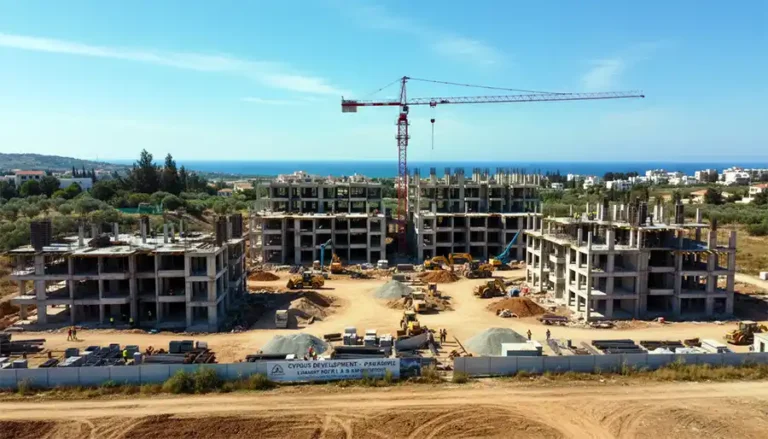
Urban development in Larnaca is accelerating at record speed in 2025, with planning applications rising by 53% compared to last year. The growth is driven by released land in Livadia, Oroklini and Pyla, alongside housing policy reforms, digital permit submission systems and strong demand for residential, hotel and commercial units.

According to the Larnaca District Local Government Organisation (EOA) data, between January and July, 1,295 urban planning applications were submitted. This represents a 53% increase compared to the same period in 2024 (844 applications), and around 73% compared to 2022 (749 applications).

“The steady upward trend in planning applications in recent years has peaked in 2025, highlighting the growing interest in development, investment, and construction activity in the city and district of Larnaca,” the Larnaca EOA noted.

Speaking to Phileleftheros, EOA president Angelos Hadjicharalambous stressed that demand is highest in the wider area of the former refinery, particularly the Livadia municipal district, where a large zone was released in May 2023 following the lifting of the Seveso Directive.

“The sharpest increase is in Livadia, followed by Oroklini and then Pyla,” he pointed out, noting that the overwhelming majority of planning applications concern residential units. He added that “there are also applications for hotel units and commercial developments.”

Rise in Larnaca applications due to several factors

The first is the full adoption of the digital system IPPODAMOS, which now covers the entire spectrum of licensing, allowing users and developers to submit applications 24/7, including weekends, without visiting the Town Planning Authority’s offices.

The second factor is linked to government housing policy, specifically the revision of planning incentives to encourage construction and the availability of housing units, along with the speeding up of the licensing process for certain types of developments.

Another key element was the approval of the Planning Amnesty Scheme by the Council of Ministers, which concerned the legalisation of unauthorised constructions in approved developments. The scheme expired on 23 June 2025 and led to a major influx of applications in the final days.

Additionally, the expiry of Order 1/2020 on 30 June 2025 played a role. The directive encouraged the use of renewable energy sources in developments and provided for additional building coefficients. This has now been replaced by Order 4/2025 issued by the Minister of the Interior.

Local authority commit to sustainable urban growth

EOA assured that its staff are working intensively to manage the increased volume of applications, “aiming at the fastest possible issuance of permits, the support of sustainable urban development, and the best possible service to citizens and investors.”

Limassol offsets fall in Cyprus property sales elsewhere

Following yesterday’s report that property sales in Cyprus declined by 1% in August, the Department of Lands and Surveys released a more detailed analysis earlier today.

According to the analysis, overall sales activity in the domestic market remained broadly stable, thanks largely to the continued strength of Limassol’s property sector, which helped offset weaker trends elsewhere.

The slight overall decline can be traced primarily to a drop in sales to non-EU buyers, a segment that has shown some volatility in recent months.

The Department’s breakdown of sales by market segment paints a more nuanced picture. August was something of a mixed month, with different district and buyer categories showing varying levels of performance. It’s possible that unusually high temperatures, which exceeded 40°C on several days, may also have played a role in dampening property sales, particularly among overseas buyers unaccustomed to the extreme heat.

Market segment analysis

Property sales to the domestic market

In August 2025, domestic sales remained steady with 649 contracts deposited, compared to 650 in August 2024.

However, Limassol came to the rescue once again with a 46% increase in sales (267 vs 183), while the other four districts recorded losses: Famagusta -33% (36 vs 54), Larnaca -36% (104 vs 140), Paphos -23% (65 vs 84) and finally Nicosia -6% (177 vs 189).

Domestic contracts of sale deposited – 2024/2025 Comparison (Aug)

Over the first eight months of 2025, domestic sales rose 12% compared to the same period in 2024, with all districts recording gains.

Domestic contracts of sale deposited – 2024/2025 Year-to-Date Comparison

Property sales to the overseas market

August 2025 saw 479 contracts deposited in favour of international buyers, compared with 485 in August 2024; -1%.

While a 13% increase (117 vs 104) in property sales was recorded in Larnaca and a 4% increase (158 vs 152) was recorded in Paphos, these were outweighed by falls in the remaining three districts: Famagusta -25% (24 vs 32), Limassol -9% (149 vs 163), and Nicosia -9% (31 vs 34).

Overseas contracts of sale deposited – 2024/2025 Comparison (Aug)

Over the first eight months of 2025, overseas sales rose 14% compared to the same period in 2024, with all districts recording gains.

Overseas contracts of sale deposited – 2024/2025 Year-to-Date Comparison

Small increase in EU buyers

August 2025 saw a small increase in the number of properties sold to EU nationals, with 155 contracts deposited, a 3% increase in the 150 deposited in August 2024.

But while a 15% increase (31 vs 27) was recorded in Larnaca and an 11% increase (61 vs 65) was recorded in Paphos, falls were recorded in the remaining three districts: Famagusta -17% (10 vs 12), Nicosia -6% (16 vs 17), and Limassol -5% (37 vs 39).

Contracts deposited by EU Nationals – 2024/2025 Comparison (July)

Over the first eight months of 2025, property sales to EU nationals rose 25% compared to the same period in 2024, with all districts recording gains.

Contracts deposited by EU Nationals – 2024/2025 Year-to-Date Comparison

Small fall in non-EU buyers

August 2025 saw 324 contracts deposited in favour of non-EU nationals; a 3% fall compared to the 335 contracts deposited in August last year.

While Larnaca sales rose 12% (86 vs 77) and sales in Paphos remained steady (97 vs 97), sales in the remaining three districts fell: Famagusta -30% (14 vs 20), Nicosia -12% (15 vs 17), and Limassol -10% (112 vs 124).

Contracts deposited by non-EU Nationals – 2024/2025 Comparison (Aug)

During the first eight months of 2025, property sales to non-EU buyers rose 6%, compared to the same period in 2024, with all districts recording gains.

Contracts deposited by non-EU Nationals – 2024/2025 Year-to-Date Comparison

A changing market landscape

During the eight months of the year, non-EU buyers once again outpaced local purchasers in Paphos, underscoring the district’s ongoing attractiveness to international investors and holiday-home seekers.

At the same time, rising demand in Larnaca and Famagusta, driven in part by geopolitical uncertainty, points to a gradual broadening of foreign investment across Cyprus, with buyers increasingly exploring opportunities beyond the traditionally dominant markets.

Market Segment Summary Analysis Year-to-Date

An analysis of Land Registry statistics from 2008 to 2025 reveals how Cyprus’ property market has evolved over time, with international buyers playing an increasingly pivotal role in shaping regional trends

Contracts Deposited 2008 to 2025 Year-to-Date Comparison

Govt. launches €12 million affordable housing project in Nicosia

The Cyprus Land Development Corporation (CLDC), in collaboration with the Interior Ministry, is moving forward with a new affordable housing scheme in Strovolos. The €12 million project aims to ease rental pressures in Nicosia and expand access to reasonably priced accommodation.

A €12 million boost for affordable housing

Interior Minister Constantinos Ioannou is expected to table a proposal before the Council of Ministers, seeking formal approval for the funding. The initiative is part of a wider government effort to increase the supply of affordable rental homes across Cyprus, following consultations between the Ministry and CLDC.

Plans for 54 affordable apartments in Strovolos

The development will feature two residential apartment blocks built on a single site in Strovolos. One will be a five-storey building with 30 two-bedroom apartments, while the other will be a four-storey block housing 24 two-bedroom units.

Funding will be distributed in phases: €4 million in 2025 and €8 million in 2026, covering both land acquisition and construction costs. Work is set to begin at the end of 2025, with completion expected within three years.

Expanding affordable housing in Limassol

This project builds on the government’s earlier investment of €16 million in Limassol, which supported the construction of 138 apartments in the municipality.

Further plans are progressing in the Agios Ioannis area of Limassol, where the municipality is providing land for additional affordable housing. Once both projects are finalised, around 600 apartments will be available, representing an investment of more than €100 million.

Financial stability for the Land Development Corporation

The CLDC has faced financial challenges since the suspension of the Cyprus by Investment Programme losing revenues from the now-defunct ‘golden passport‘ scheme, which had been a major revenue stream. However, with new state-backed financing mechanisms, the organisation is now better positioned to deliver projects that directly benefit citizens.

The Limassol apartments, in particular, are expected to be rented at prices 25–30% below the local market average, offering significant relief for households struggling with high housing costs.

A step towards tackling housing pressures

The Strovolos development reflects the government’s broader commitment to tackling housing affordability and increasing supply in key urban centres. If successful, it could serve as a model for similar projects across the island.

Has the surge in Cyprus property sales come to an end?

The surge in Cyprus property sales may have come to an end in August as official statistics from the Department of Lands & Surveys reveal a fall in the number of sales contracts deposited at Land Registry offices across the island.

According to the official statistics, a total of 1,128 contracts of sale were deposited in August, a small fall of -1% compared to the 1,135 recorded in August 2024.

However, what is worrying about this 1% fall is that it could have been much worse if Limassol hadn’t recorded a double-digit 20% increase in sales (416 vs 346).

The steepest fall -30% was recorded in Famagusta (60 vs 86) followed by -9% in Larnaca (221 vs 244), -7% in Nicosia (208 vs 223) and -6% in Paphos (223 vs 236).

The sales figures include a broad range of real estate, including residential properties (houses and flats), commercial units, retail spaces, offices, warehouses, and land. While the Department of Lands and Surveys does not provide a breakdown by property type, past data suggests that residential property sales typically account for approximately half of all transactions.

Total contracts of sale deposited – 2024/2025 Comparison (Aug)

Year to date property sales

But despite the fall in August, Cyprus remains on track to achieve the highest number of sales since the property market collapsed in the wake of the worldwide financial crisis in 2007.

Total sales in the first eight months of 2025 are up 13% on the numbers reported in the same period last year, with numbers rising in all districts.

Total contracts of sale deposited – 2024/2025 Year-to-Date Comparison